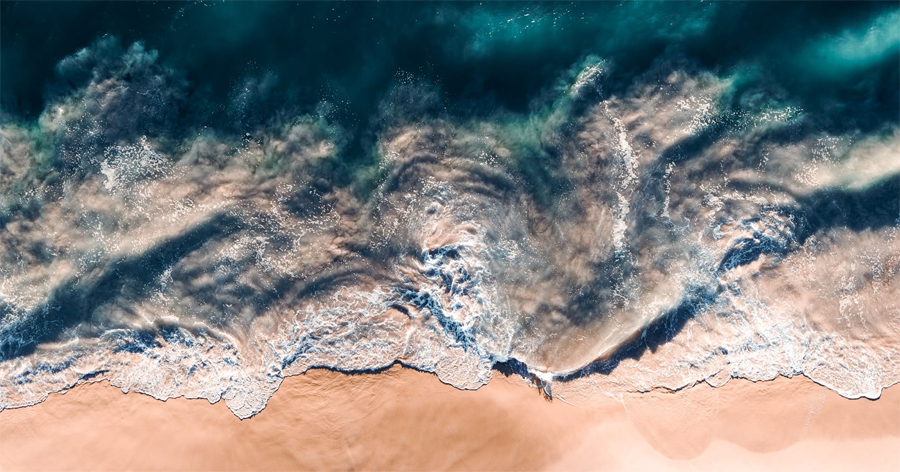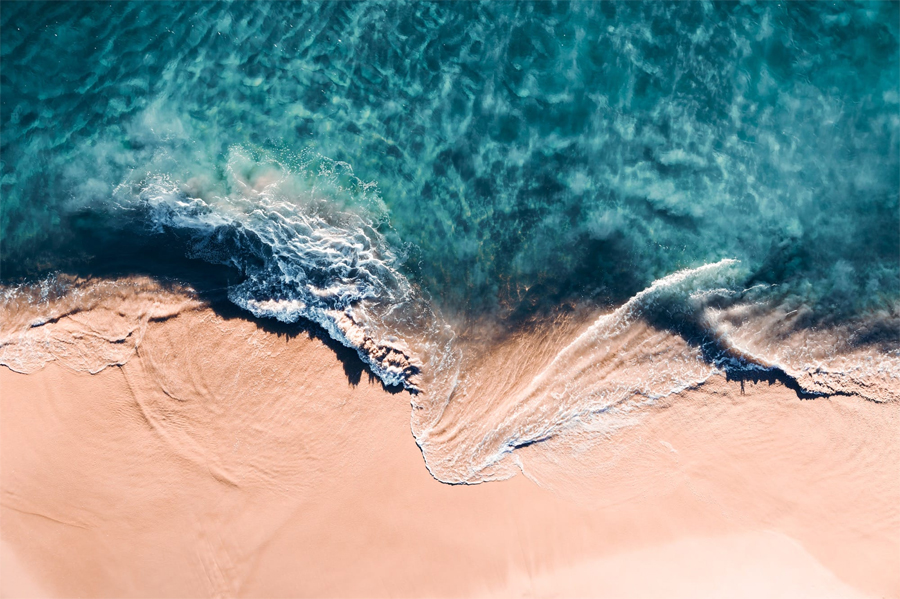
Kevin Krautgartner has a way of turning familiar landscapes into something entirely new by changing only one variable: perspective. In his latest body of work, Waves | Ocean Forces , the shift to a vertical viewpoint transforms the coastline of Western Australia into a study of energy, physics, and fleeting geometry. Seen from above, waves stop looking like waves and begin behaving like lines, shapes, and intricate textures that vanish the instant they form.
Krautgartner has long been drawn to environments where natural forces leave visible marks. His aerial projects have documented salt fields, river deltas, tidal flats, and deserts, always with the same signature approach: carefully framed high-resolution images that hover between abstraction and reality. Water, in all its states, has become one of his most recurring subjects. Waves | Ocean Forces extends this fascination to the thin boundary where the open ocean collides with land.
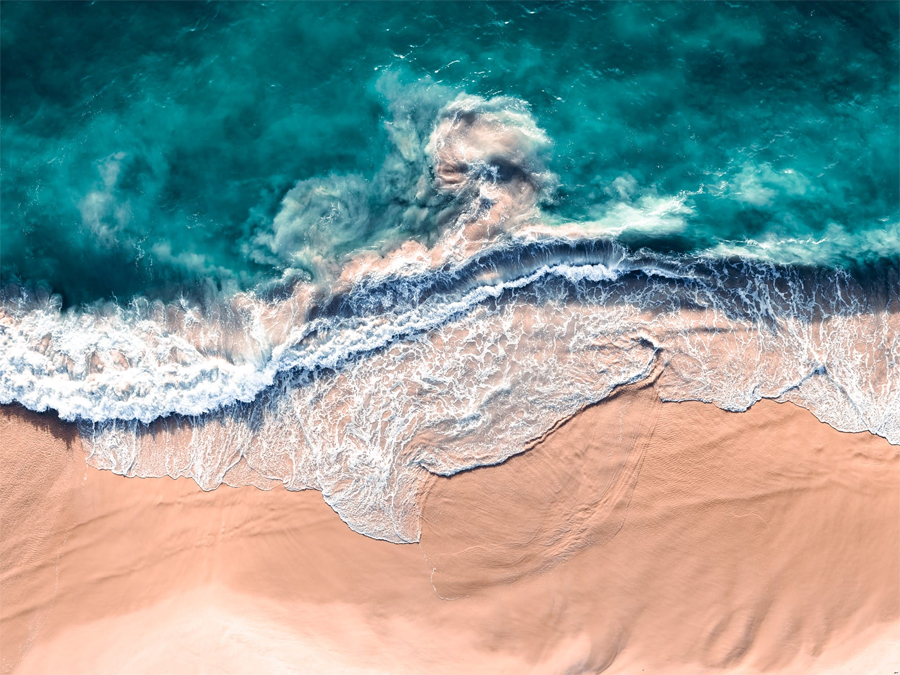
Western Australia offers conditions few coastlines can match. Long, uninterrupted fetch across the Indian Ocean sends powerful swells toward shore, where they meet shallow banks, sandbars, and submerged reefs. These underwater formations bend, compress, and redirect the incoming energy. The result is waves that rise, twist, and collapse with unusual clarity. For Krautgartner, this coastline became a natural laboratory, a place where the mechanics of wave formation unfold with rare precision.
The photographs narrow the world to the vertical frame. There is no horizon and no reference point for scale. Turquoise water surges forward, bleeds into foamy white, then retracts in fine lacework patterns before the next line of energy arrives. At first glance, the images can read like marbled paper, digital renderings, or close-up textures of stone. Only after studying the frame does the viewer recognize the familiar rhythm of breakers rolling onto sand. This delay is deliberate. The work asks the eye to renegotiate something it already knows.
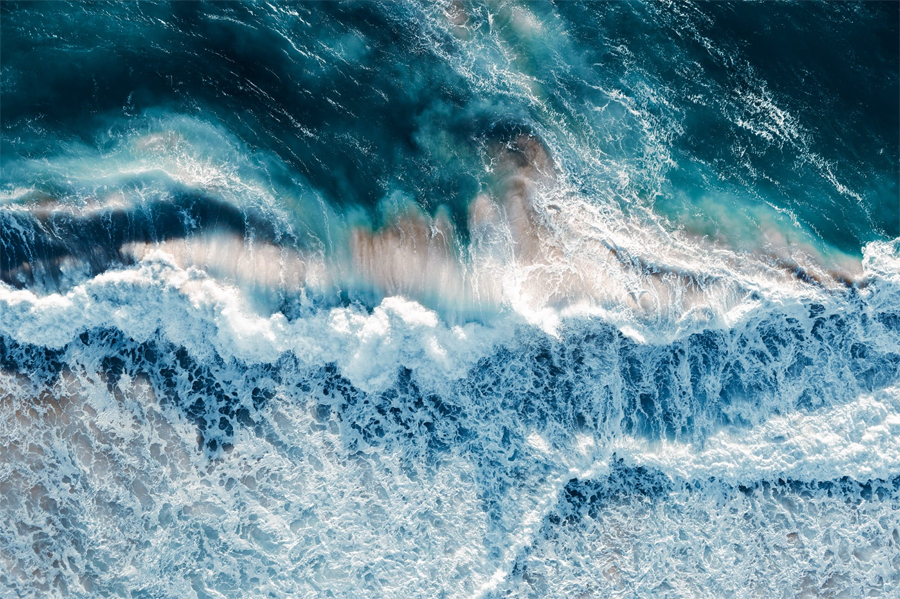
Every image begins with long preparation. Krautgartner studies wave forecasts, wind patterns, cloud coverage, and tide schedules before even leaving the ground. Swells generated thousands of kilometers away can take days to arrive in their final form. Local conditions then decide whether a wave peels cleanly or collapses into chaos. When the right combination appears – offshore wind, rising tide, steady sets – he takes to the air and waits for the coastline to present its strongest choreography. Even then, timing matters. Each burst is captured within seconds, and no two moments repeat themselves.
The resulting compositions serve two functions at once. On one level they document the physical processes of coastal dynamics. You can read how submerged sandbanks change the color of the water, how rip currents carve darker channels, how backwash disrupts the symmetry of a breaking set. On another level they function as distilled meditations on motion. The ocean becomes a drawing instrument, creating patterns that feel intentional despite emerging from pure physics.
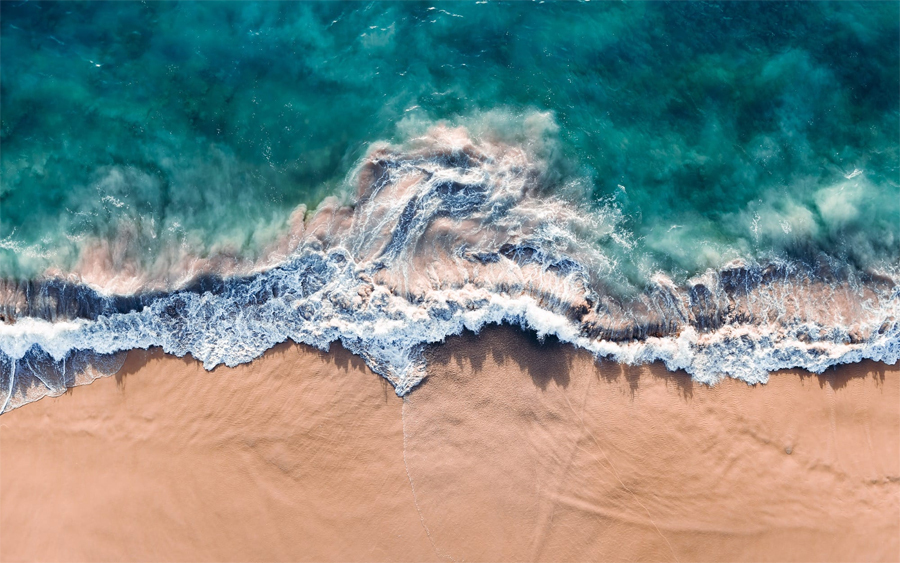
Krautgartner often speaks of waves as temporary expressions of energy – shapes sculpted by storms far offshore and revealed only when they reach shallow water. The idea that a wave carries the memory of its origin underpins this entire project. Each photograph freezes a single configuration of that energy at the instant it becomes visible, knowing it will never reappear in exactly the same way.
Western Australia amplifies this impermanence. Many of its beaches stretch for kilometers without human structures, surfboards, or boats. There are no visual anchors. Without them, the viewer must confront the ocean as an autonomous system. The removal of scale makes the waves feel larger, smaller, and more intimate all at once. The water becomes both familiar and alien, shifting between worlds with each frame.
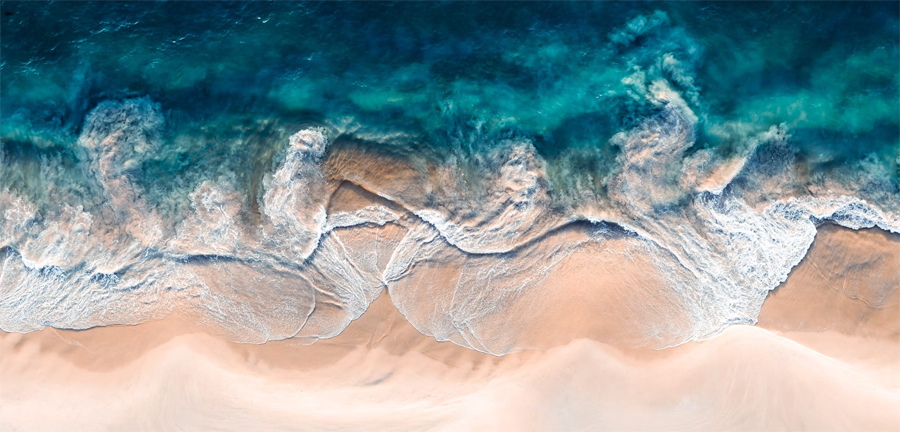
The new series also resonates with Krautgartner’s earlier explorations of water landscapes. His previous aerial studies of tidal flats and coastal formations revealed how the sea sculpts land over long periods. Waves | Ocean Forces zooms in on the very instant that this sculpting begins – the moment force meets resistance. It is a snapshot of change itself.
The photographs are currently featured in an exhibition in Hamburg, where large-format prints showcase the depth, clarity, and fine detail that define his aerial work. Mounted on minimal supports or framed behind glass, the images take on a physical presence that mirrors the expansiveness of the ocean scenes they capture. Another solo show is planned for 2026.
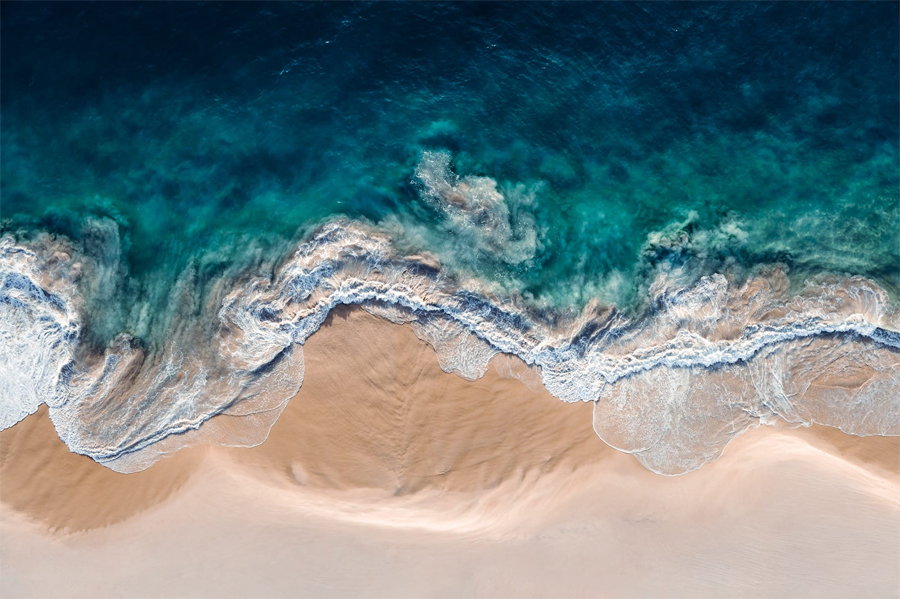
Beyond the gallery setting, Krautgartner continues to share this series across his online platforms, offering glimpses of the project’s evolution and the coastal environments that inspire it. Viewed digitally, the work becomes more immediate, yet the core purpose remains the same — an invitation to look closely at forces we usually take for granted.
Waves | Ocean Forces stands as a reminder that the ocean is not an object but a process, a continuous negotiation between wind, water, light, and land. Through Krautgartner’s lens, these negotiations become visible long enough to leave an impression, then disappear back into the endless motion that created them.