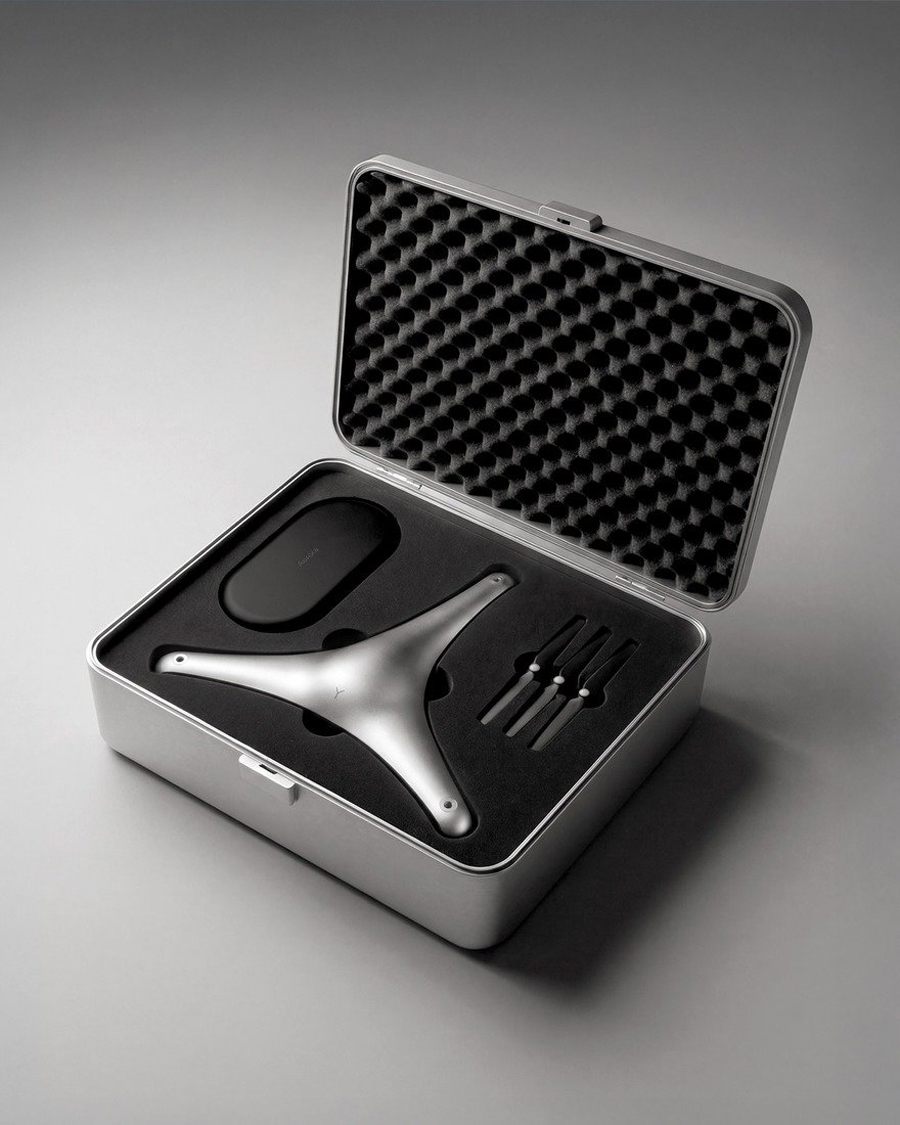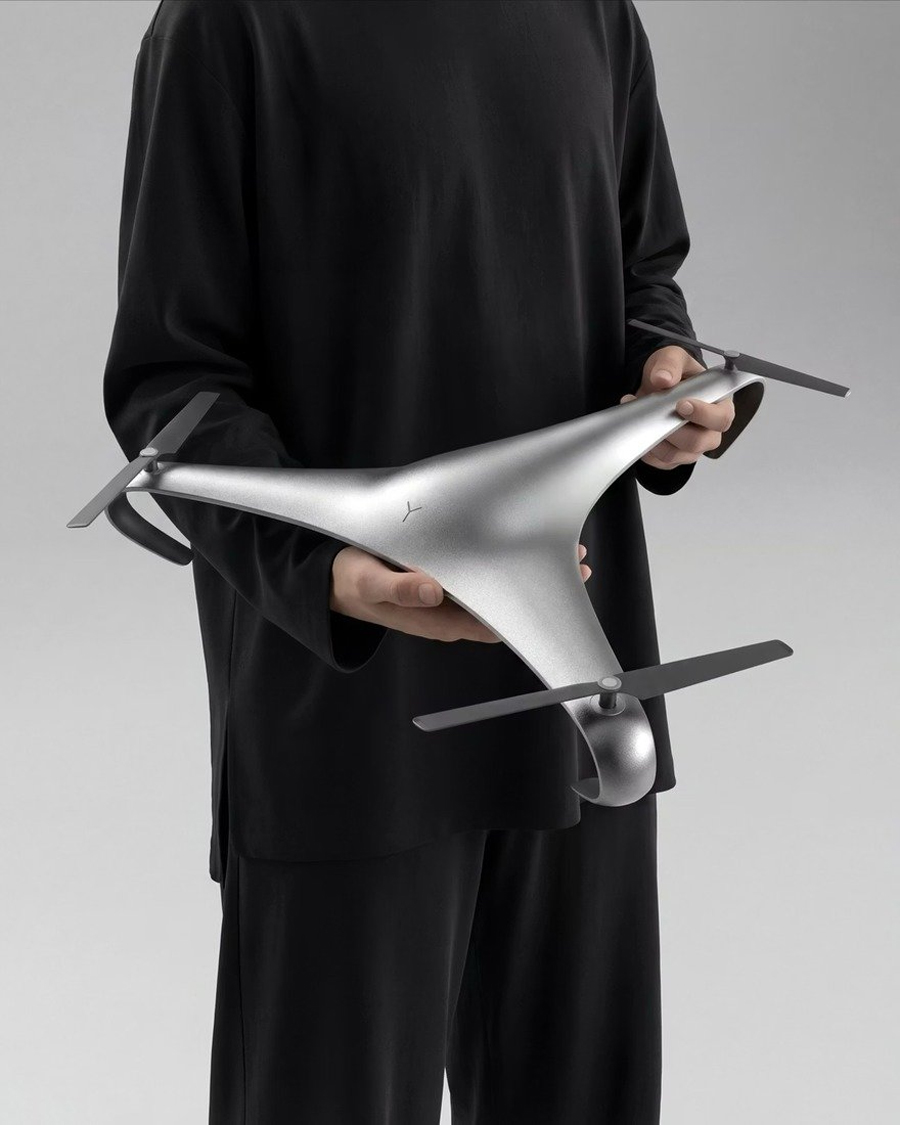
Most rotor-based drones are built with a single priority in mind. Function. Efficiency. Reliability. Visual design rarely enters the conversation. Yet a striking tri-rotor concept created by industrial designer Alberto Essesi suggests that unmanned aircraft can also be objects of deliberate aesthetic and aerodynamic refinement. The project, known as the Aurora Drone , presents a vision of what happens when engineering requirements and industrial design thinking are allowed to evolve together rather than separately.
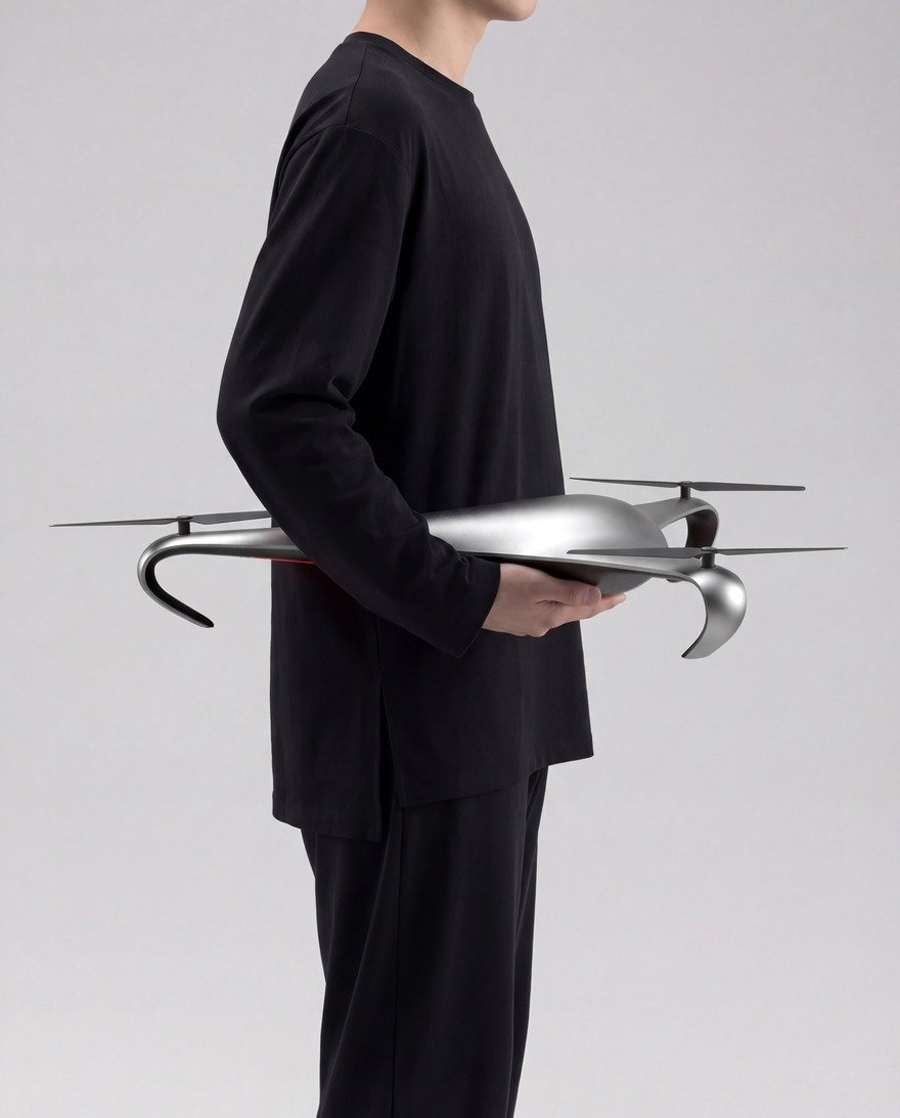
Essesi developed the Aurora for an unnamed aerospace client interested in pushing the boundaries of tri-rotor UAV architecture. The design brief focused on two primary goals: maximizing agility and delivering significant power within a compact aerial platform. Tri-rotor drones are less common than quadcopters or hexacopters, largely because balancing thrust, torque, and stability across three rotors introduces additional control challenges. The Aurora concept embraces this complexity rather than avoiding it. The result is a highly sculpted airframe with flowing surfaces and integrated rotor mounts. Instead of appearing as a collection of mechanical components, the drone reads almost like a single aerodynamic body shaped by airflow.
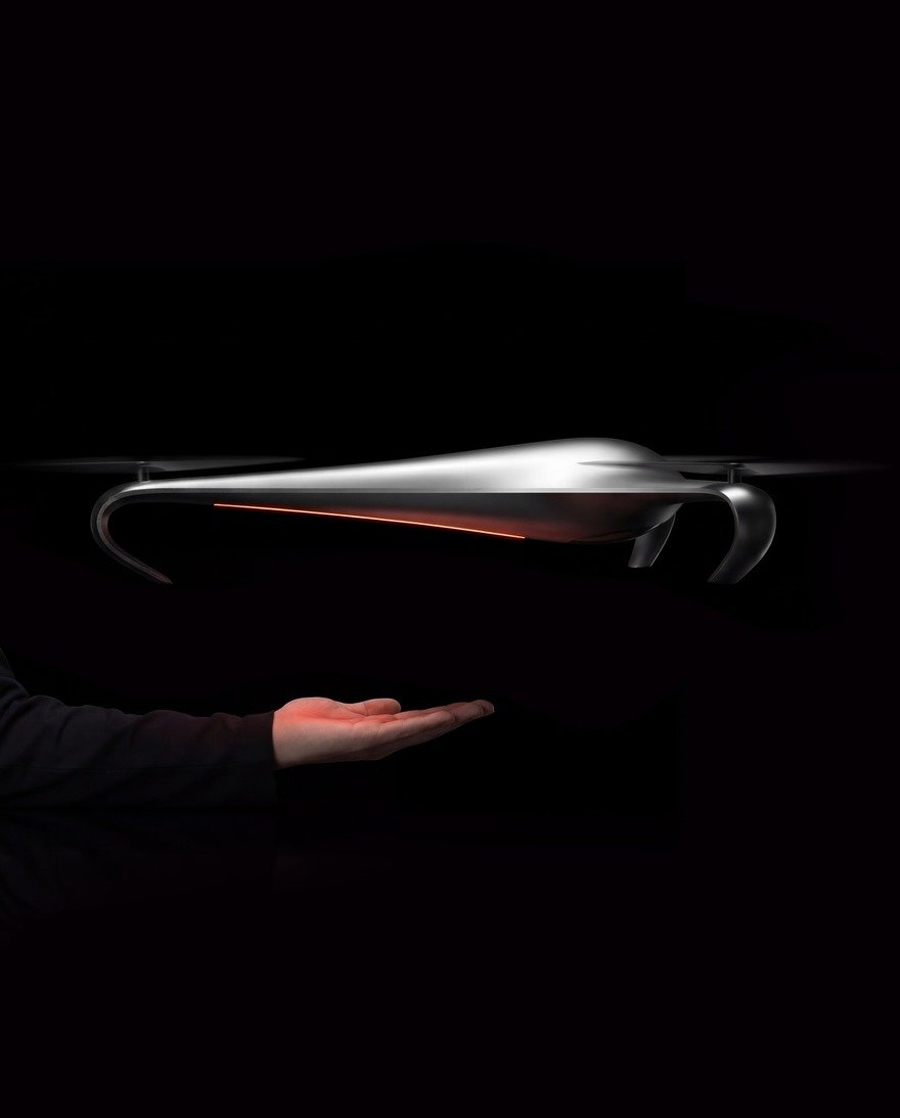
The most distinctive feature of the Aurora design is its organic, aerodynamic profile. Essesi shaped the drone to reduce drag and enhance lift, allowing it to move efficiently through the air while maintaining the vertical stability needed for hovering. This design philosophy reflects an approach more commonly seen in high-performance aircraft and racing vehicles. Smooth surface transitions guide airflow across the body, reducing turbulence and improving overall flight efficiency. The drone is intended to operate in two distinct modes. In forward motion it glides with minimal resistance, using its streamlined form to maintain momentum. In stationary or low-speed flight it behaves more like a helicopter, relying on rotor thrust for precise hovering and maneuvering. Such versatility would allow a drone like Aurora to perform complex movements in confined or dynamic environments.
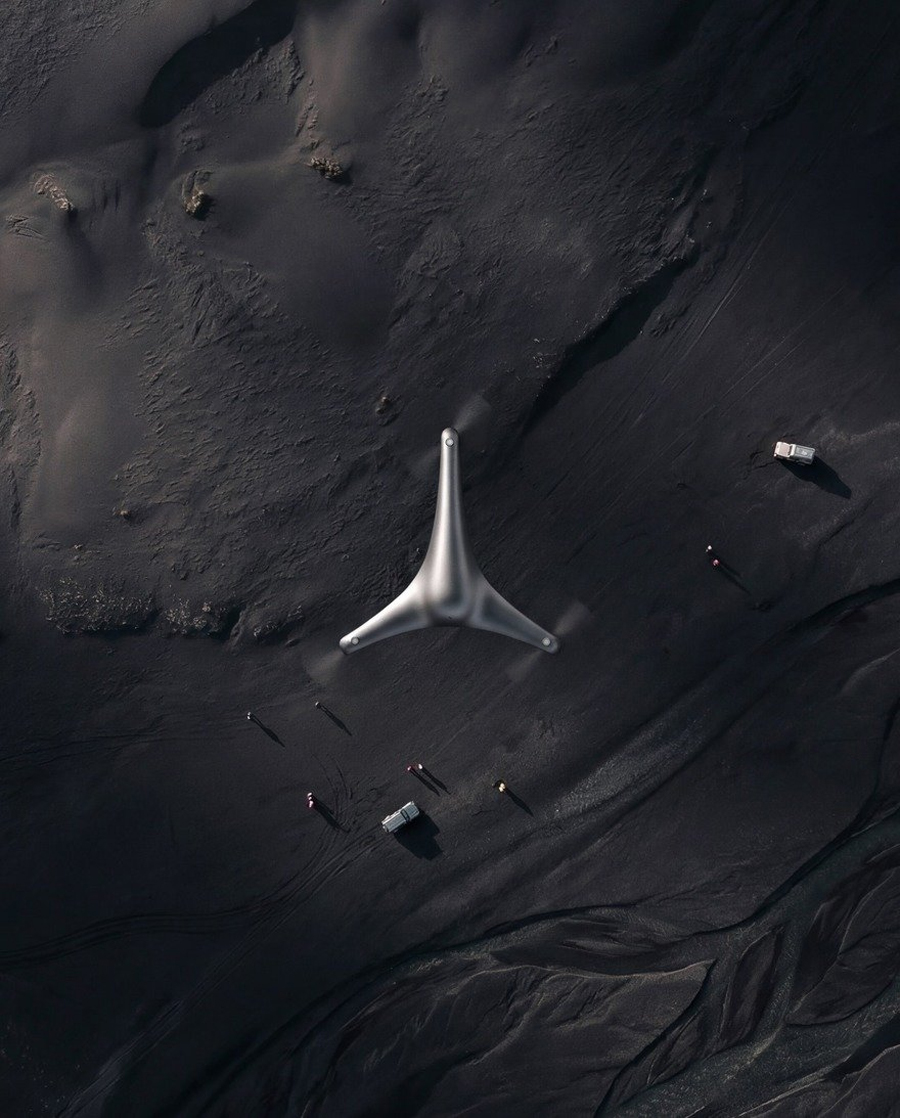
Material selection also plays a crucial role in the concept. The Aurora drone is envisioned using lightweight composites such as carbon fiber alongside aluminum and engineered plastics. These materials offer a balance between structural rigidity and weight reduction, both essential for high-performance UAV platforms. The rotor configuration is designed to deliver rapid response times and high maneuverability. Quick adjustments in thrust could allow the drone to react instantly to changing flight conditions, a valuable trait for missions that require precision navigation or sudden directional changes. This combination of lightweight construction and responsive propulsion could make the drone suitable for demanding operational scenarios, including inspection work, search-and-rescue support, or specialized reconnaissance tasks.
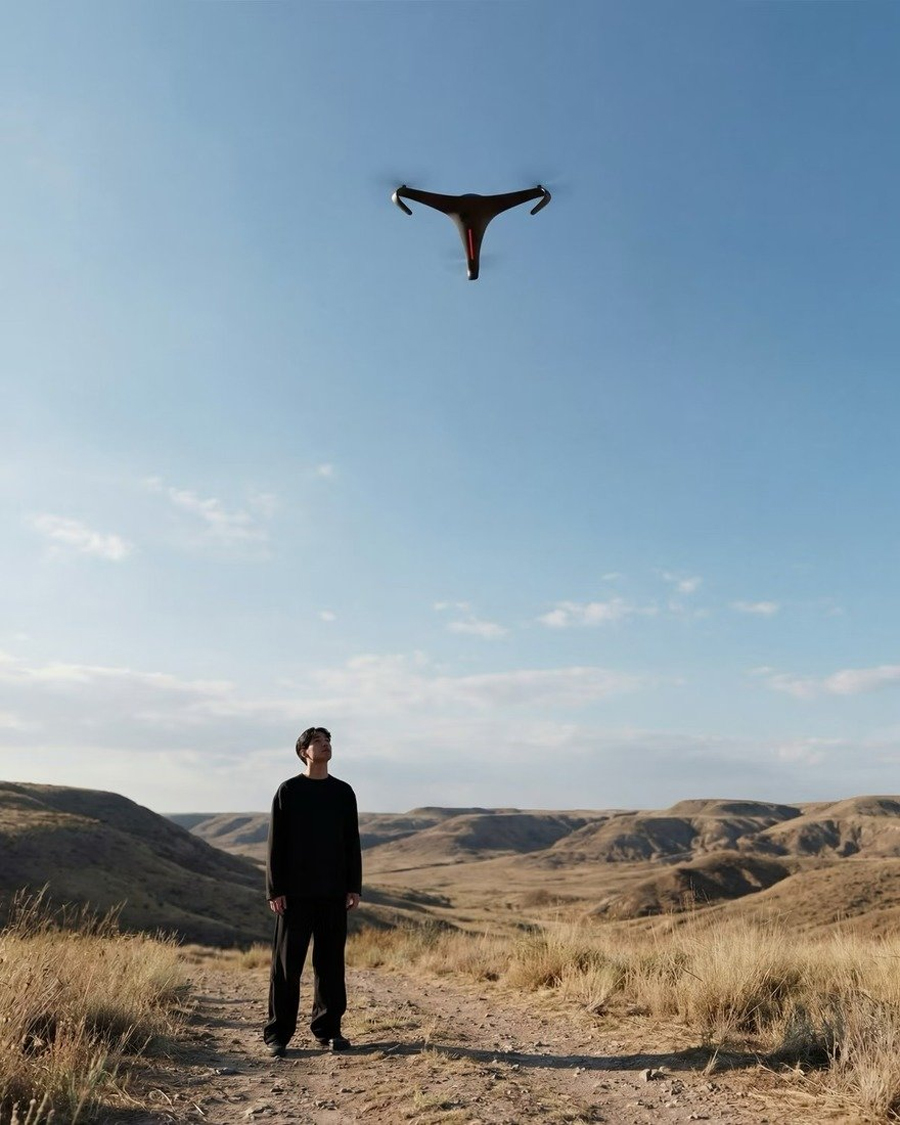
In Essesi’s portfolio the project is simply labeled Aurora Drone , which has led some observers to speculate that the client might be Aurora Flight Sciences , a company known for developing advanced unmanned aircraft systems. Aurora Flight Sciences operates as part of Boeing and has produced several experimental UAV platforms focused on autonomy and advanced flight concepts. However, no official confirmation connects the design to that organization. The similarity in name may be coincidence, and the identity of the aerospace client remains undisclosed. What makes the Aurora concept noteworthy is not just its unusual tri-rotor layout. The project demonstrates how industrial design can influence technologies that are typically dominated by engineering constraints. By treating the drone as both a machine and a designed object, Essesi highlights the possibility of UAVs that perform efficiently while also embodying intentional form.
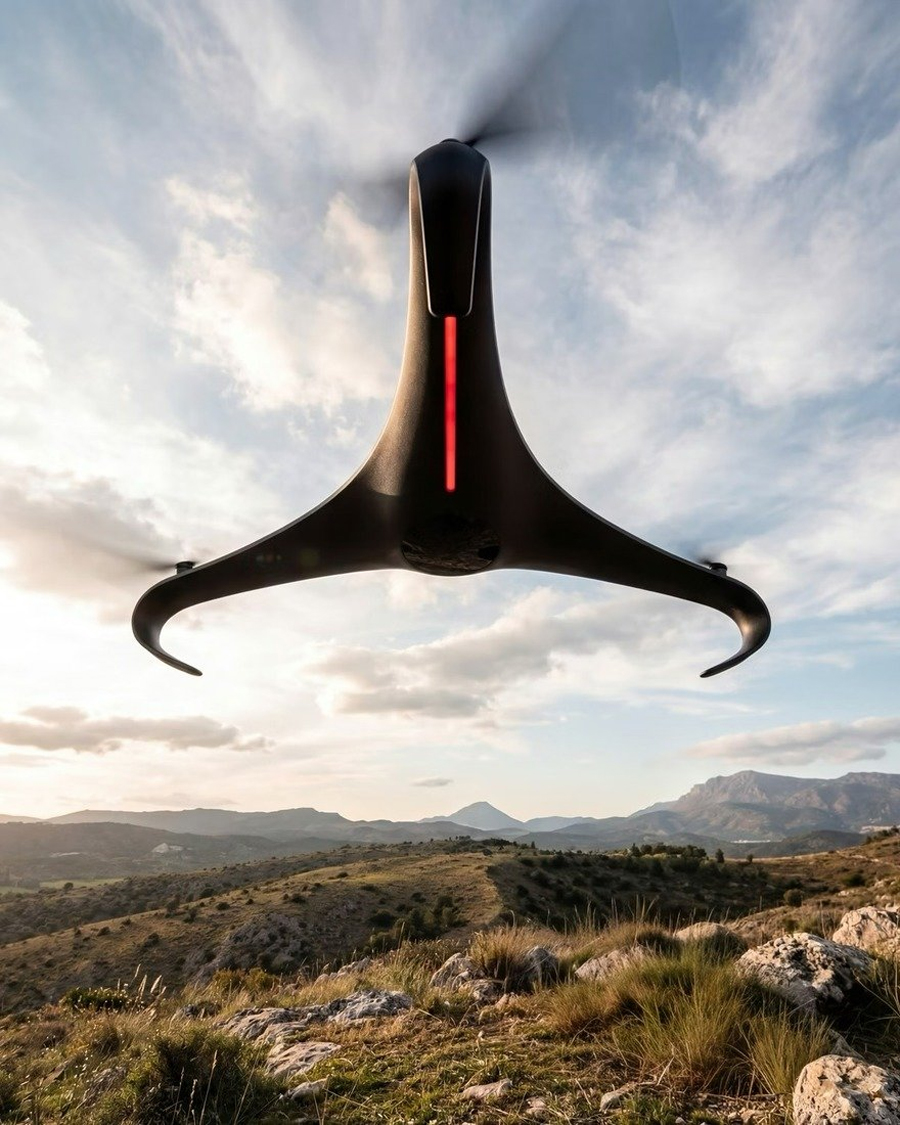
As drones continue to expand into commercial, scientific, and urban environments, the integration of design thinking may become increasingly important. Aerodynamics, materials, user interaction, and visual identity will all play roles in shaping the next generation of unmanned aircraft.
The Aurora drone offers a glimpse of what that future might look like. A UAV that is not only engineered to fly well but also designed to look like it belongs in the air.