L’Epée 1839 has always approached time differently. Where much of modern horology focuses on miniaturization and technical density, this Swiss manufacture has spent nearly two centuries treating time as a physical presence. An object first, a measurement second. Founded in 1839 and celebrated early on for its carriage clocks, the brand gradually moved toward large-scale mechanical creations that sit somewhere between horology, sculpture, and architecture.
That mindset pushed L’Epée beyond the boundaries of conventional clockmaking. Over the years, collaborations with names such as MB&F, Tiffany & Co., and Louis Vuitton confirmed a clear pattern. The brand thrives when mechanics, design, and spatial impact are given equal importance. These are not clocks designed to disappear into interiors. They are meant to anchor a room.
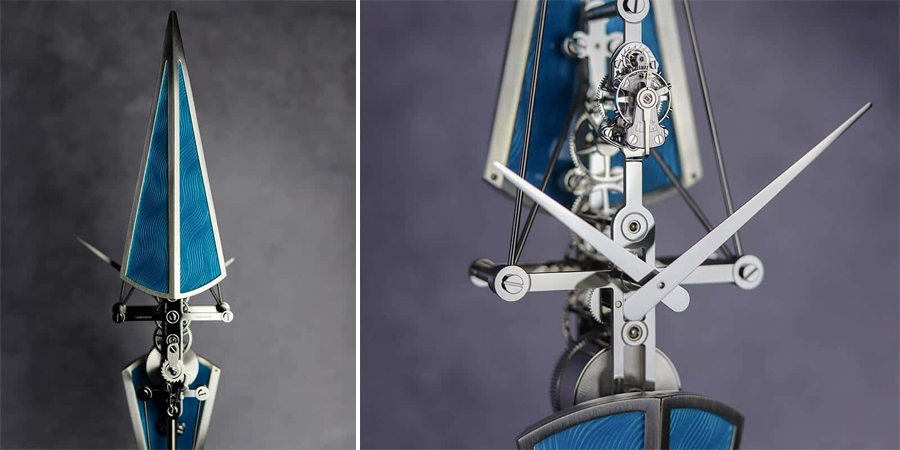
La Regatta Métiers d’Art continues that philosophy with quiet confidence. It also arrives at a meaningful moment, following L’Epée’s acquisition by LVMH. Such transitions often signal shifts in direction, yet here the emphasis remains firmly on proportion, craft, and restraint. Nothing feels diluted or rushed. The piece reflects continuity rather than reinvention.
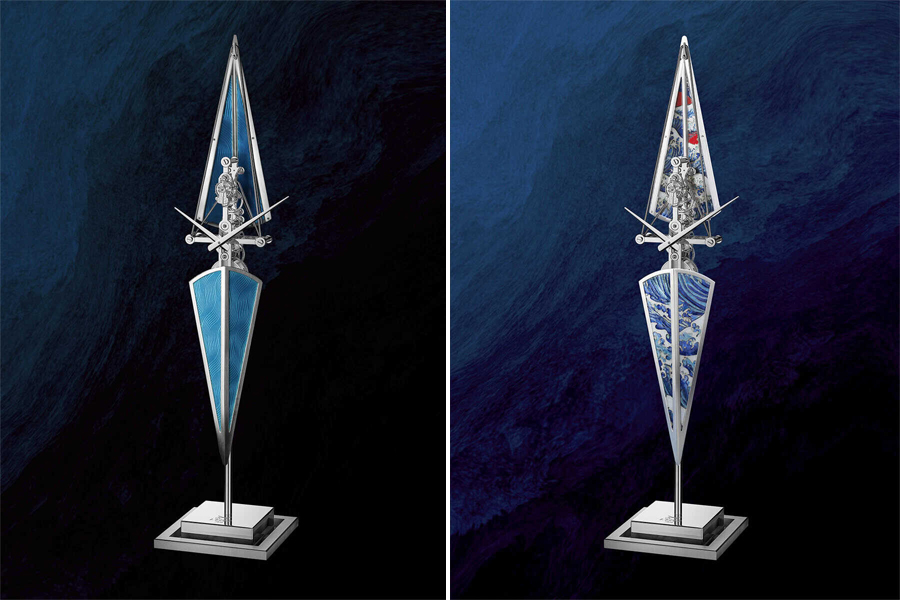
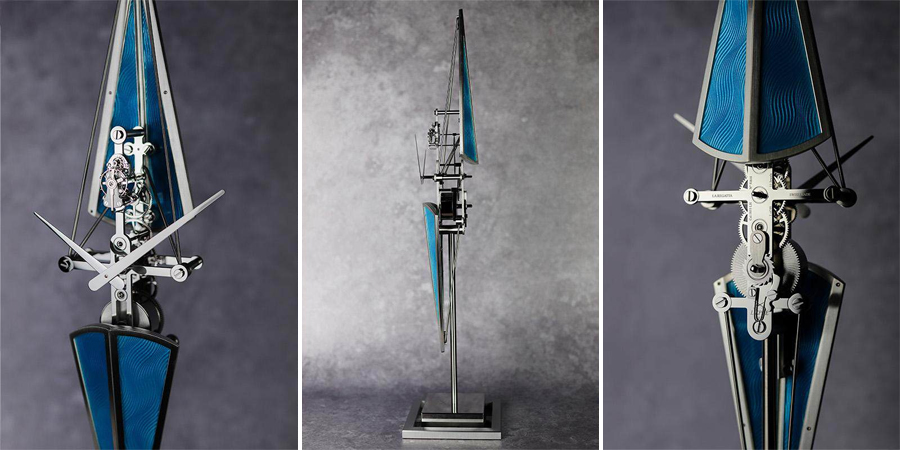
La Regatta itself is a vertical table clock standing 518 millimeters tall on a compact square base. Its form takes inspiration from a racing skiff, translated into a long, narrow silhouette that feels athletic and composed. The design leans more architectural than ornamental. In a space, it reads immediately as a sculptural object, but the time display remains clear and central, never treated as an afterthought.
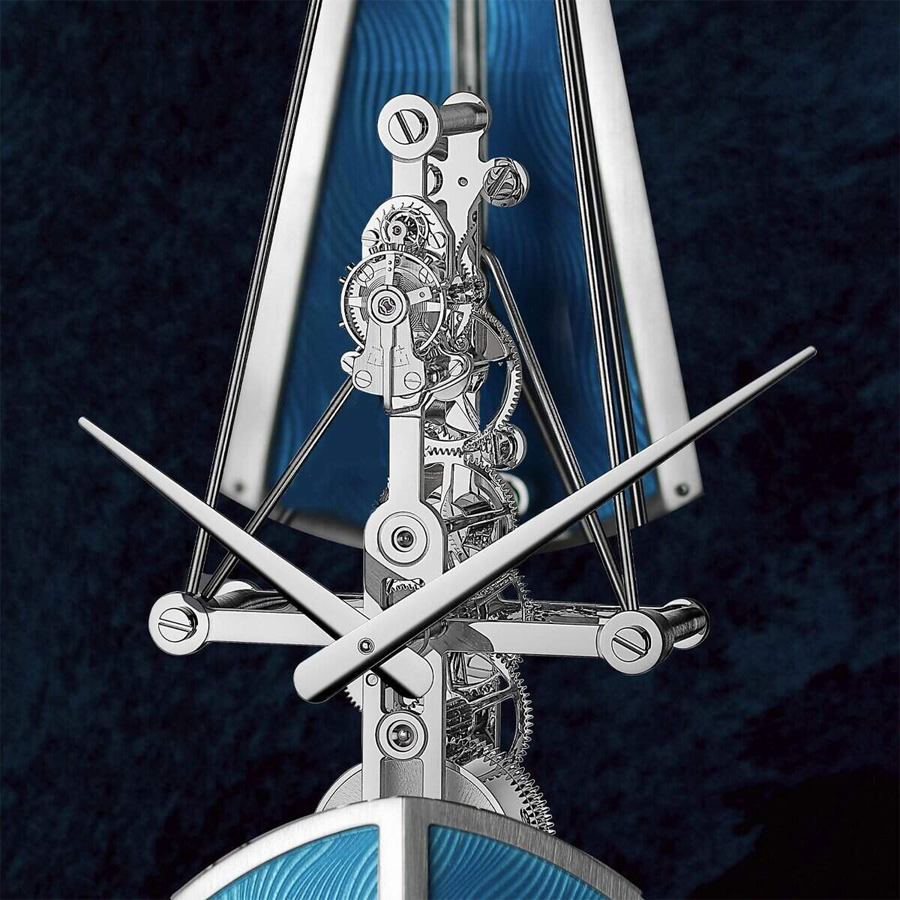
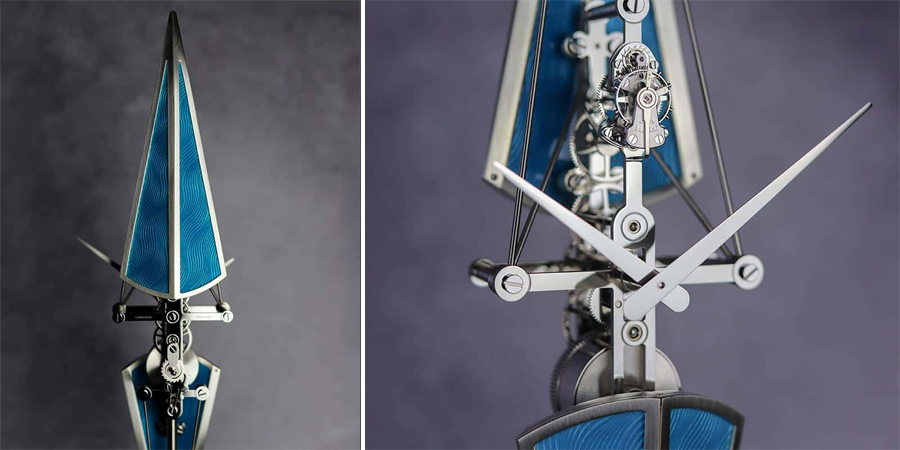
The vertical layout allows the movement to extend through the entire height of the case. The gear train runs straight upward, naturally guiding the eye along the structure. Barrel and escapement sit at opposite ends, creating a visual balance that feels intuitive once noticed. Rather than forcing a movement into a shape, the form appears to grow organically around the mechanics.
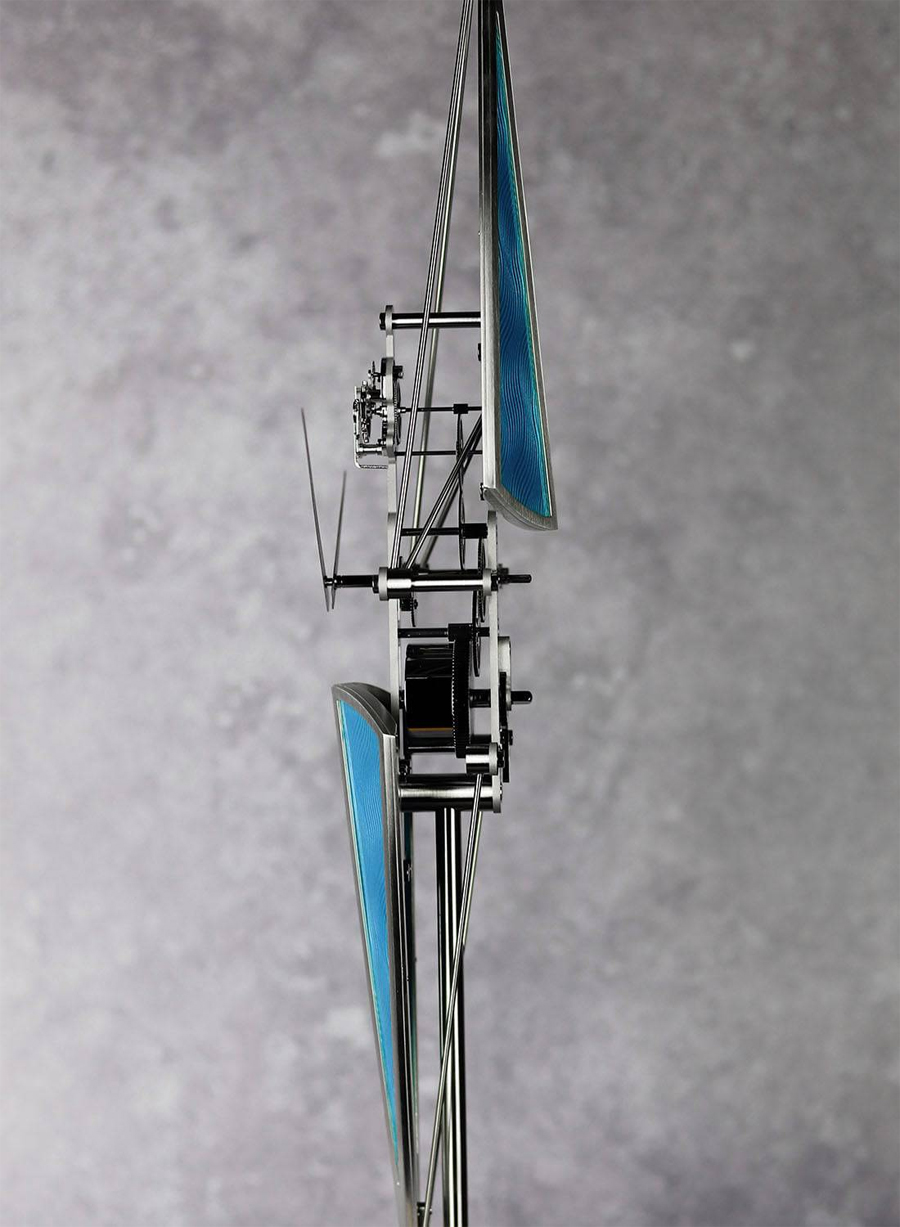
Powering the clock is L’Epée’s in-house manually wound calibre, operating at 18,000 vibrations per hour with an eight-day power reserve. The construction is intentionally straightforward, using palladium-plated brass, polished steel components, and Incabloc shock protection. Winding becomes a weekly ritual rather than a daily task, which suits both the scale and the calm authority of the object.
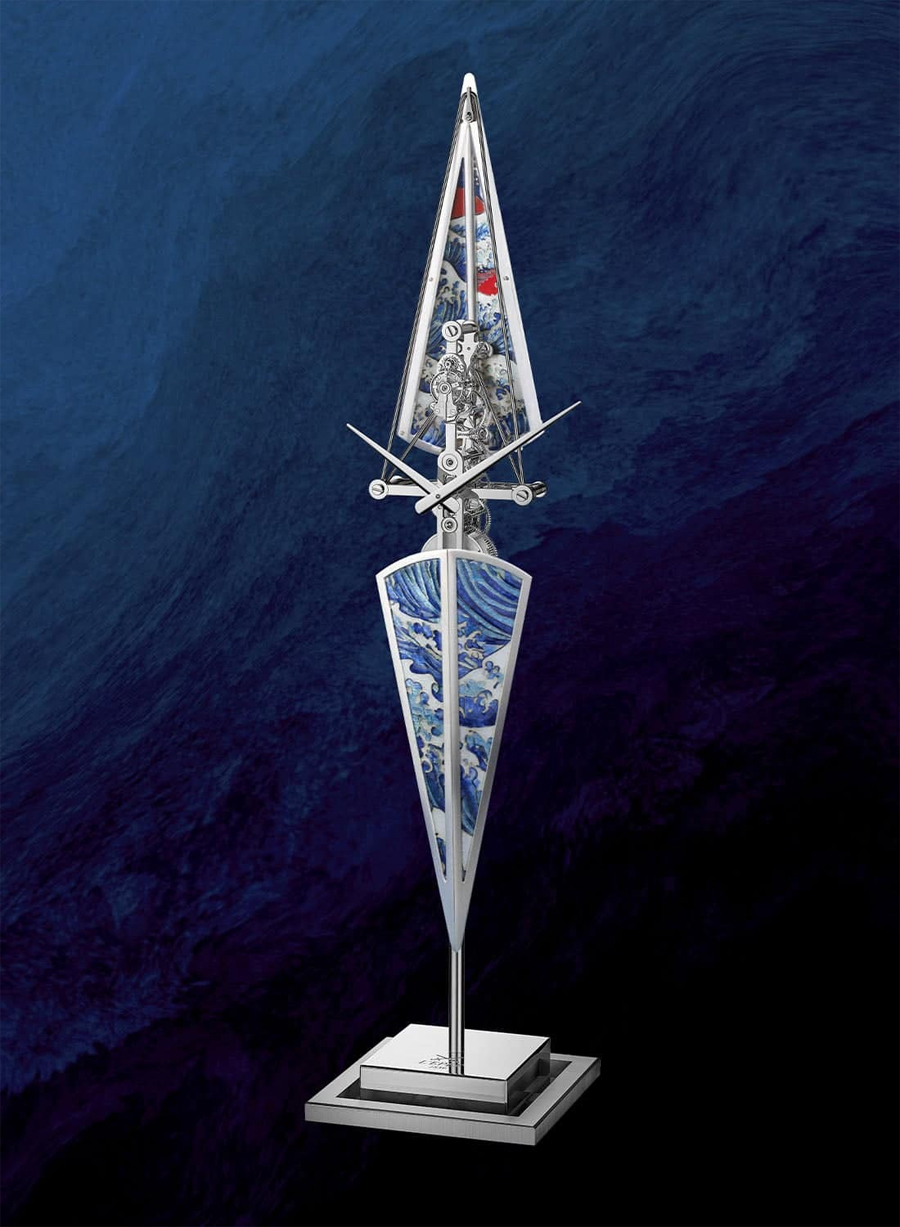
The Métiers d’Art execution shifts attention to the surface without overwhelming the structure. For the enamelled hull, L’Epée collaborated with David Kakabadze Enamel in Georgia, a workshop known for its mastery of Grand Feu techniques. Each hull undergoes multiple firings, with results shaped as much by experience and judgment as by process. Colors settle unpredictably. Edges evolve subtly. Variation is not a flaw here, but the defining character.
Three distinct interpretations form the collection. La Regatta Umi draws inspiration from Japanese wave imagery, with flowing enamel patterns that feel dynamic and slightly untamed. Blue Horizon takes a quieter route, combining deep blue flinqué enamel with a guilloché base that reveals itself gradually as light moves across the surface. Prism pushes in a more contemporary direction, using plique-à-jour enamel to create translucent geometric structures that recall suspended stained glass. It is also the most technically demanding of the three.

Each version relies on a different enameling approach, including cloisonné with gold wires and paillons using silver leaf. These techniques define the emotional tone of each piece, while the surrounding architecture remains deliberately restrained. Palladium-plated brass, stainless steel, and aluminum form the case, finished through a controlled mix of polishing, satin brushing, and sandblasting. The contrast keeps the focus where it belongs.
La Regatta Métiers d’Art occupies a narrow but intentional space in the world of high-end horology. It assumes familiarity with mechanical objects and an appreciation for scale. This is a piece that resonates once smaller statements no longer feel sufficient. Each clock is produced as a one-of-one, with additional customization available through commission, and pricing reflects that reality.
Within the broader trajectory of L’Epée 1839, La Regatta Métiers d’Art feels entirely natural. It reinforces the brand’s long-standing belief that time deserves space, weight, and patience. For collectors drawn to objects with lasting presence rather than fleeting novelty, this clock lands exactly where it should.