The phone on the nightstand is one of those design failures that nobody in the consumer electronics industry seems especially motivated to fix. It wakes you with a jolt. It glows through the night. And the first thing it offers each morning is not the time but a backlog of notifications demanding your attention before you have even sat up. The bedside clock was supposed to be the simple alternative, but most clocks traded the problem of distraction for the problem of mediocrity – a cheap plastic rectangle with red LED numerals that solved nothing and added nothing.
Balmuda has been thinking about this problem for longer than most. The Tokyo-based company has built a reputation on making ordinary household objects – toasters, fans, humidifiers – into things that reward attention. Its founder, Gen Terao, is not a trained designer. He dropped out of school, pursued music, and eventually taught himself product design before launching Balmuda in 2003. What he builds tends to start from personal frustration rather than market research, and The Clock is no exception.
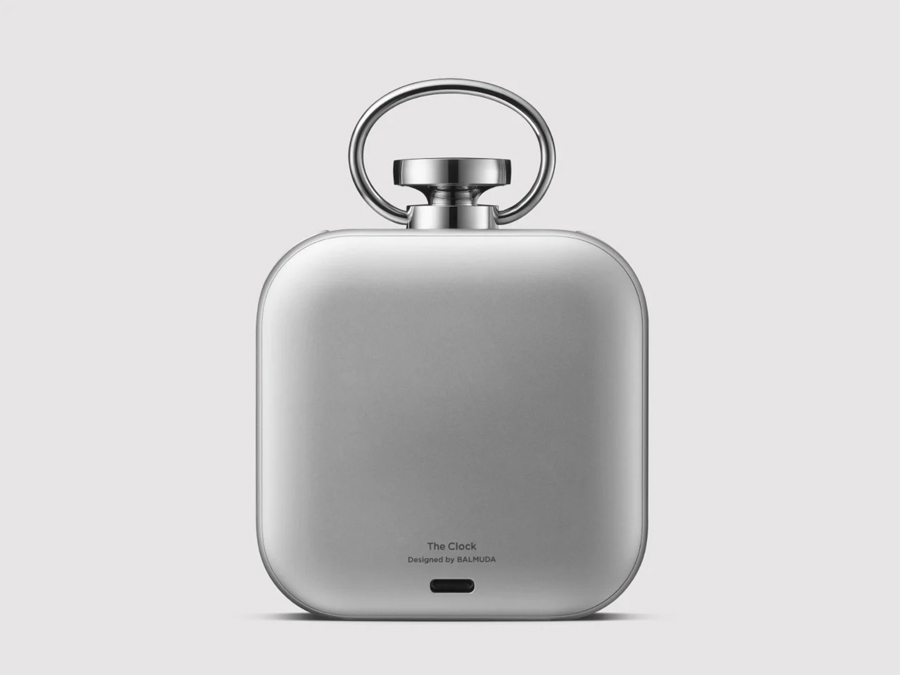
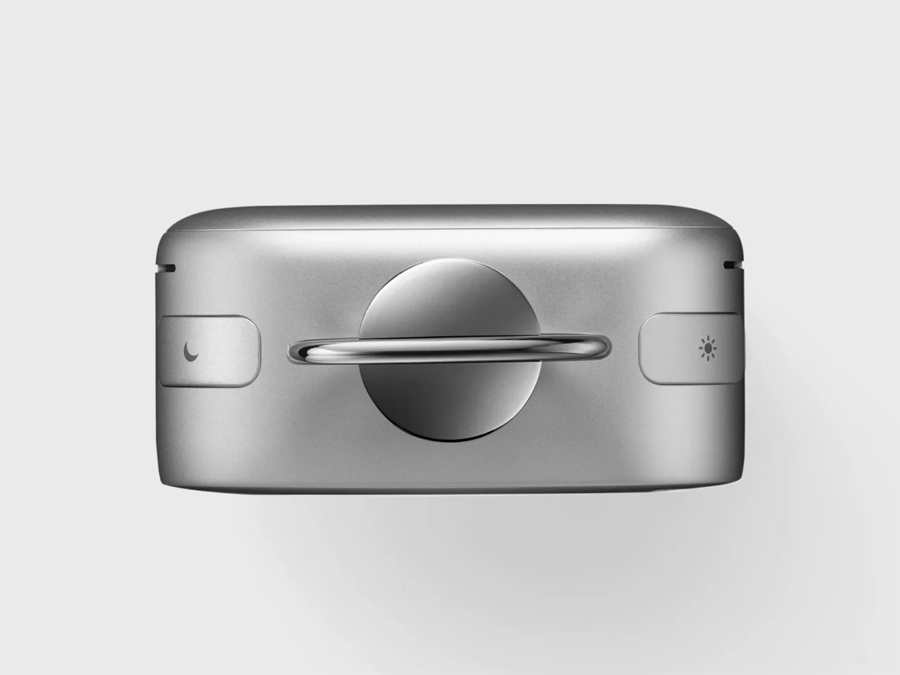
Terao had been playing rain sounds on a tablet at night to help him sleep, then lying awake bothered by the screen’s glow from the bedside. The Clock is the object-form answer to that exact problem. It is not a smart device, not a wellness app, and not another screen to look at. It is a dedicated bedside companion designed to handle waking, focusing, and resting without once asking you to reach for your phone.
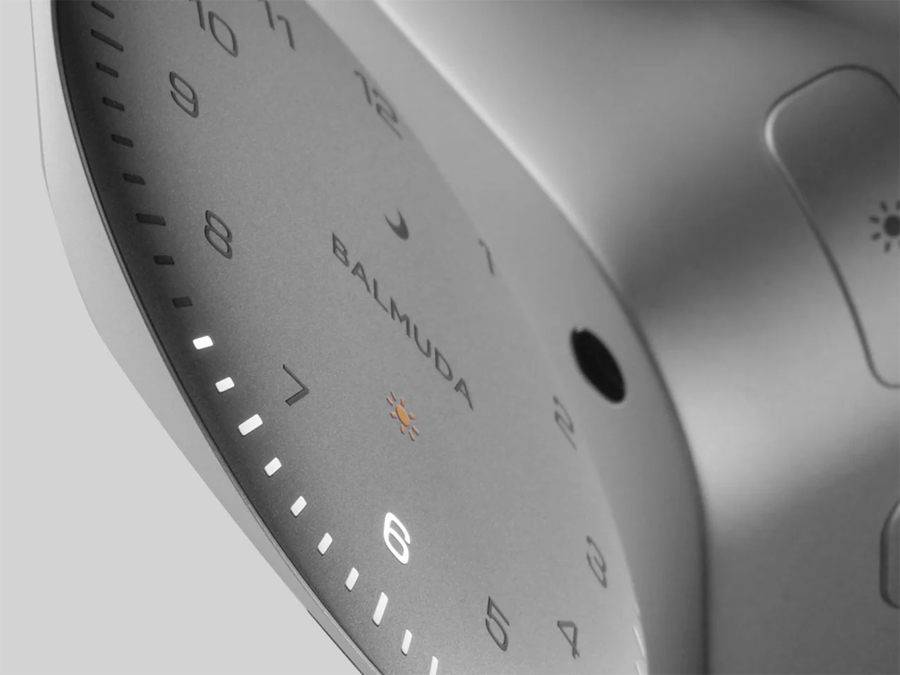
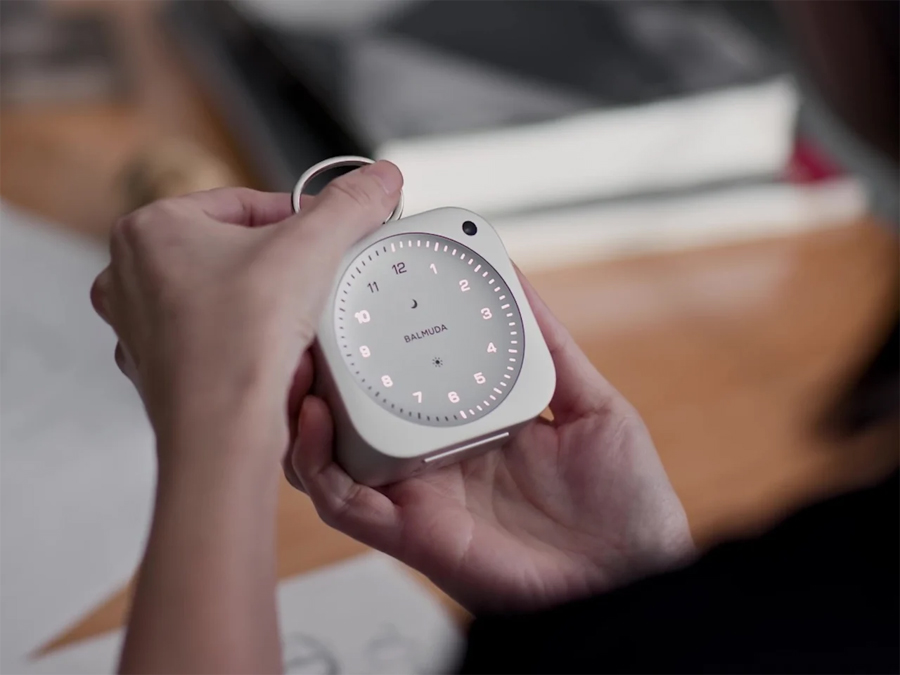
To get there, Balmuda brought in LoveFrom, the independent design firm founded by Jony Ive after he left Apple in 2019. The collaboration had already produced the Sailing Lantern – a limited edition of 1,000 units at $4,800, designed around Ive’s personal frustration with available lighting on his yacht. The Clock is a less theatrical object, which in some ways makes the design challenge harder. A lantern can afford to be dramatic. A clock that lives on a nightstand has to earn its place through daily use rather than occasional occasion.
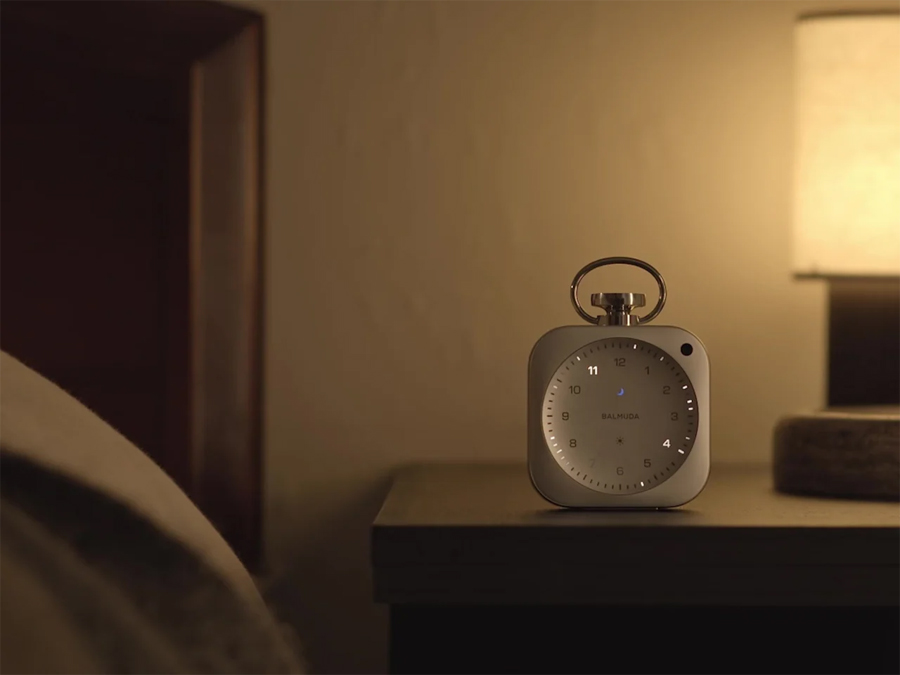
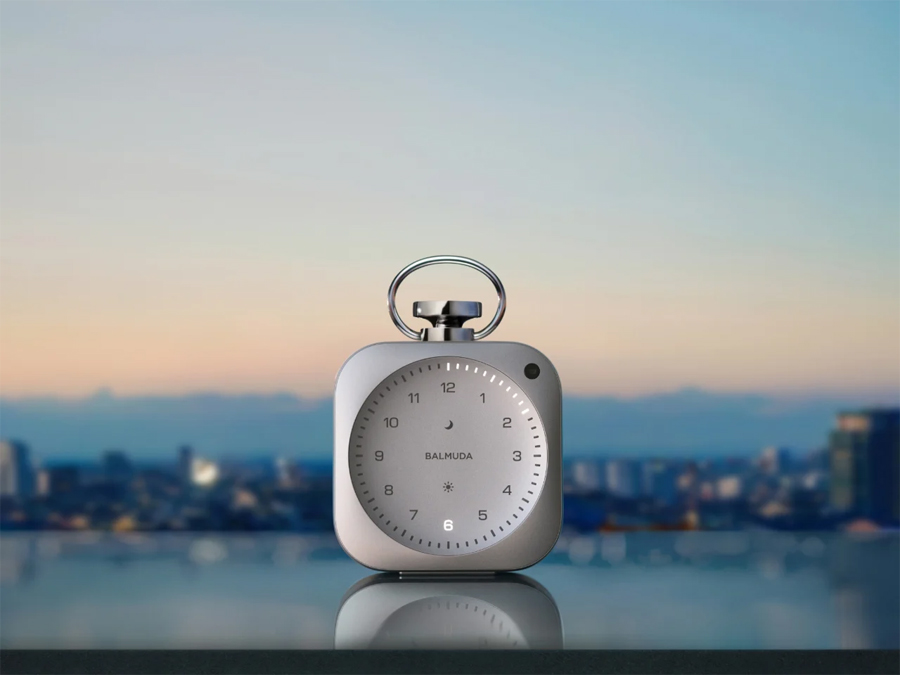
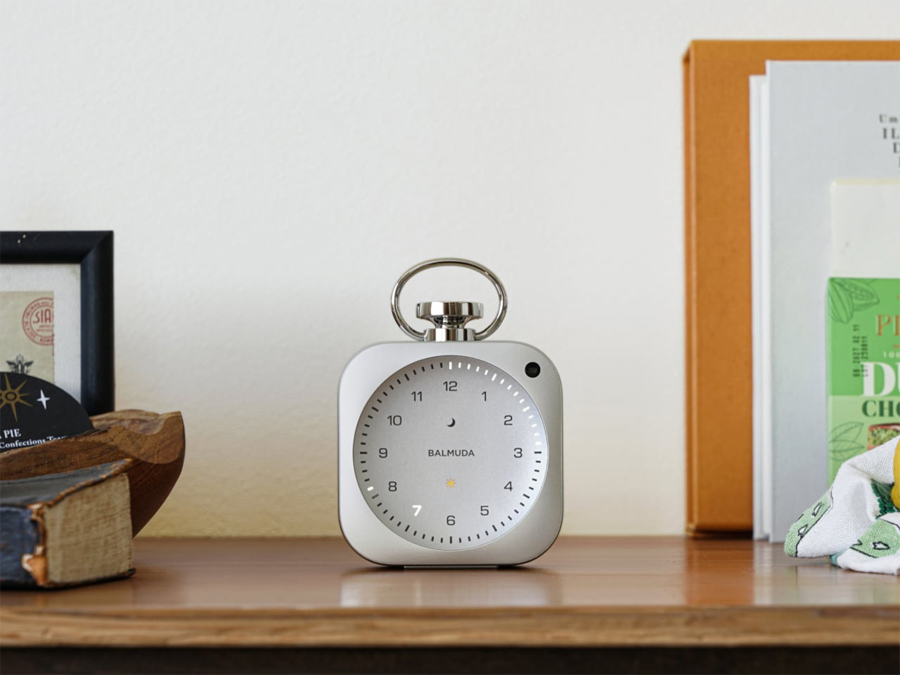
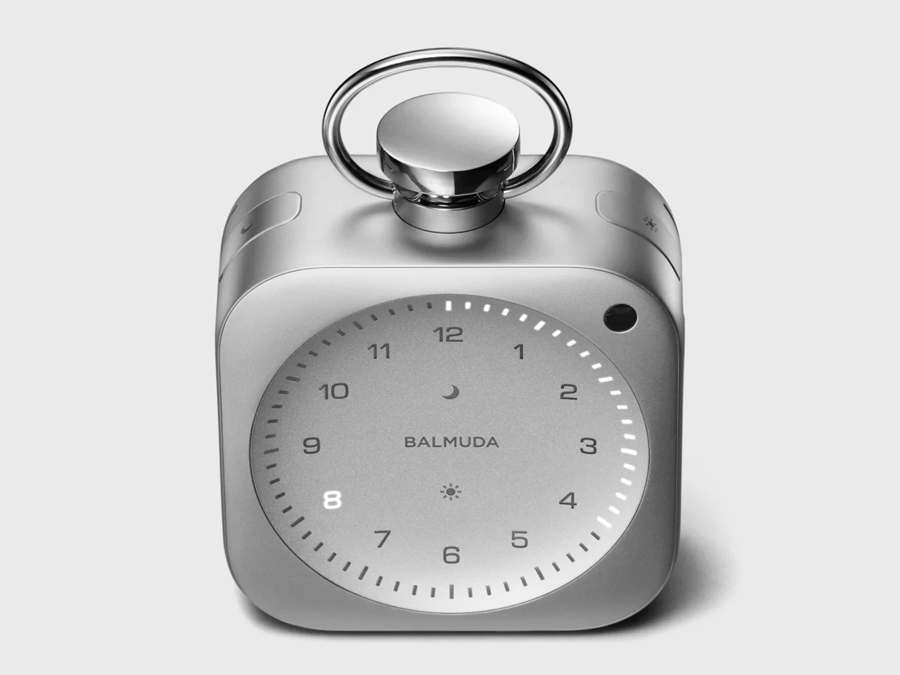
The visual result is a 75mm square aluminium body machined from a solid block, finished to a quality that the specifications alone do not prepare you for. The shape draws from the classic pocket watch rather than the conventional desk clock, giving it a density and completeness that mass-produced alternatives cannot replicate. Reaching that finish required access to aluminium processing vendors that Balmuda did not have independently – the collaboration with LoveFrom opened those doors, and the difference is apparent in the object itself.
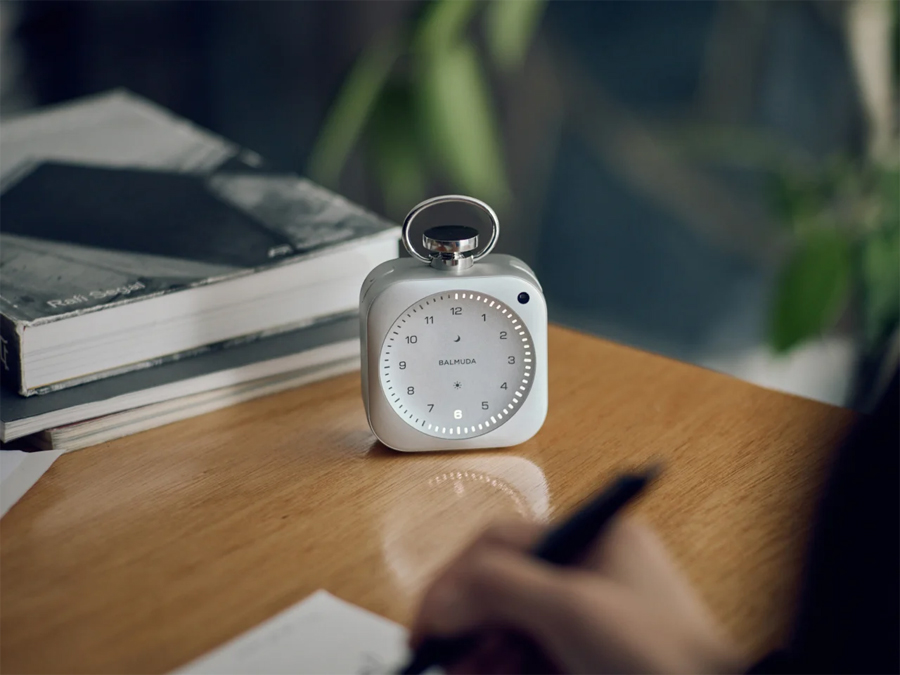
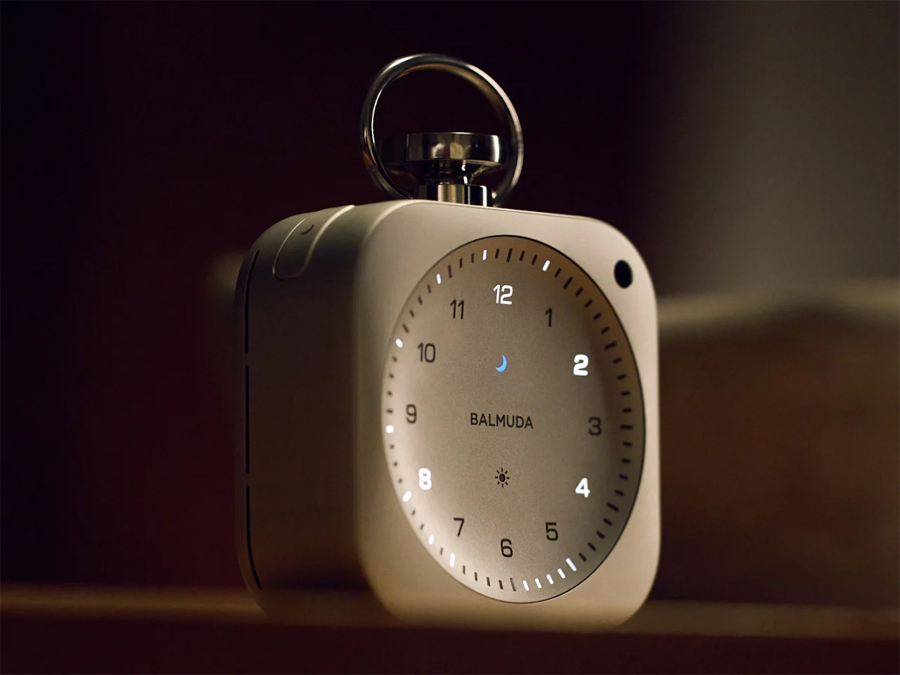
The dial carries no hands. Balmuda’s Light Hour system expresses time through illumination alone – the corresponding hour digit lights up, and LEDs behind lines on the outer edge denote the minutes. The second hand movement is slow and pendulum-like, and that quality was not accidental. The design team visited the Foucault pendulum at Japan’s National Museum of Nature and Science specifically to study the movement before settling on the animation. That level of reference work for a detail most people will never consciously notice is either excessive or exactly right, depending on how you feel about craft.
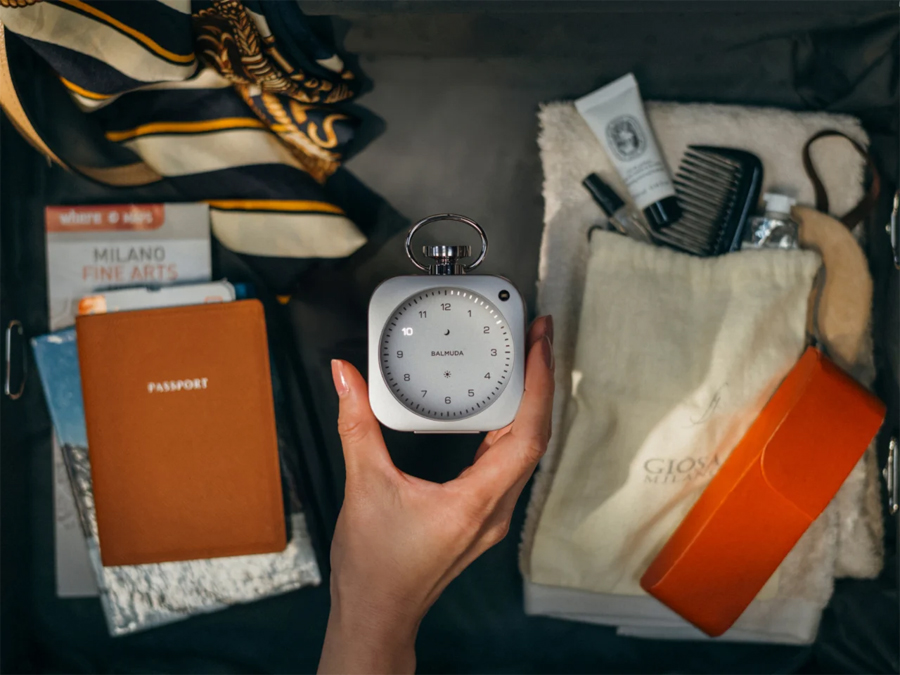
Three operational modes govern the day from the same pocket-sized object. Relax Time plays seven original ambient tracks – rainfall, river sounds, a fireplace, crickets – produced by an in-house sound team working with outside musicians. The focus timer layers white noise over a countdown running from one minute to sixty. The alarm builds volume gradually over three minutes before it fully sounds, a considered alternative to the binary silence-then-noise of a standard alarm that turns out to make a significant difference to how a morning begins. All three modes are controlled through the Balmuda Connect app over Wi-Fi and Bluetooth 5.0, with options for multiple alarms, dial brightness, and a second time zone for travel.

At 259 grams with a cloth carrying bag included and USB-C charging that restores a full 24-hour battery in approximately 2.5 hours, the Clock is portable without making portability its reason for existing. It launches in Japan in mid-April, priced at ¥59,400 – approximately $373 – with no confirmed date for other markets.
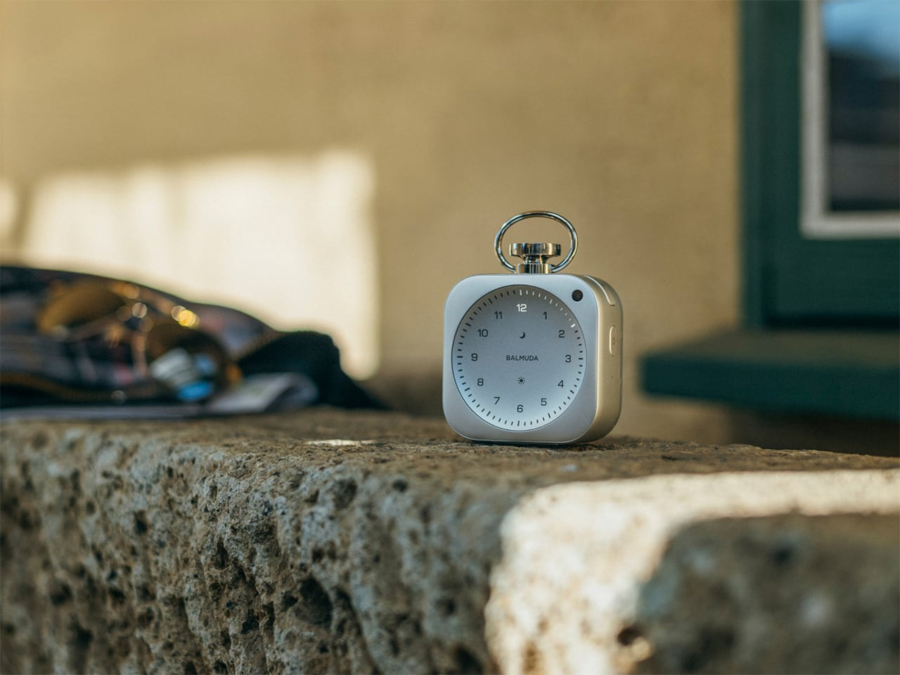
That price will prompt the obvious question, and the obvious question deserves a direct answer. A clock that costs $373 is not competing with the clock on your phone. It is competing with the phone itself – with the habit of leaving a glowing, notification-generating social device on the surface closest to where you sleep. Understood in those terms, the value proposition looks considerably more reasonable. The object is asking to be taken seriously as a piece of considered design, and the manufacturing pedigree and the referencing process and the LoveFrom collaboration all give that ask some grounding.
Balmuda has never really made anything ordinary. The Clock fits that tradition. The more interesting question is whether enough people have decided they are tired enough of their phones to want something better in their place.