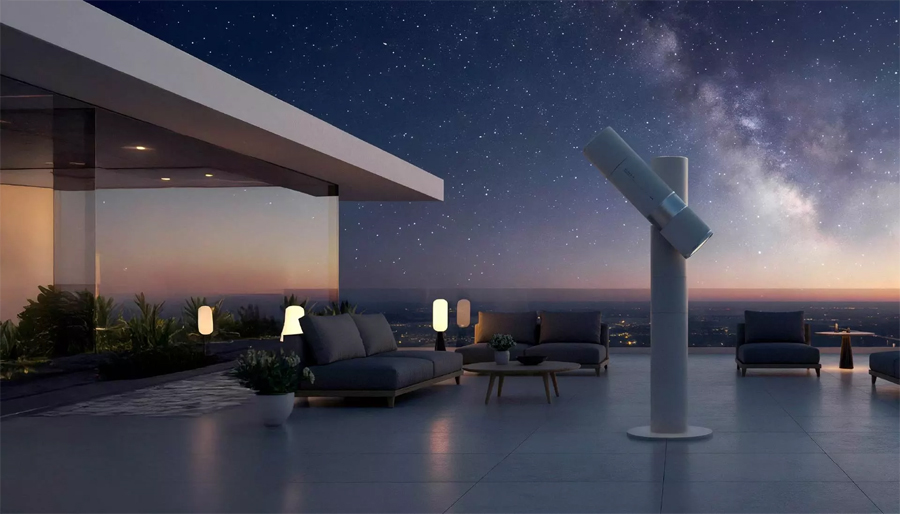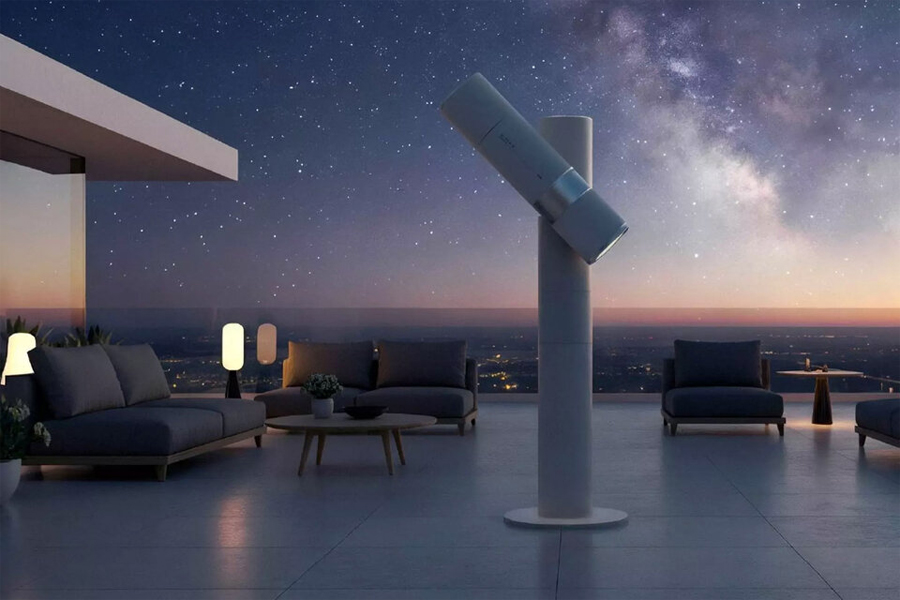
Created as a one-off digital observatory for the Palais de la Découverte in Paris, the Vaonis Hyperia represents the most ambitious project ever undertaken by the French smart telescope brand. Rather than aiming at the consumer market, Hyperia was conceived as a large-scale scientific and educational instrument, designed to bring live astronomy into museums, planetariums, classrooms, and public spaces in a way that feels immersive, precise, and technologically seamless.
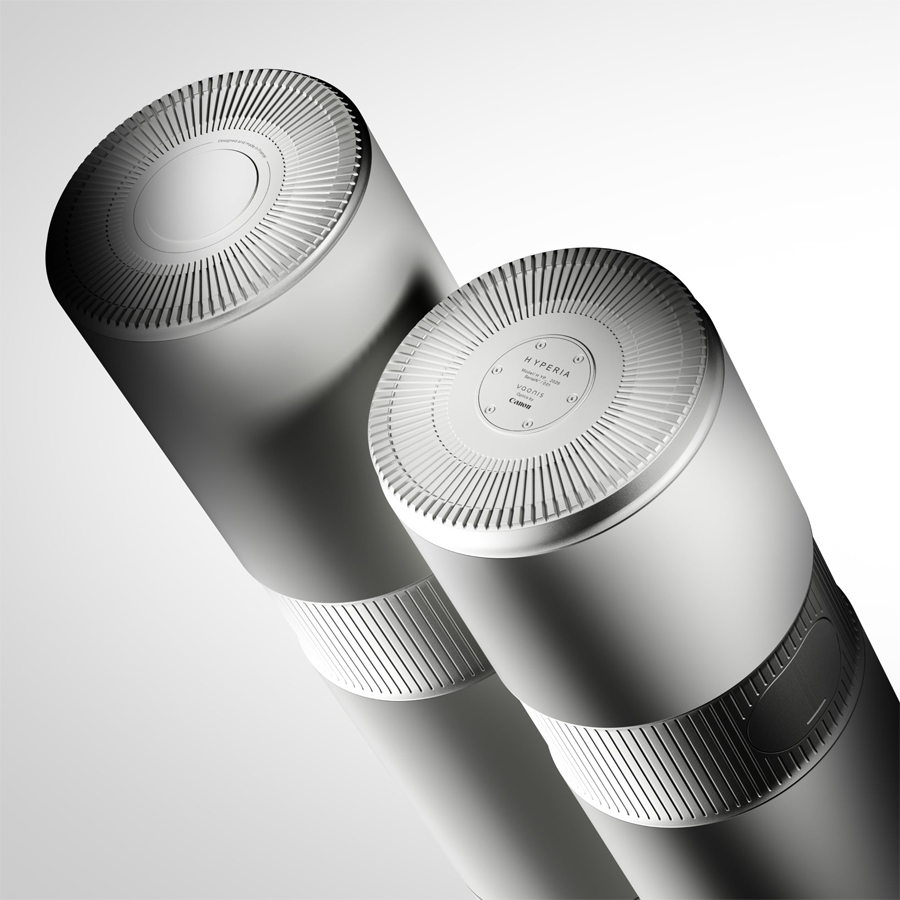
At the core of Hyperia is an optical system developed in collaboration with Canon, signaling a clear shift from hobbyist-grade components toward professional imaging standards. The system consists of 17 lenses treated with Canon’s Air Sphere Coating technology, a solution originally designed to minimize reflections and ghosting in high-end photography lenses. Combined with a 150 mm f/4 aperture and a long 1,050 mm focal length, the telescope is optimized for deep-sky observation, capturing faint objects with high contrast and exceptional clarity.
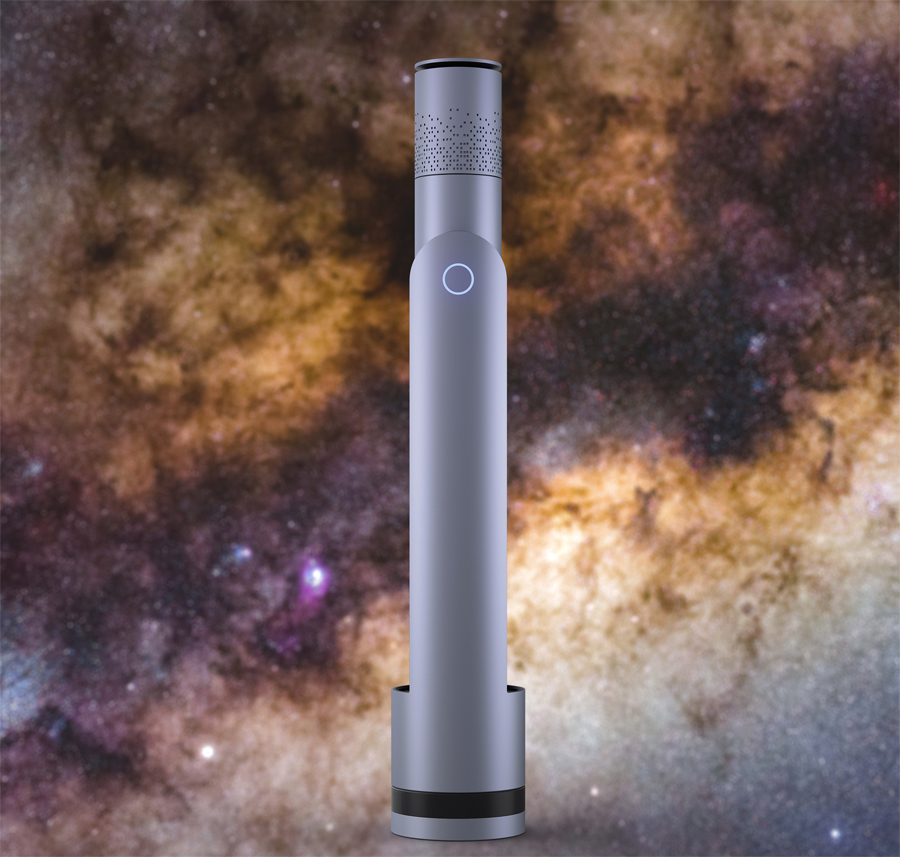
Image capture is handled by a 45-megapixel full-frame sensor, an unusually large format for astronomical instruments of this category. This allows Hyperia to collect an immense amount of light and detail, producing images suitable not only for scientific visualization but also for large-scale projection in theaters and exhibition halls. Two integrated filters enable observers to isolate specific wavelengths, expanding the telescope’s ability to highlight nebulae, star-forming regions, or other astrophysical phenomena that benefit from spectral filtering.
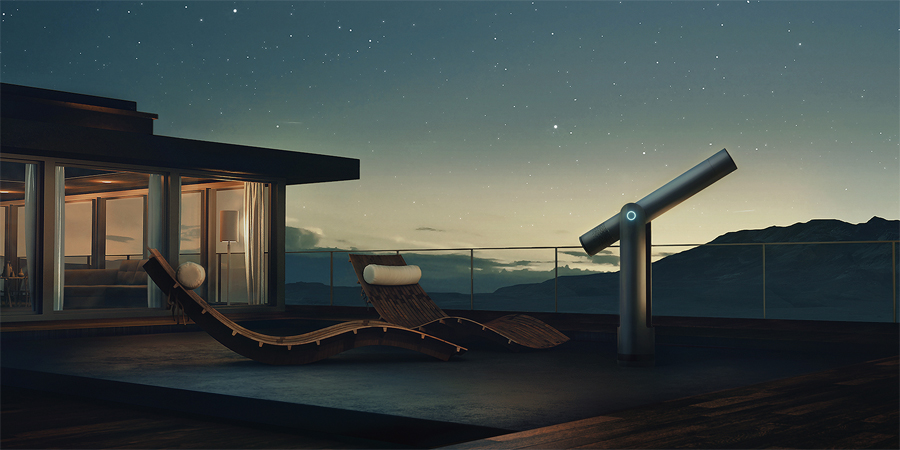
Physically, Hyperia makes a strong architectural statement. With its optics mounted on a robotic arm, the telescope reaches nearly six feet in height when fully deployed. The robotic system allows for precise, automated movement and tracking, following celestial objects selected through a dedicated app. Once locked onto a target, Hyperia can track it across the sky for up to 30 minutes, compensating for Earth’s rotation while maintaining image stability and framing.
One of Hyperia’s most distinctive features is its built-in livestreaming capability. Rather than requiring observers to stand at the instrument itself, the telescope is designed to operate remotely. Live images can be transmitted directly to a planetarium dome, lecture hall, or classroom, turning astronomical observation into a shared, collective experience. This approach aligns perfectly with the original mission of the Palais de la Découverte, which has long focused on making science visible, engaging, and accessible to the public.
From a technological perspective, Hyperia also represents a maturation of Vaonis’s smart telescope philosophy. The brand is known for integrating optics, robotics, sensors, and software into unified systems that remove much of the traditional complexity of astronomy. With Hyperia, that philosophy is scaled up dramatically, moving from backyard observation to institutional-grade deployment without sacrificing usability.
Although originally created as a bespoke installation, Vaonis has confirmed that the Hyperia will be available for pre-order, with deliveries expected to begin in 2027. This positions the telescope as a rare hybrid product, not mass-market by any means, but no longer limited to a single institution. For science centers, universities, and cultural venues seeking a visually powerful and technologically advanced way to present astronomy, Hyperia offers a glimpse of how public observation may evolve in the coming decade.
Rather than replacing traditional telescopes, the Vaonis Hyperia proposes a different role for astronomical instruments altogether. It treats observation as performance, data as spectacle, and technology as a bridge between distant cosmic events and human-scale spaces.