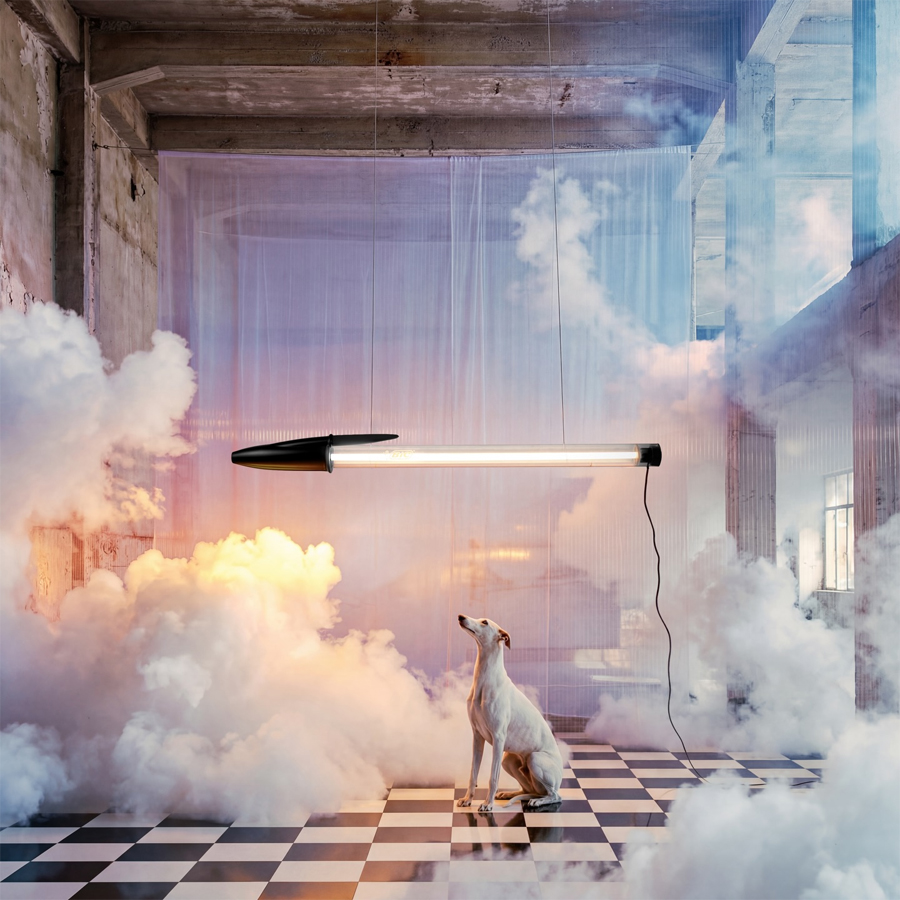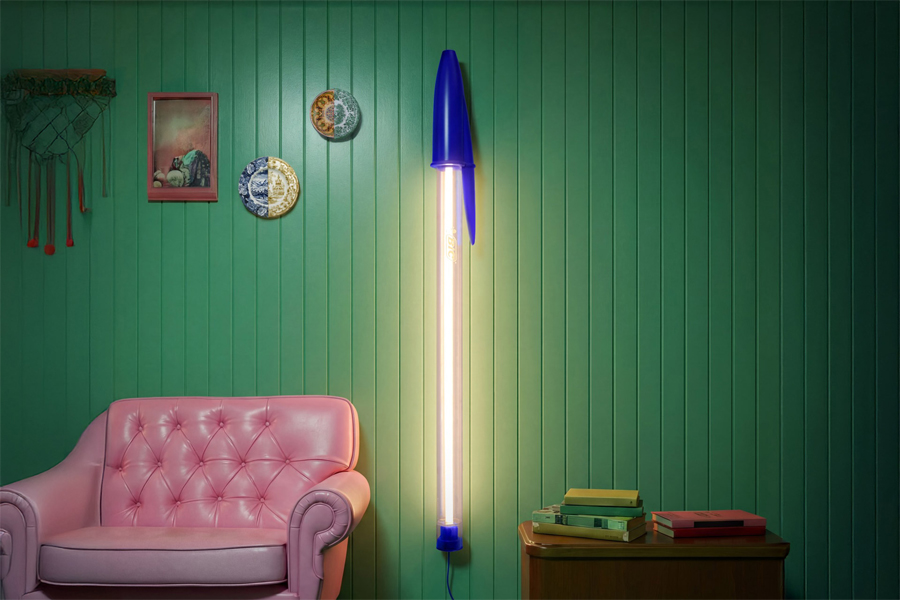
Since its launch in 1950, the BIC Cristal has quietly shaped everyday life on a scale few designed objects can rival. More than 120 billion pens sold later, it remains the most successful writing instrument ever produced, not because it chased innovation for innovation’s sake, but because it solved a simple problem with near-perfect clarity. Transparent plastic to show ink levels, a hexagonal barrel that stops it from rolling, a shape that feels natural in the hand, and a price point that made it accessible everywhere. Over time, this simplicity turned into something bigger than a pen, a universal object embedded in schools, offices, homes, and cultures across the world.
As the 75th anniversary of the BIC Cristal drew to a close, the brand chose an unusual way to mark the occasion. Rather than releasing a special edition pen or revisiting materials, BIC partnered with Italian design studio Seletti to shift the object into a completely different category. The result is a lamp that preserves the original silhouette almost obsessively, while radically changing its scale and function. What was once disposable and small becomes monumental and permanent.
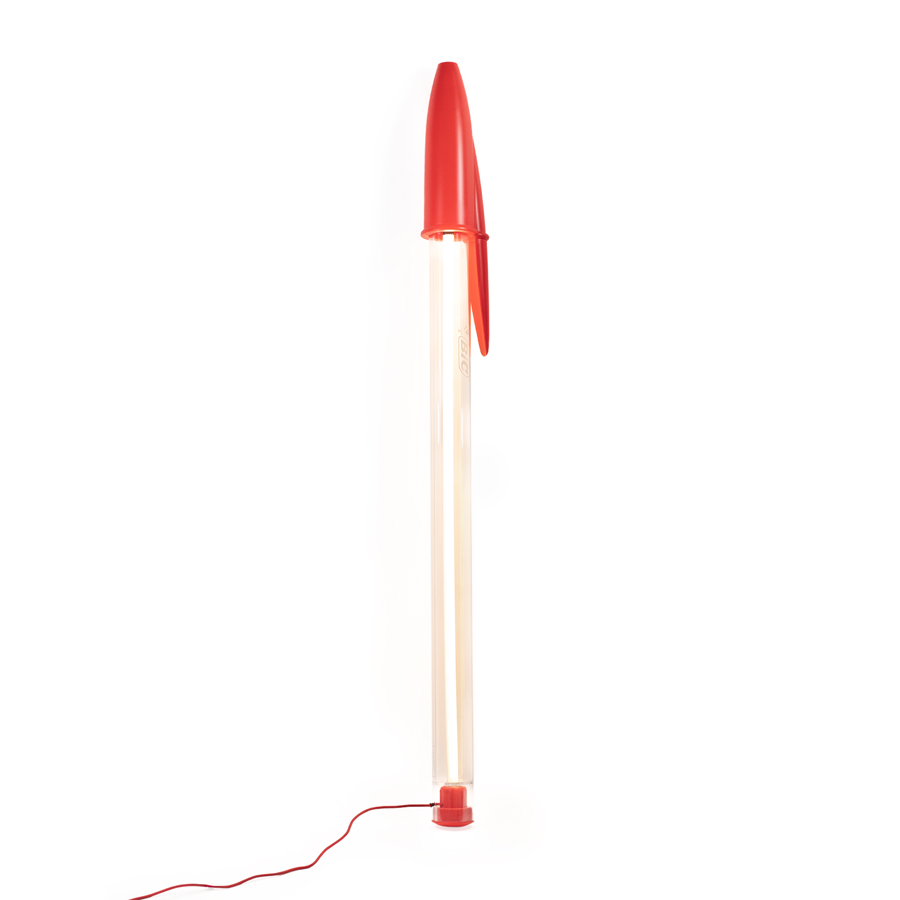
The lamp enlarges the classic BIC Cristal design to a 12 to 1 ratio, turning a familiar hand-held object into a piece that commands space. The proportions remain immediately recognizable, from the straight transparent barrel to the tapered tip and distinctive cap. Instead of ink running through the center, an integrated LED light now fills the body, glowing from within and emphasizing the clarity of the form. This internal illumination draws attention to something often overlooked, how carefully balanced and visually coherent the original design really is.
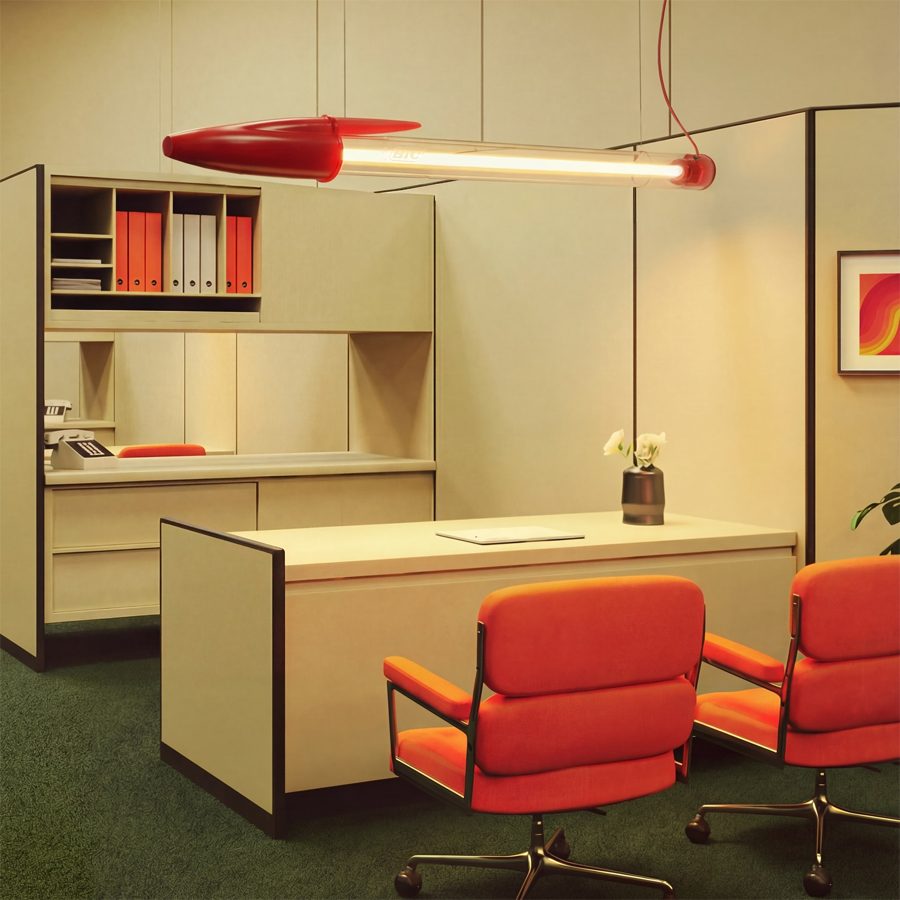
Scaling the pen up changes its emotional impact. At this size, the object feels playful, slightly surreal, and self-aware, yet it never slips into parody. The lamp does not exaggerate or distort the pen’s features. It simply magnifies them, allowing the design to speak louder. Seen in a room, it instantly triggers recognition, followed by a second reaction that borders on delight. The object works because it relies on collective memory. Almost everyone knows this pen, and that shared familiarity becomes part of the experience.
Seletti’s involvement is key to this transformation. The brand has built its reputation on turning everyday symbols into functional design objects that sit somewhere between art and utility. In this case, restraint matters as much as boldness. The lamp does not add decorative elements, patterns, or ironic twists. It trusts the original industrial design enough to let it stand on its own, even when amplified to architectural proportions.
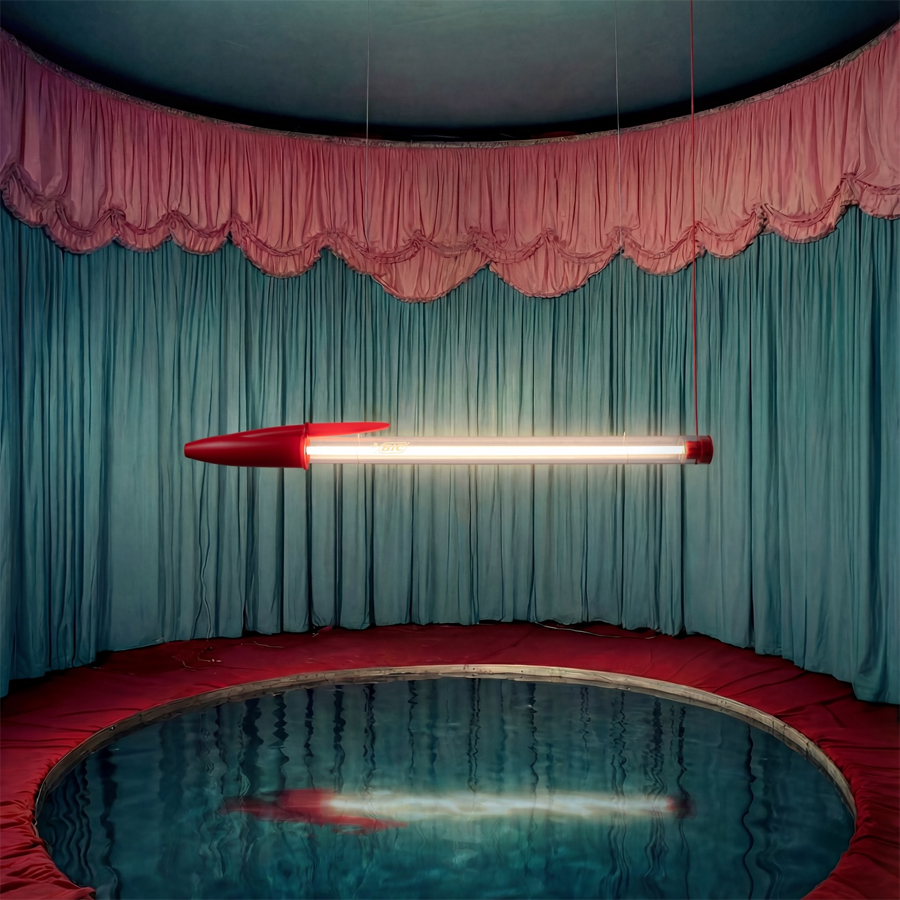
The lamp will be offered in floor, pendant, and wall-mounted versions, making it adaptable to different spaces and uses. A floor version leans into the object’s sculptural presence, while a pendant version emphasizes its graphic silhouette when suspended. The wall-mounted option blurs the line between lighting and wall art. Color choices stay faithful to the pen’s legacy, with classic black, blue, and red options that directly reference the inks that defined generations of writing.
What makes this project compelling is not novelty alone, but timing. In an era saturated with short-lived design trends and constant reinvention, the BIC Cristal Lamp highlights the lasting power of a well-resolved object. It reframes mass production as something worthy of celebration rather than dismissal. The pen was never exclusive, rare, or precious, yet its design endured precisely because it was honest, efficient, and repeatable at enormous scale.
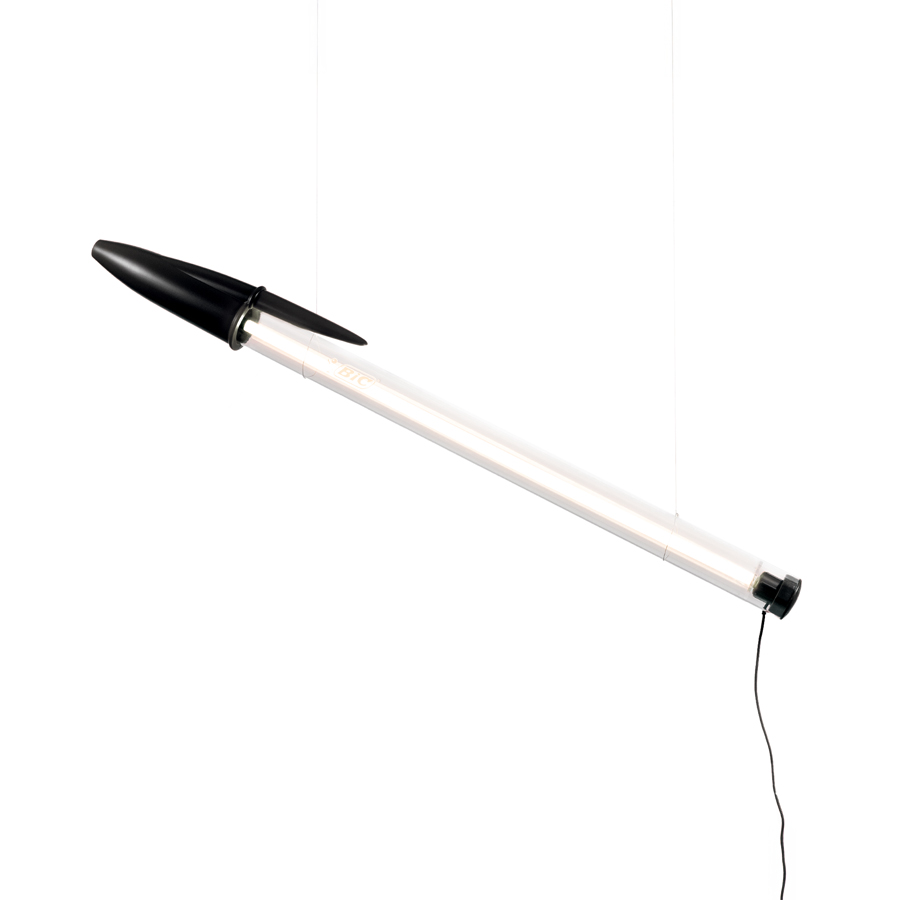
By turning the BIC Cristal into a lamp, the collaboration invites a second look at objects people usually ignore. It suggests that good design does not need complexity or luxury to be meaningful. Sometimes, all it takes is changing perspective and scale to reveal why something became iconic in the first place.