For a lot of coffee lovers, the moka pot sits in a sweet spot. It delivers a rich, espresso-like cup without the cost, maintenance, or ritual complexity of a full espresso machine. Steam pressure, simple mechanics, and decades of Italian tradition make it feel honest and almost timeless. The irony is that visually, most moka pots feel frozen in time. Different colors appear now and then, but the form barely changes. One moka pot tends to look like every other moka pot.
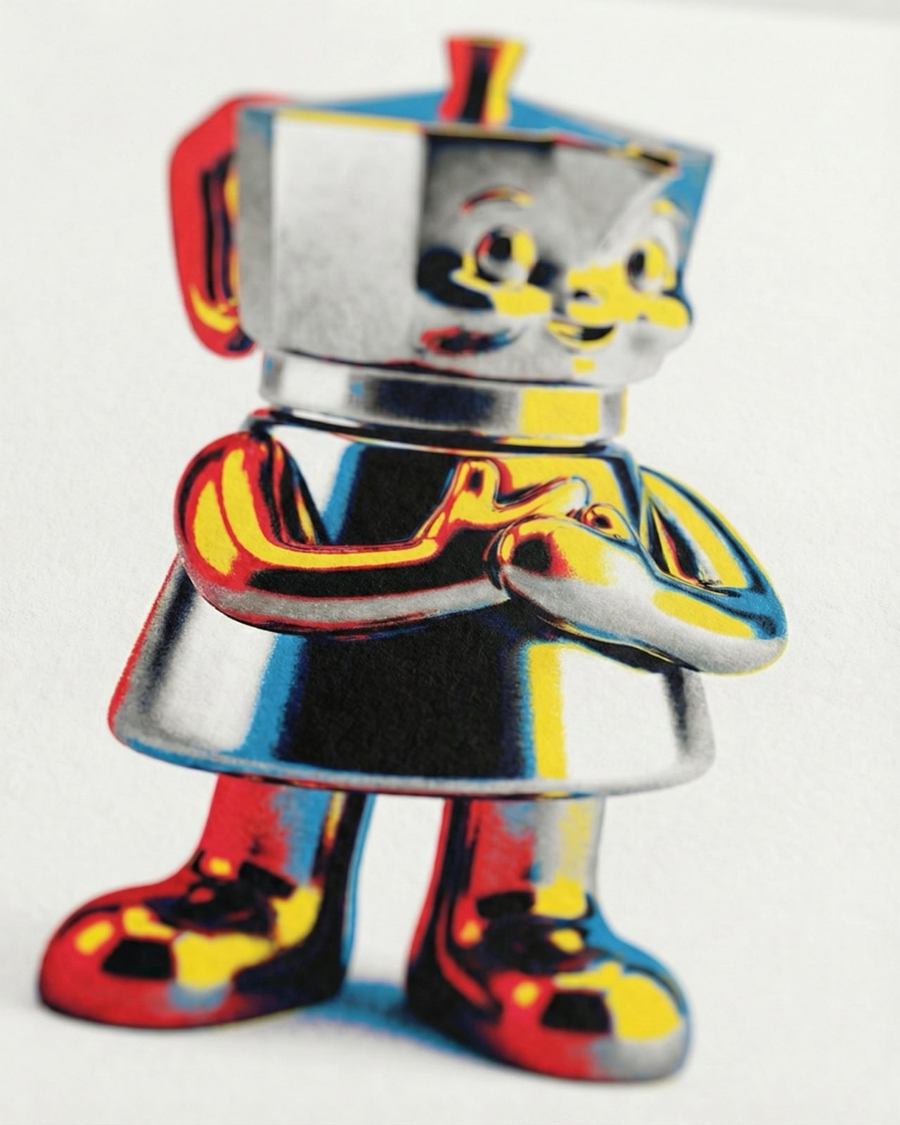
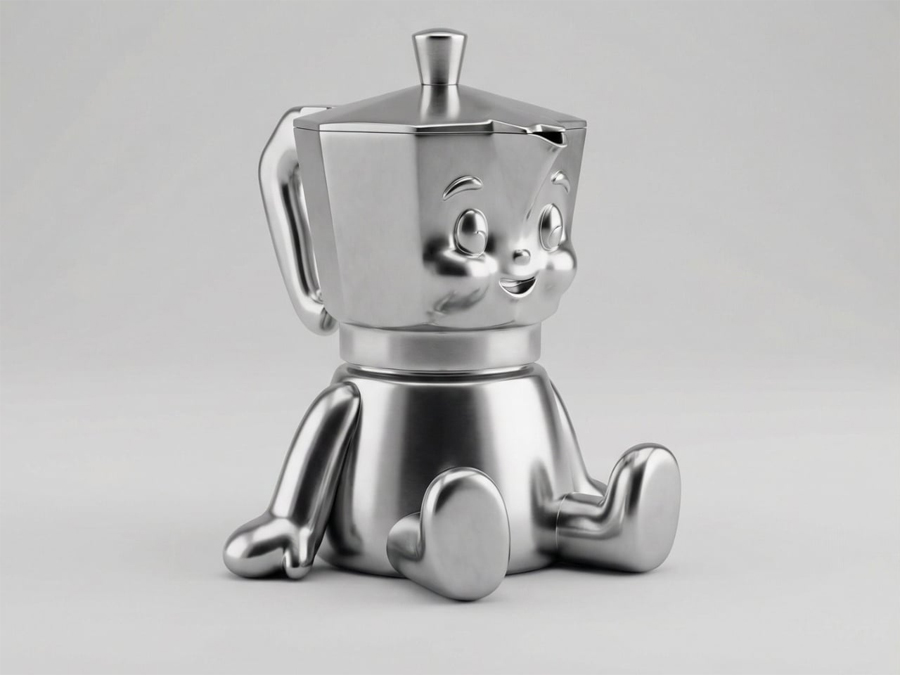
That familiarity is exactly what makes Davide Bozzo‘s concept so striking. MOKY does not try to optimize the moka pot in a technical sense. Instead, it reframes it entirely. The object keeps its functional core but gains a body, a face, and a quiet sense of presence. It looks like a small metallic figure patiently waiting to brew your coffee, as if the process itself has been anthropomorphized.
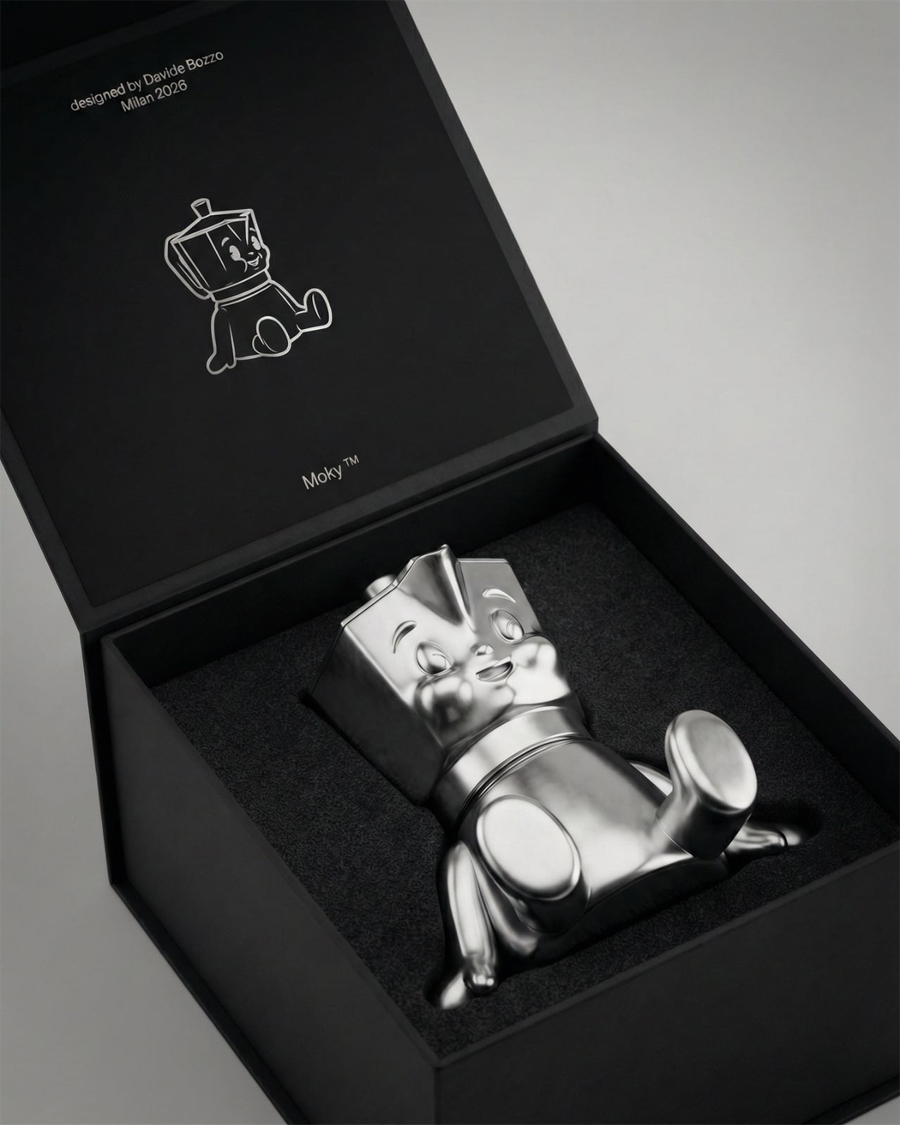
The design walks a careful line. For some, the human-like form might feel uncanny. For others, it is charming and playful. That tension is part of its appeal. MOKY does not aim to disappear into the kitchen. It asks to be seen. Even when not in use, it works as a sculptural object, something you would leave on display rather than hide in a cabinet.
Despite its whimsical character, the design still feels rooted in Italian industrial heritage. The metallic finish and clean surfaces reference modern Italian aesthetics rather than novelty toy design. There is restraint in the proportions and a respect for the original moka pot’s function. This is not a joke object. It is a serious design proposal that happens to smile back at you.

What truly sets MOKY apart is how naturally it fits into the growing space between functional objects and collectibles. Designer toys and art figures have moved far beyond niche collector culture. They now live in everyday interiors, styled alongside books, ceramics, and plants. Most of them, however, remain passive. They are visual statements only. MOKY breaks that rule. It earns its place by doing something useful.
Using it every morning changes the relationship entirely. Brewing coffee becomes an interaction with an object that feels personal and expressive. Over time, that repeated interaction builds attachment. This is where the concept becomes especially strong. Design stops being decorative and starts becoming part of a ritual.
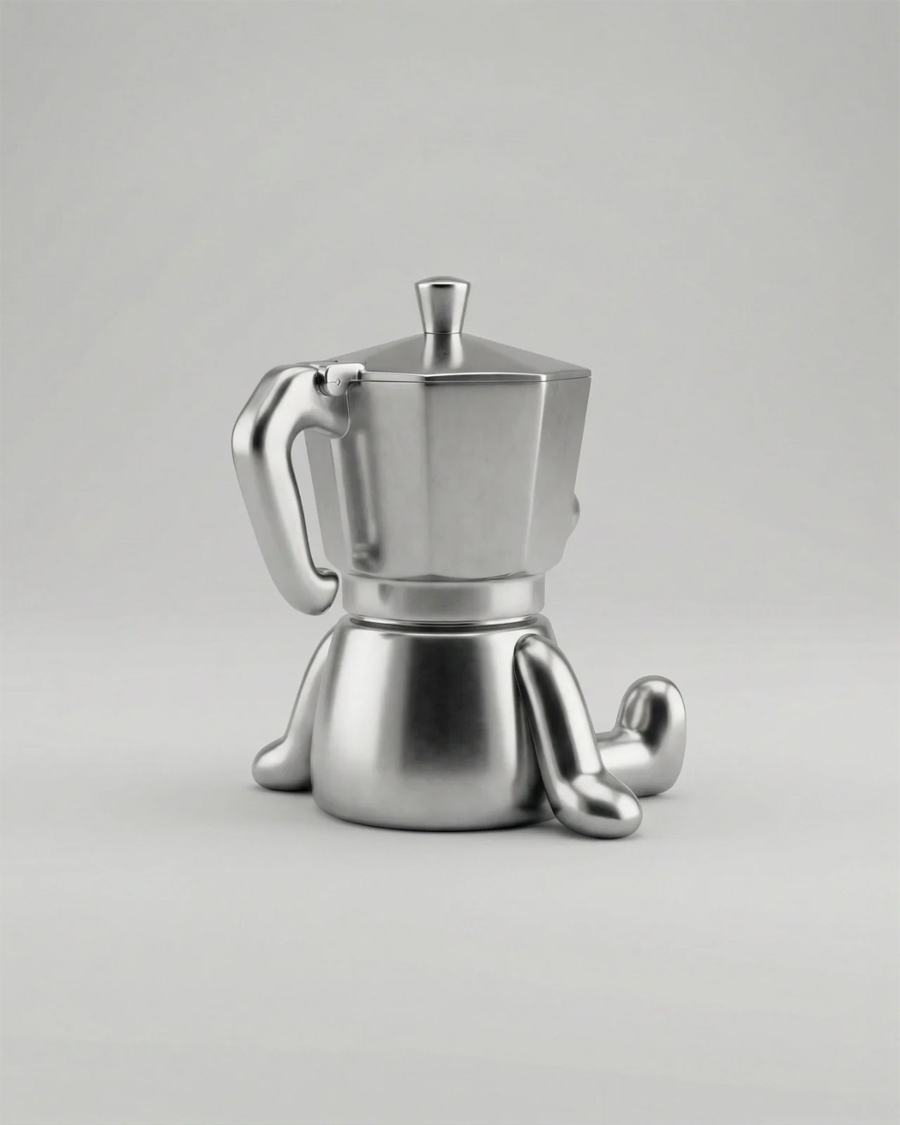
The Milan connection matters here as well. Milan carries global authority in design, not just historically but culturally. Objects that emerge from that context are expected to balance experimentation with discipline. MOKY reflects that balance. It is playful without being random, expressive without losing purpose. Davide Bozzo is not decorating a machine. He is reinterpreting a cultural icon with intention.
For collectors, the appeal is obvious. The market is crowded with familiar formats and endless variations. MOKY offers recognition without repetition. You immediately understand what it is, yet you have never seen it before. That mix of familiarity and surprise is what drives long-term interest in design objects. Add coffee culture into the equation, and it becomes a piece that connects multiple passions at once.

Whether MOKY ever reaches production is almost secondary. As a concept, it captures a broader shift in design thinking. Objects are no longer expected to be purely efficient or purely aesthetic. The most compelling ones now sit somewhere in between. Functional, expressive, collectible, and emotionally engaging. MOKY shows that even the most traditional tools can be reimagined without losing their soul. If good design is meant to improve everyday life, making you smile while it works feels like a pretty strong argument. Also be sure to check Top 10 Most Expensive Coffee in The World.