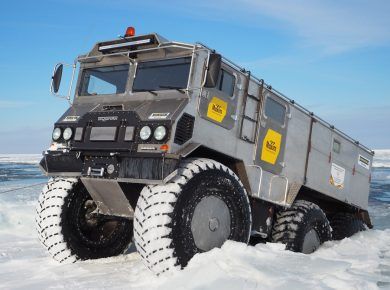
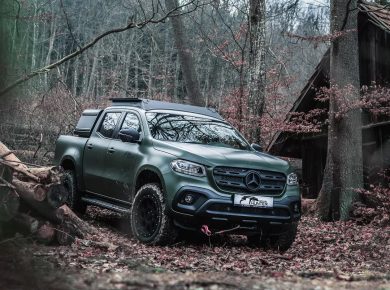
Originally conceived in the aftermath of World War II as a highly adaptable agricultural vehicle, the Mercedes-Benz Unimog gradually escaped the limits of its utilitarian roots. Its rare combination of durability, torque, and off-road geometry made it attractive not only to farmers and municipalities, but also to a growing number of enthusiasts who saw its potential far beyond work duties. By the late 1940s and early 1950s, owners were already experimenting with custom bodies and living modules, turning the Unimog into a self-sufficient vehicle for remote travel long before the term overlanding existed.
For decades, these conversions remained largely personal projects or small-batch custom builds. That changed around fifteen years ago, when professional builders began offering fully engineered Unimog-based expedition campers. As demand grew and the quality of conversions improved, Mercedes-Benz took notice. Rather than treating these builds as unofficial offshoots, the company chose to formalize the concept. The partnership with German specialist Hellgeth marked a turning point, resulting in factory-supported expedition campers that felt integrated rather than improvised. The TenereX stands as the clearest expression of that collaboration.

The name itself is revealing. “TenereX” is derived from the Tuareg word Ténéré, a term used to describe vast, empty wilderness. It reflects both the vehicle’s intended environment and its philosophy. Built on the Unimog U 4023 chassis, the TenereX is engineered to operate where roads disappear entirely. Selectable all-wheel drive works in concert with longitudinal and differential locks on both axles, while a central tire pressure control system allows real-time adjustments depending on terrain. Ground clearance is extreme, and water crossings of nearly four feet are possible without special preparation.
Much of this capability comes from classic Unimog engineering. Portal axles raise the chassis well above obstacles, while the torsionally flexible ladder frame allows massive articulation without compromising structural integrity. Long-travel coil spring suspension absorbs sharp impacts before they reach the cabin, making slow technical driving feel composed rather than brutal. Even on boulder-strewn tracks or deeply rutted trails, progress feels deliberate and controlled.

Hellgeth’s contribution becomes most apparent once you step inside. The living module is built from fiber-reinforced plastics and aluminum, carefully balancing strength and weight. By keeping the permissible gross weight below 7.5 tons, the TenereX remains drivable with a standard Class 3 license in many markets, a crucial advantage for private owners. The camper body is mounted using a three-point system, allowing the chassis to flex independently while the living space stays rigid, quiet, and free from stress fractures.
Despite its extreme underpinnings, the interior feels surprisingly refined. A full-size double bed anchors the sleeping area, while a functional kitchen features an induction cooktop and a compressor fridge with an 85-liter capacity. A separate wet bath includes a shower and composting toilet, turning long-distance travel into something genuinely sustainable rather than endurance-based. Fresh and grey water tanks, combined with roof-mounted solar panels and optional generator configurations, allow several days of off-grid living without compromise.

What sets the TenereX apart is how seamlessly these elements work together. It never feels like a truck with a box bolted on the back, nor like a motorhome pretending to be rugged. Instead, the vehicle behaves as a single, cohesive system. One moment it is crawling through terrain that would immobilize most expedition rigs, and the next it offers a quiet, insulated living space that feels closer to a compact apartment than a field shelter.
Under the rear bodywork sits either a four-cylinder OM 934 LA diesel producing 231 horsepower or an optional six-cylinder OM 936 delivering 299 horsepower, both paired with Mercedes’ EAS automated transmission. Top speed is limited to around 62 miles per hour, a reminder that this vehicle values control and reliability over outright pace. Water fording depth reaches approximately 3.9 feet, reinforcing its ability to move confidently through environments that defeat conventional campers.

Pricing for the TenereX typically starts around the 200,000 dollar mark and increases depending on configuration and equipment. Each vehicle is delivered turnkey from Hellgeth’s facility in Wurzbach, Germany, ready for immediate use. Buyers outside Europe, particularly in North America, must address import and compliance requirements, though experienced specialists are available to manage that process. For those seeking true expedition capability without sacrificing everyday livability, the Unimog TenereX remains one of the most convincing and thoughtfully executed solutions available. And don’t forget to check 15 Best All-Terrain Vehicles for Sale.