
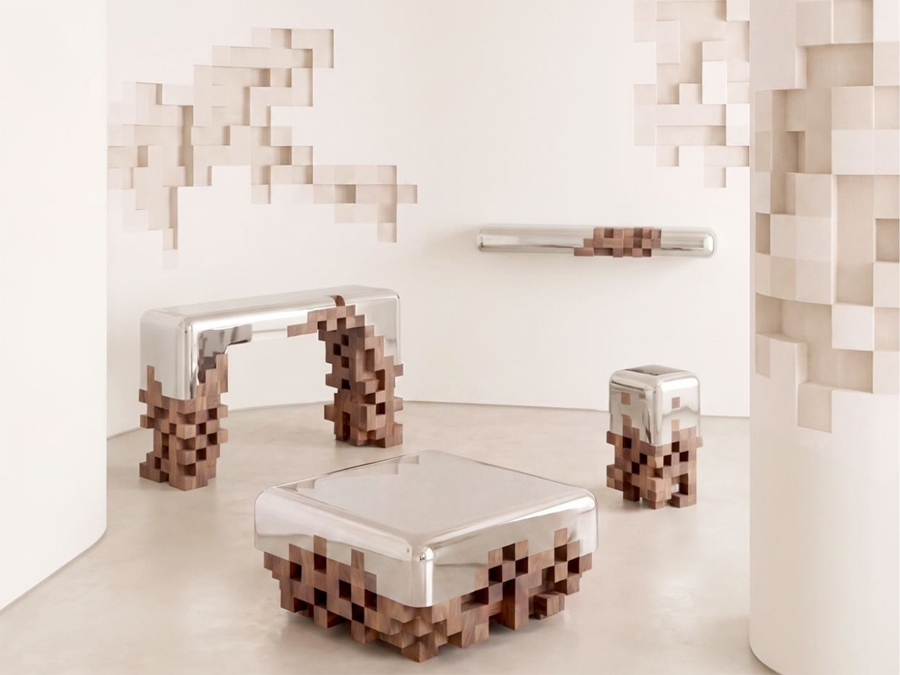
What happens when the visual language of early video games meets contemporary collectible furniture? Italian designer Alberto Essesi offers an intriguing answer with the Ghost Collection, a series of sculptural objects that combine mirror-polished aluminum with solid walnut wood arranged in deliberately pixelated forms. The collection plays with the contrast between high and low resolution, digital and analog, creating furniture that seems to exist somewhere between a physical object and an unfinished computer rendering.
The central idea is surprisingly simple. Each piece combines two materials with completely different visual characteristics. Smooth, reflective aluminum represents the polished precision of modern digital imagery, while the walnut elements beneath it break into chunky, staggered geometric shapes reminiscent of pixels in an old video game. Rather than treating this contrast as a decorative gimmick, Essesi uses it as the foundation of the entire collection.
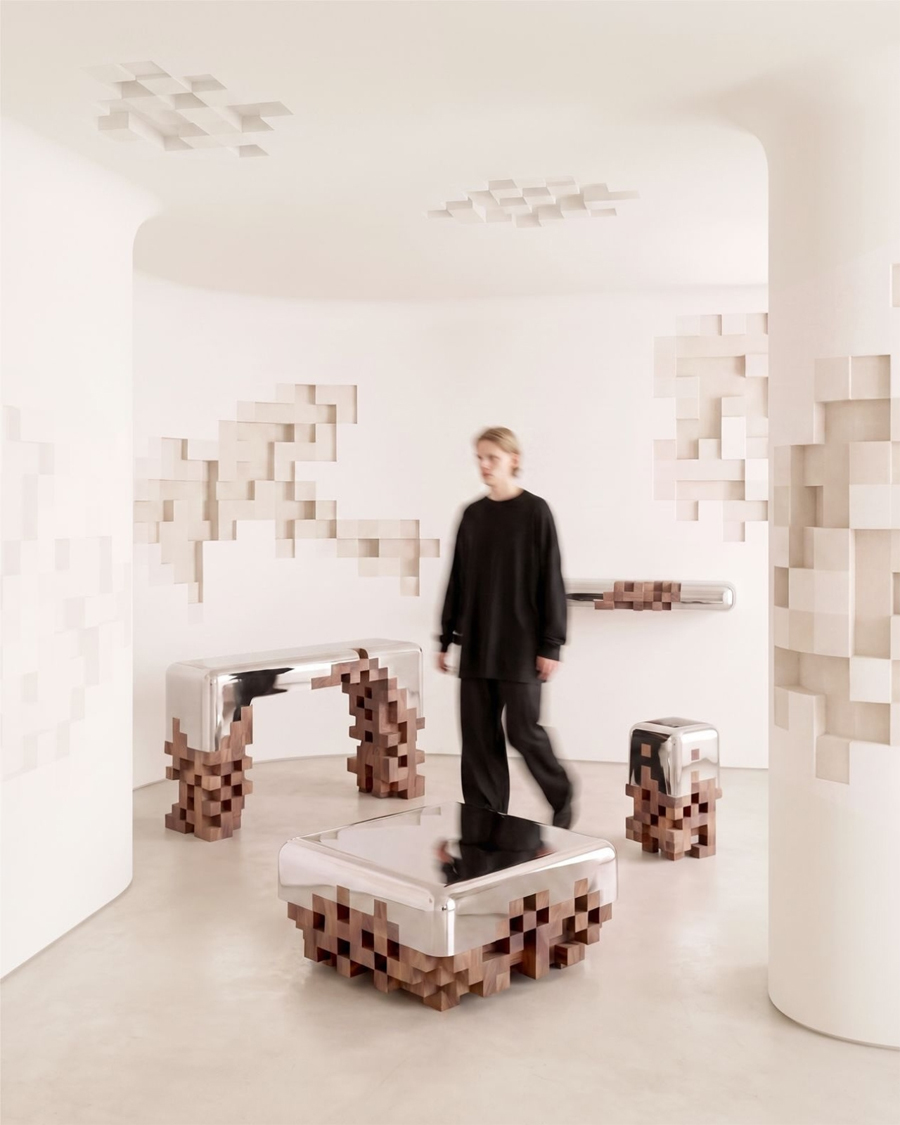
The console table is perhaps the clearest expression of the concept. Its aluminum surface features rounded edges and a highly reflective finish, creating an almost liquid appearance. As the structure moves downward, however, the smooth metal seems to dissolve into a series of wooden blocks. The transition resembles a digital image caught halfway through rendering, when its geometry is still being assembled from individual pixels.
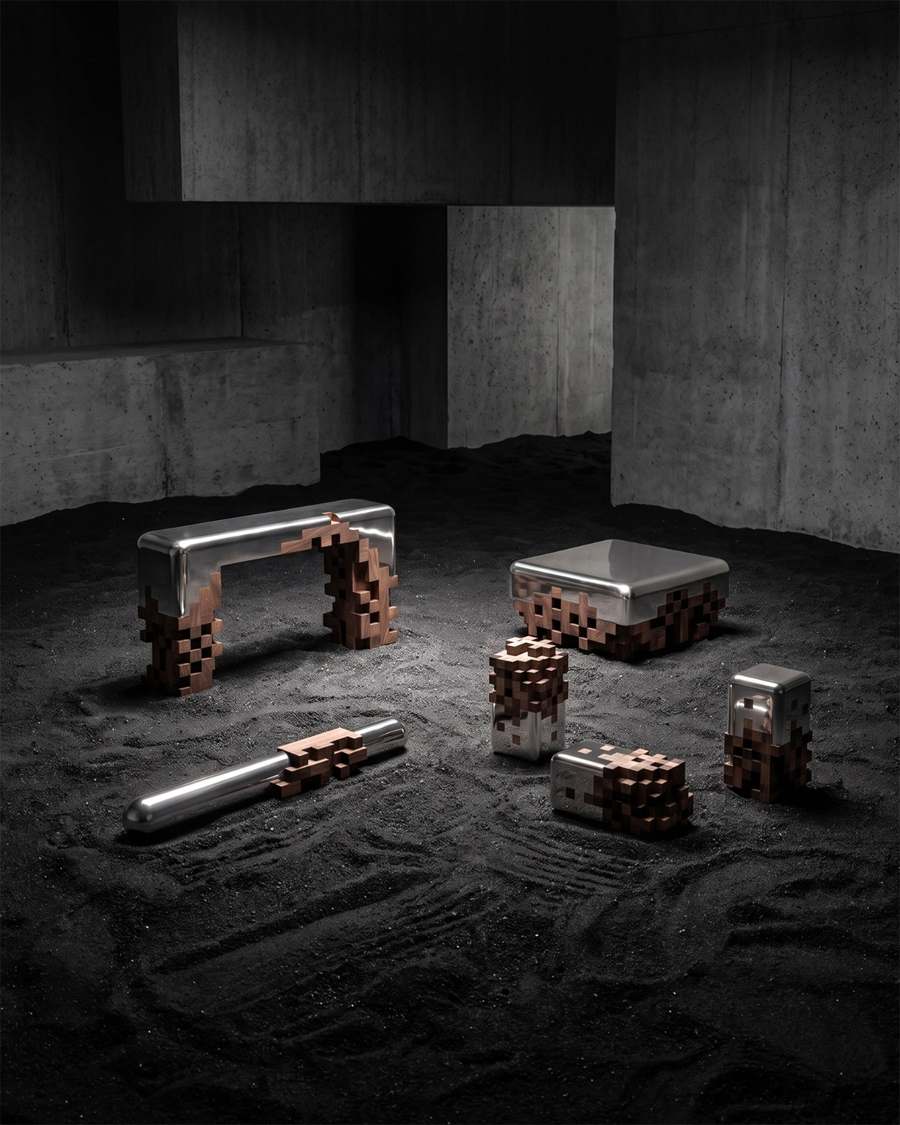
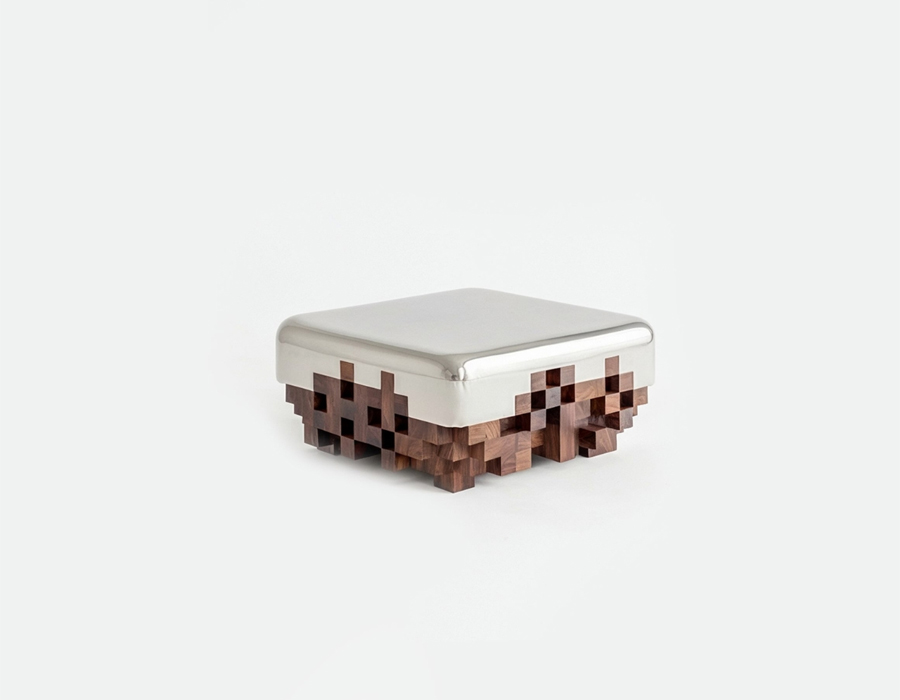
The same visual language continues across the other pieces. A low ottoman combines a chrome-like aluminum top with a pixelated walnut base, while a wall-mounted bar uses a minimal metal rod anchored by a small cluster of wooden blocks. The collection also includes smaller sculptural objects that resemble characters or artifacts from an early Minecraft-style digital environment, translated into solid materials.
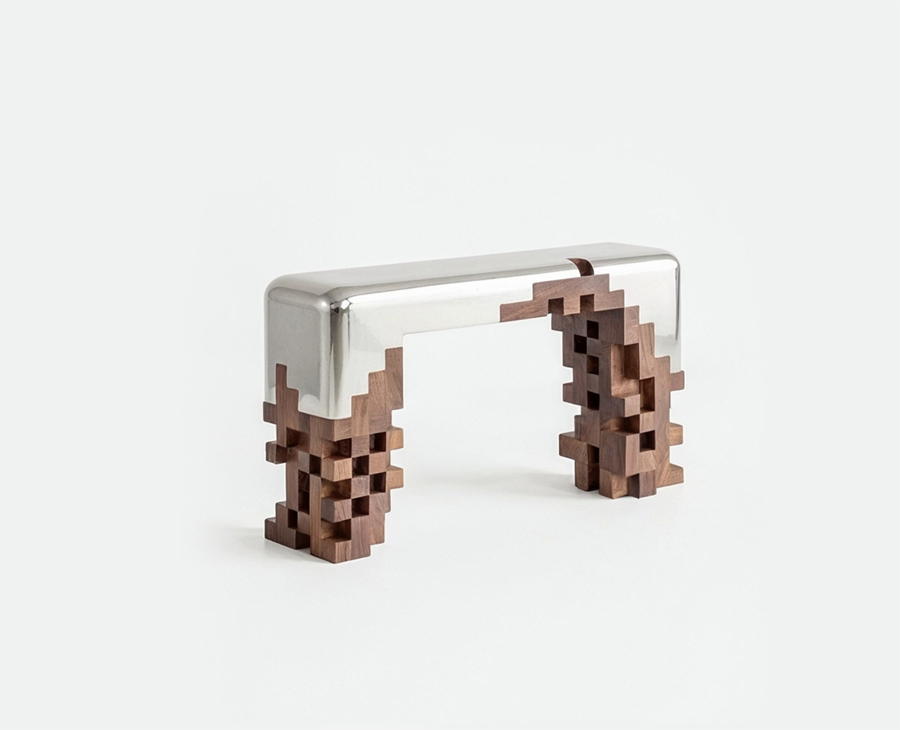
Despite their intentionally irregular appearance, the wooden structures are carefully constructed. The walnut is solid, with individual blocks precisely cut, shaped, and assembled into compositions that look spontaneous but are actually highly controlled. The aluminum surfaces provide a contrasting sense of refinement, with their curved forms and reflective finishes softening the otherwise angular geometry.
The way the collection is presented adds another dimension to the concept. In a clean white gallery environment, the furniture appears architectural and almost meditative. Photographed against dark, textured sand, the same objects take on a different character, resembling archaeological discoveries from a civilization somewhere between the digital and physical worlds. The contrasting settings reinforce the collection’s central idea of existing between two visual realities.
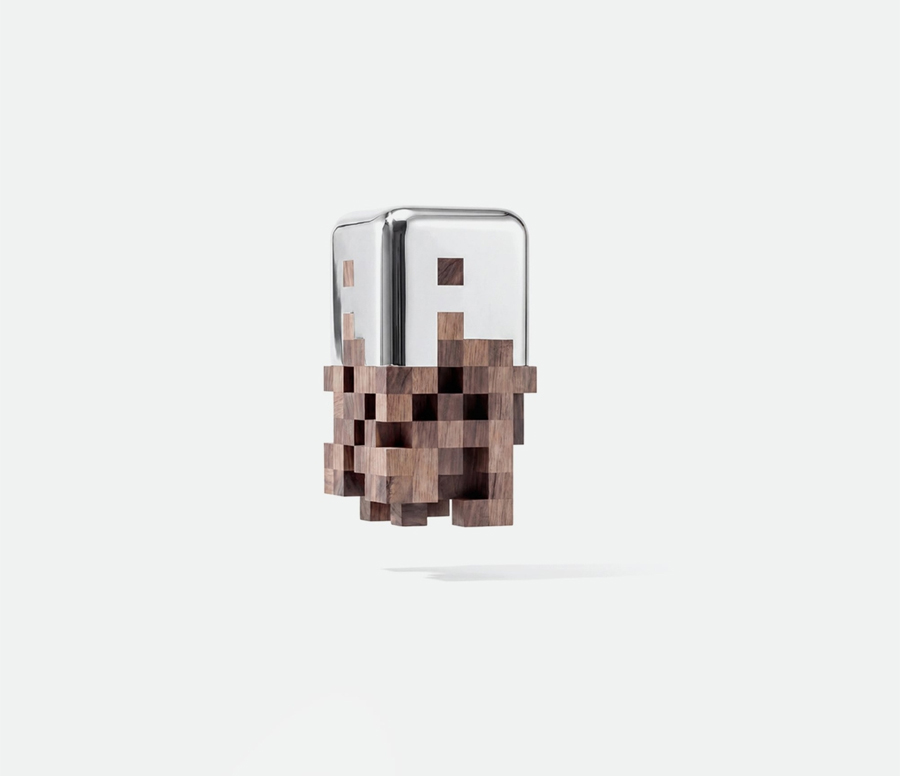
There is also a nostalgic element to the design. For people who grew up with early video games and later transitioned into a world of ultra-high-definition screens and digital imagery, pixels carry a particular cultural significance. Essesi draws on that shared visual memory without simply reproducing retro gaming aesthetics. Instead, he transforms the pixel into a physical design language, giving it weight, texture, and an unexpected sense of luxury.
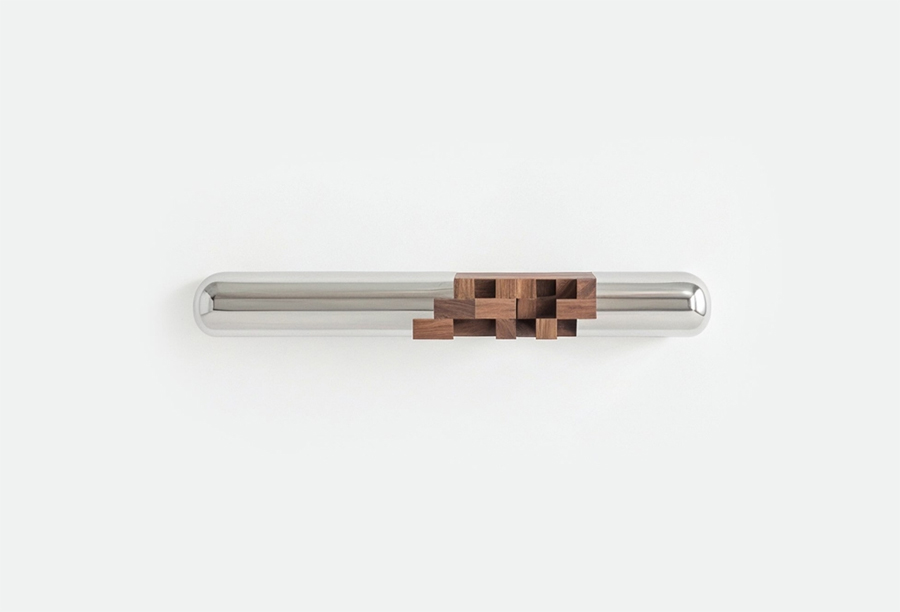
The Ghost Collection occupies an interesting position between functional furniture and collectible design. Its pieces are not conventional household objects, nor are they purely decorative sculptures. They challenge the familiar boundaries between materials, technology, and craftsmanship, suggesting that the imperfections of low-resolution imagery can be just as visually compelling as the flawless surfaces of modern digital design.
With Ghost, Alberto Essesi turns a simple contrast between pixels and polished metal into a distinctive collection that feels both nostalgic and futuristic.
Also you might be interested in Wireframe Aesthetics in Real-World Furniture.


