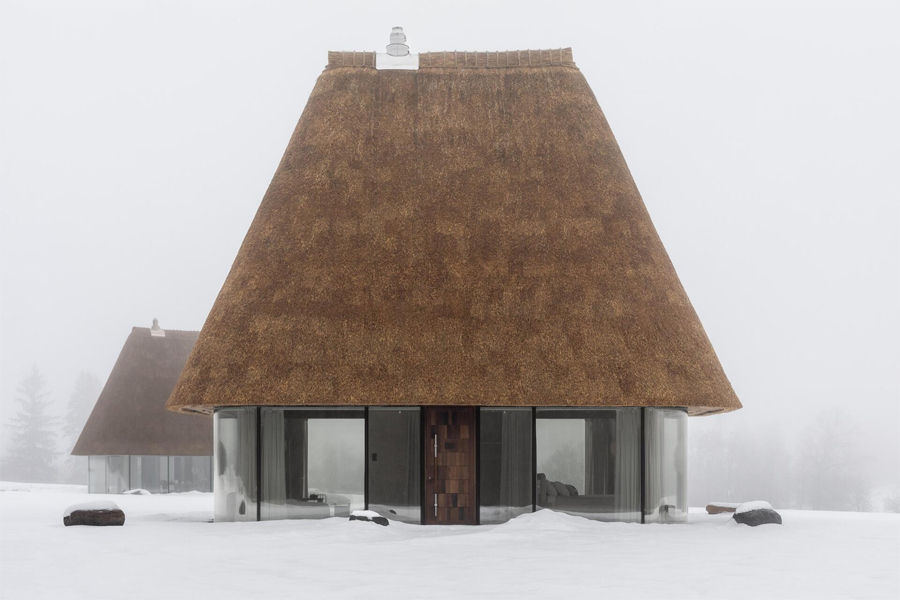
At first glance, the building feels almost surreal, as if a giant thatched roof has gently landed in the landscape and decided to stay. A closer look reveals that beneath this dramatic form sits an entire guesthouse made almost entirely of glass. Designed by YOD Group, these guesthouses turn the idea of a traditional rural home inside out, keeping the roof as a reference point while removing heavy walls in favor of light, transparency, and restraint.
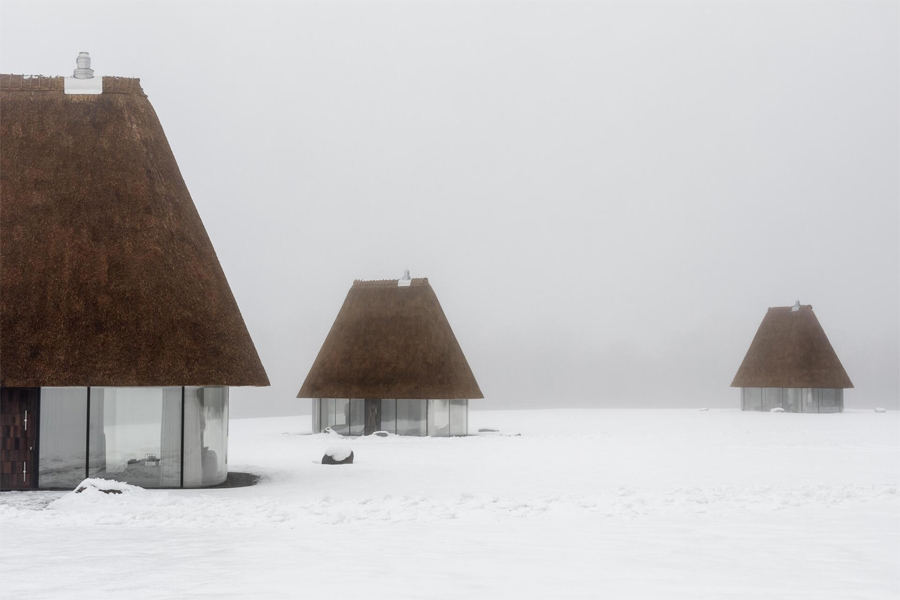
The concept begins with a familiar house archetype and reduces it to its bare essentials. Thick walls and solid boundaries are replaced by full-height glazing, while the roof becomes larger, bolder, and more expressive. What is usually a supporting element transforms into the main architectural gesture.
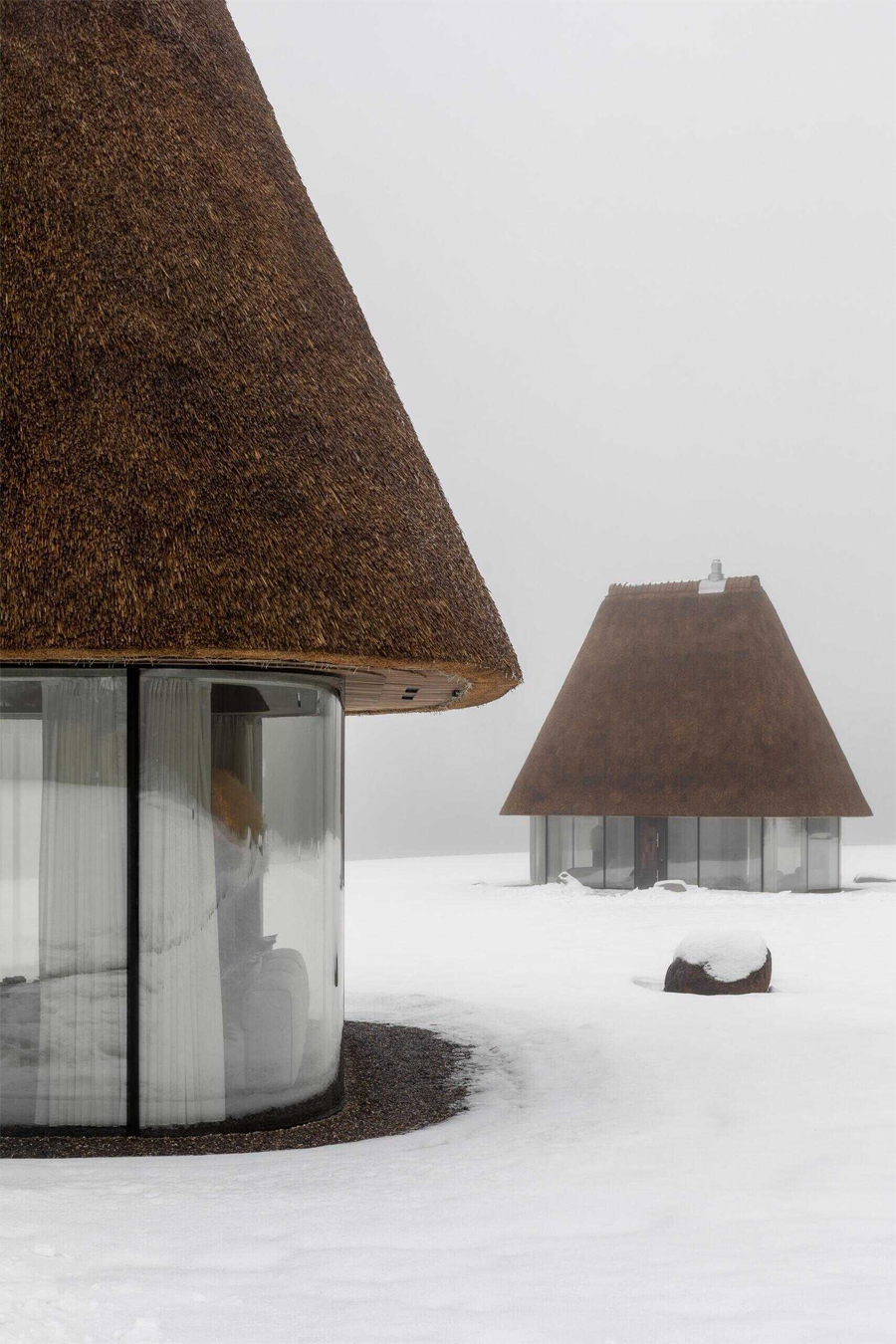
That roof defines everything. Oversized and sculptural, it creates a strong silhouette that gives the building weight and presence, even though the walls beneath are nearly invisible. From a distance, the reed roof dominates the view. Up close, the structure beneath almost disappears.
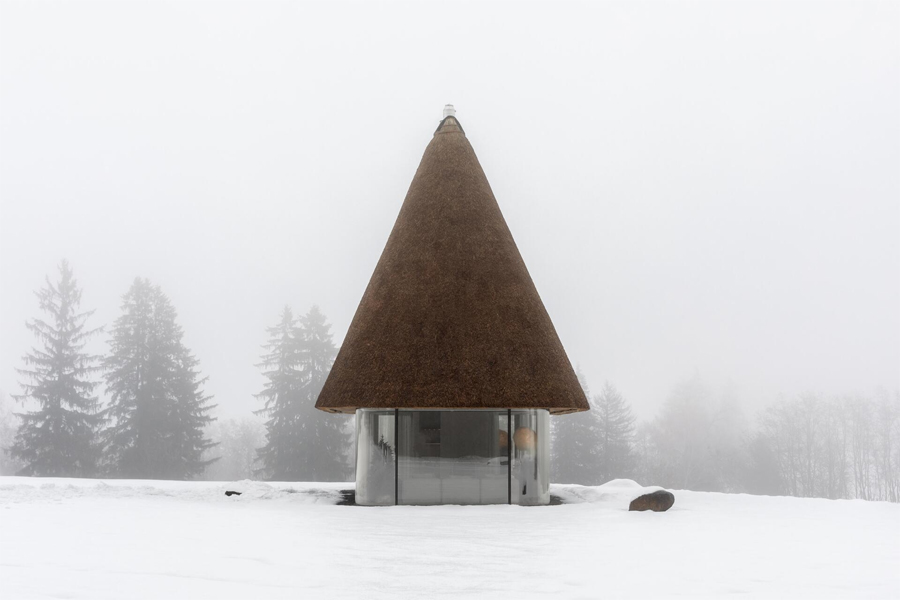
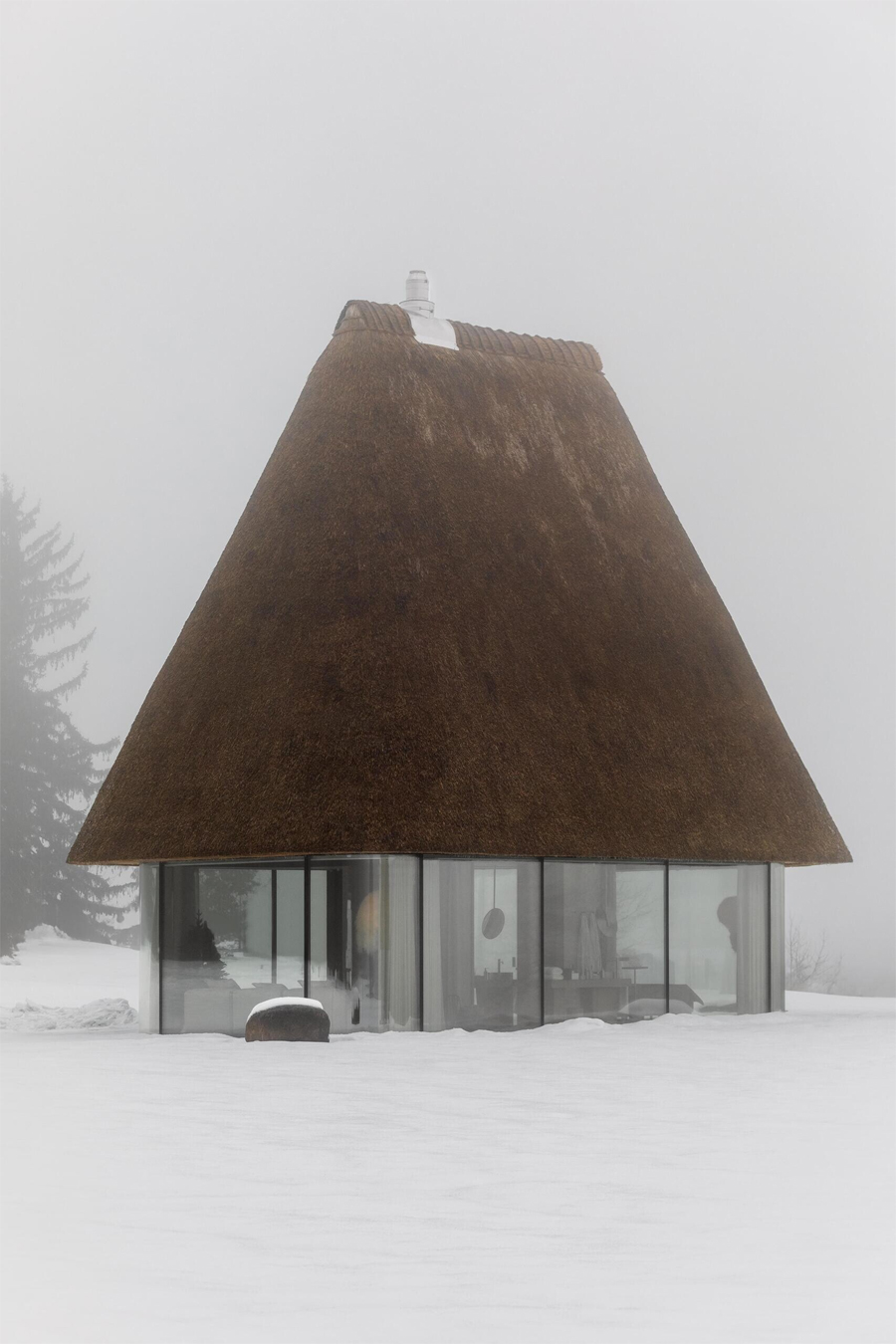
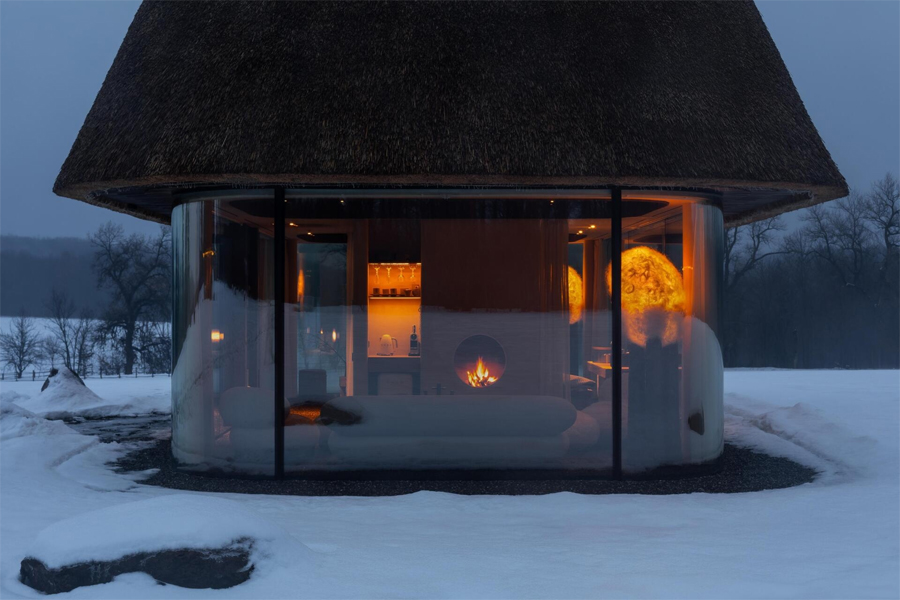
During the day, the glass facades visually dissolve into the surroundings. The roof appears to float above the ground, with the landscape flowing uninterrupted through the interior. At night, the effect reverses. Warm interior lighting turns the guesthouse into a glowing lantern, emphasizing the contrast between the heavy roof and the lightness below.
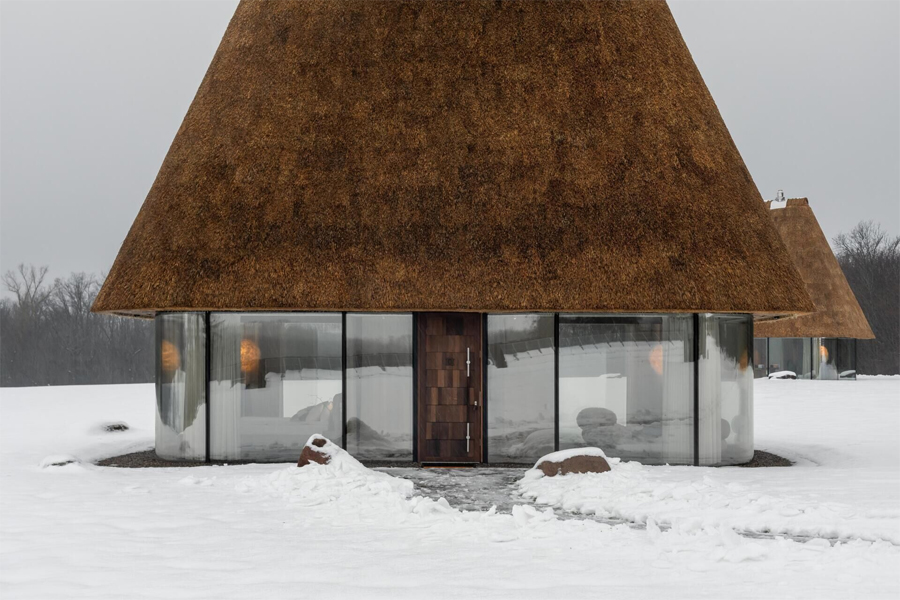
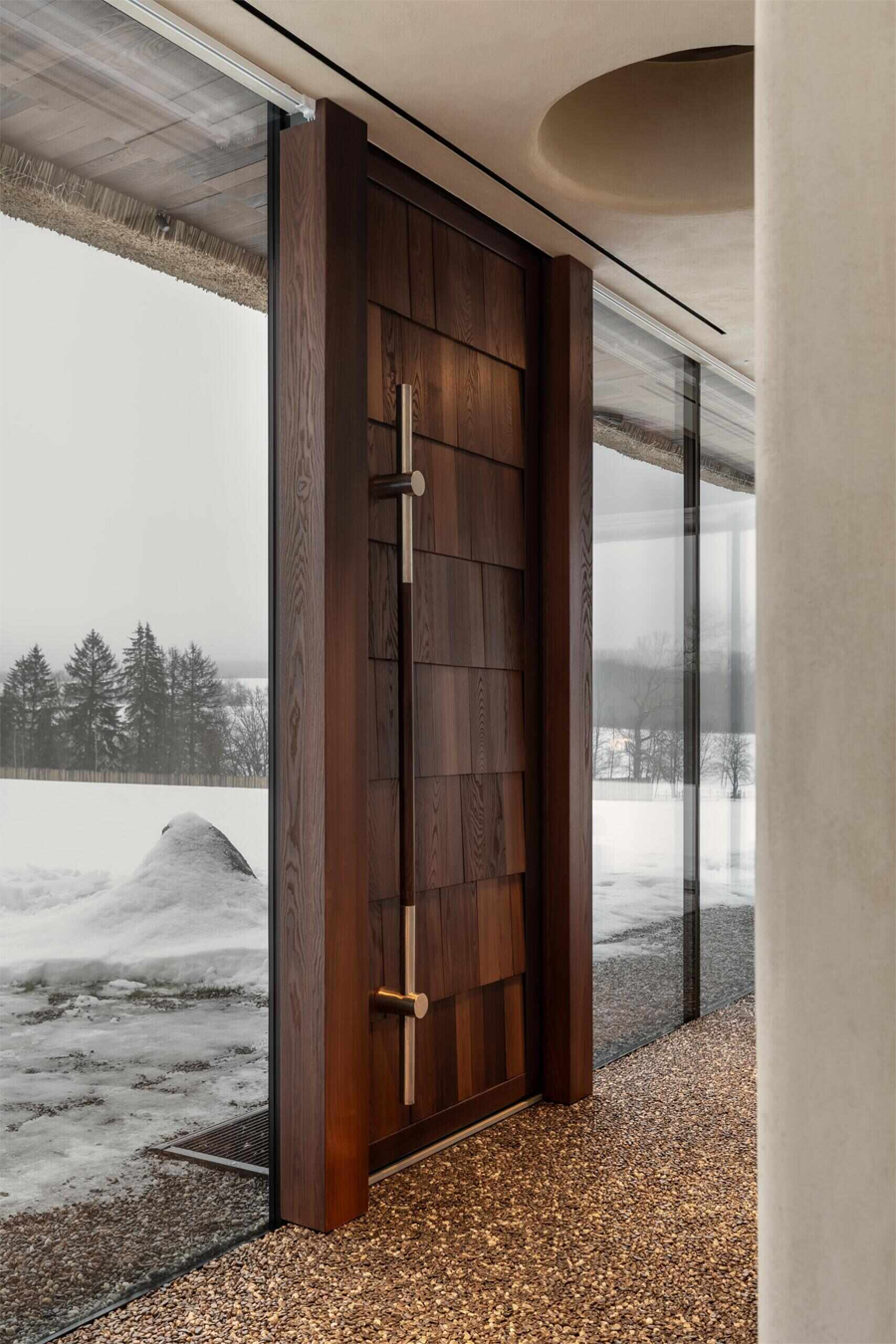
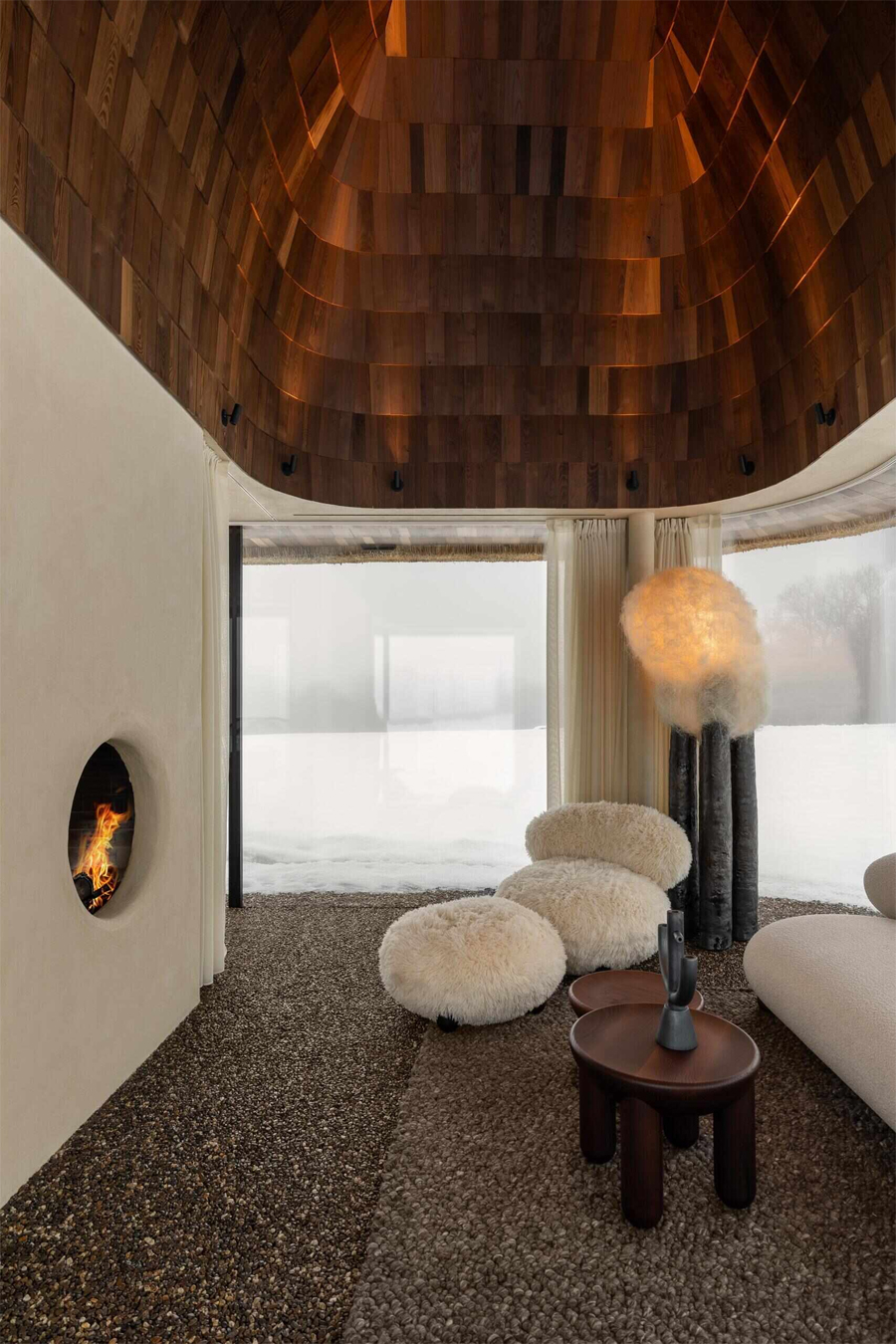
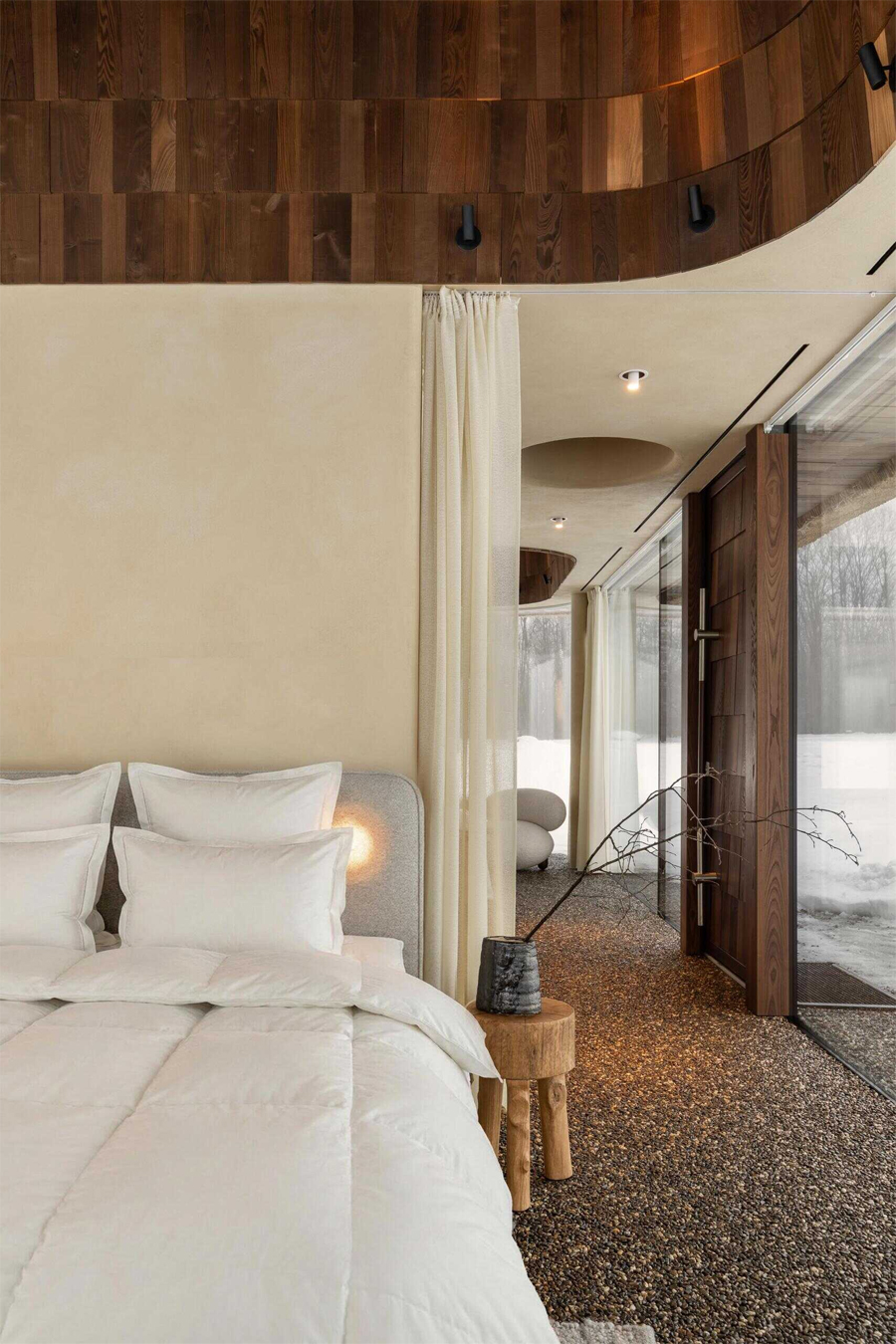
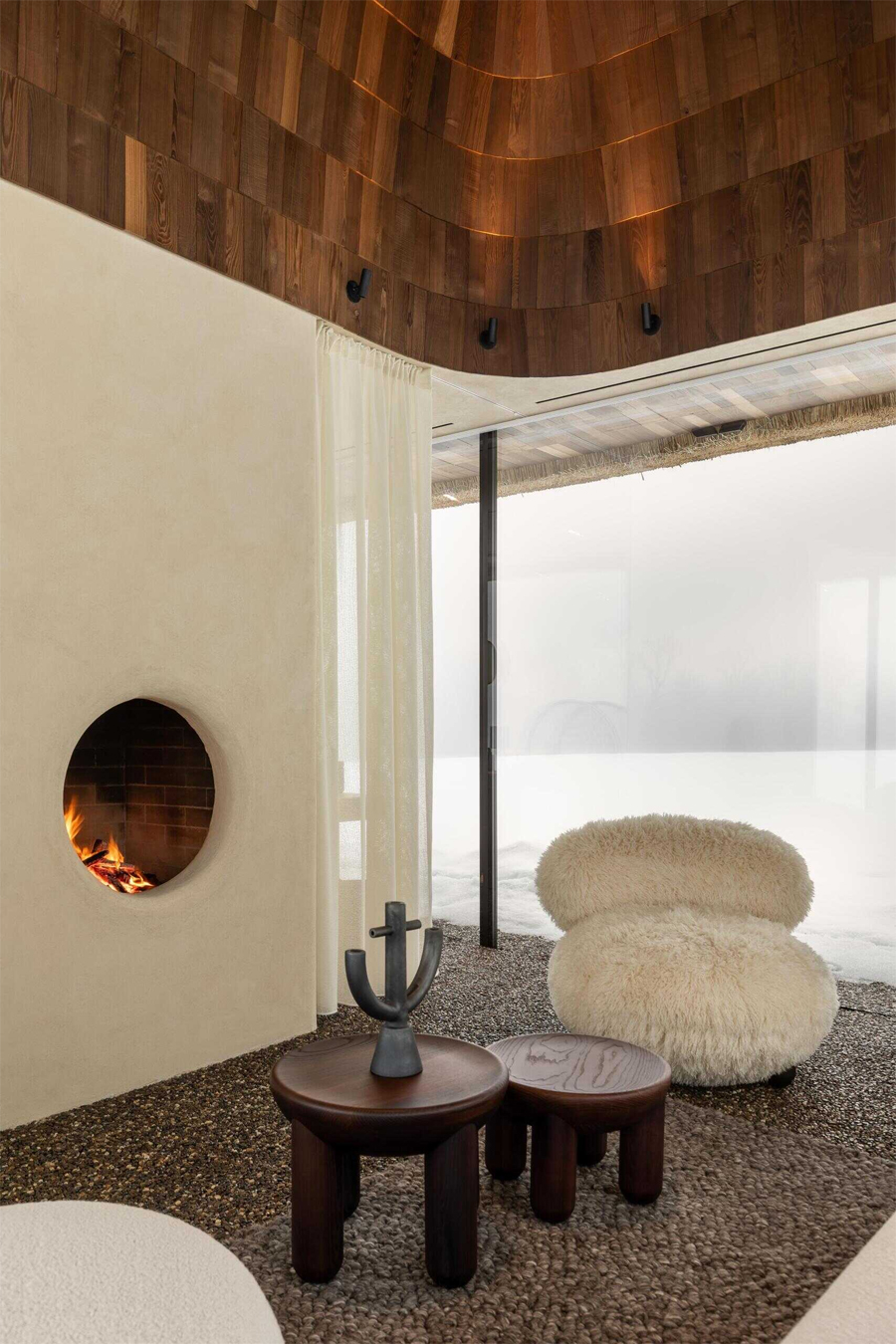
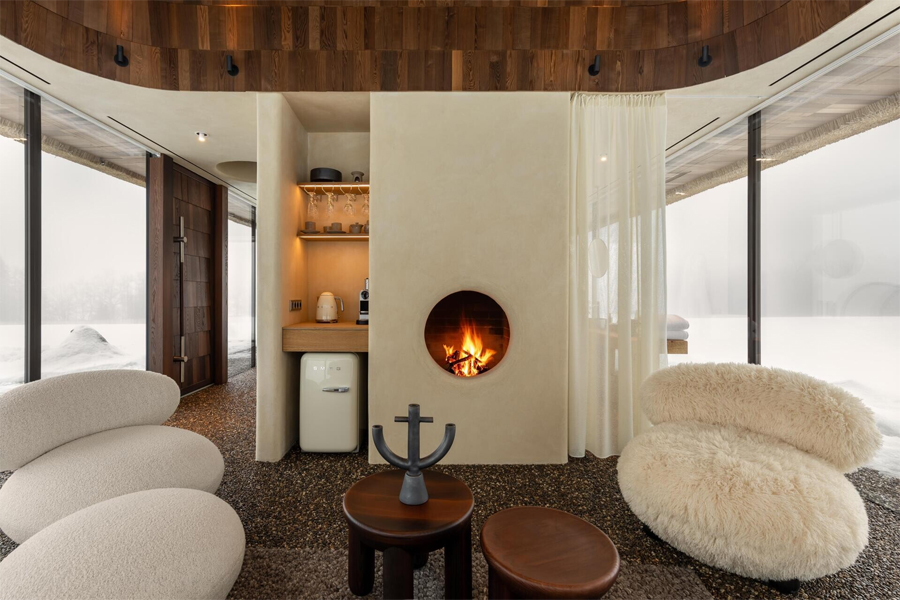
Visitors enter through a simple wooden door. Underfoot, a continuous stone carpet floor runs seamlessly from outside to inside, designed to feel natural and comfortable. Above, the roof dome rises to nearly ten meters and is lined with wooden shingles that hide all engineering systems. This keeps the interior visually calm and free from technical distractions.
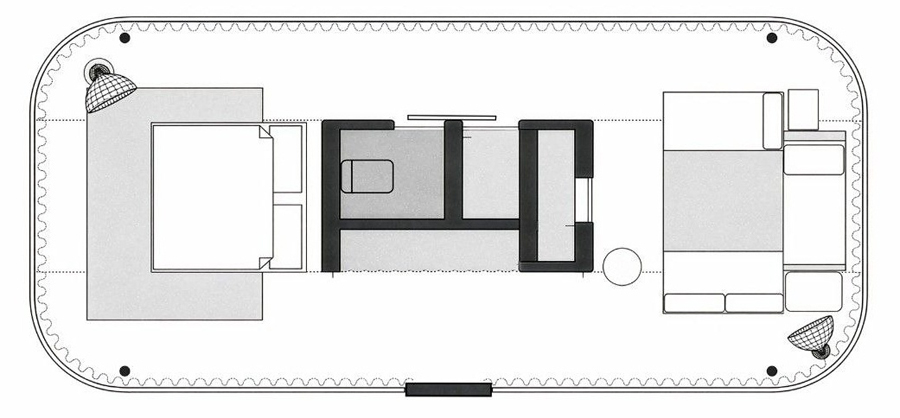
Inside, the layout is organized around a central concrete core. On one side sits the living room, intentionally minimal, with a built-in fireplace as its main focal point. There is no television. Fire and landscape replace screens, encouraging guests to slow down and stay connected to what is happening outside.
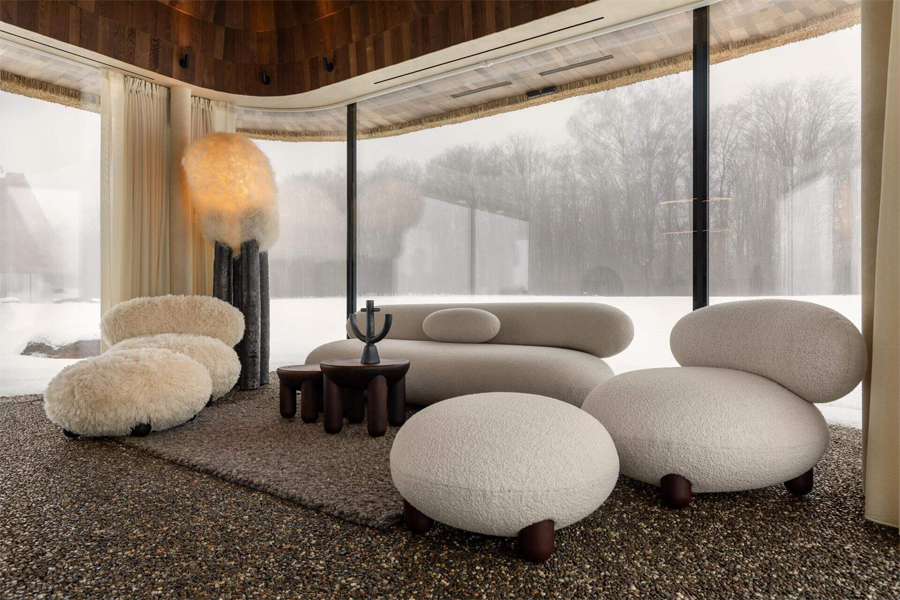
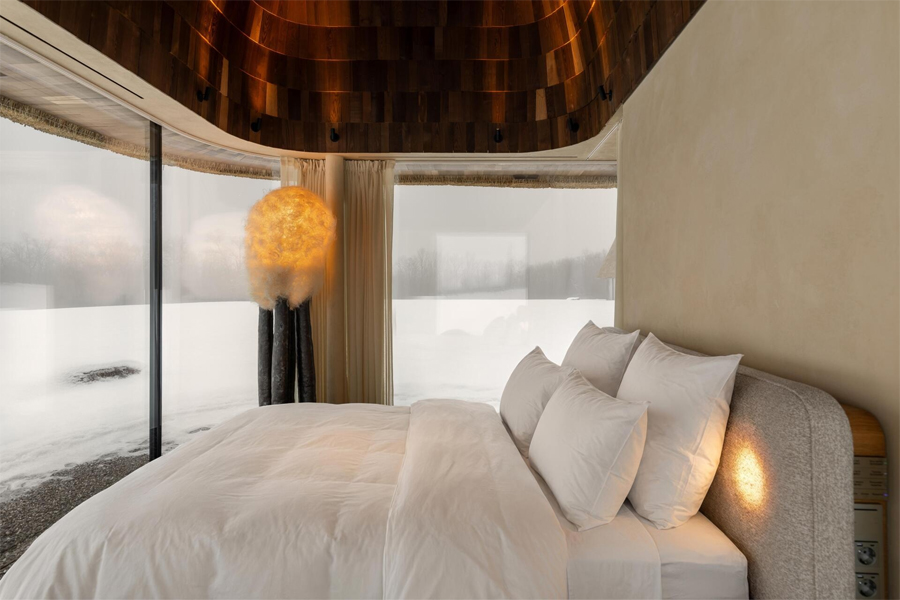
The bedroom occupies the opposite side of the core, creating a clear and balanced plan. Floor-to-ceiling glazing keeps the space open, while privacy is maintained through dense yet visually light curtains. These can be closed automatically using a control panel placed next to the bed.
This kind of thinking aligns closely with contemporary small-scale living trends. Projects often grouped under themes like 15 modern tiny houses show a similar philosophy, where architecture relies on clarity of form, strong singular ideas, and an intimate relationship with nature rather than decorative excess.
By allowing the roof to do most of the talking, these guesthouses achieve a rare balance. Glass walls, a simple plan, and one powerful architectural move come together to create a place where the building steps back, and the experience of light, space, and landscape takes the lead.