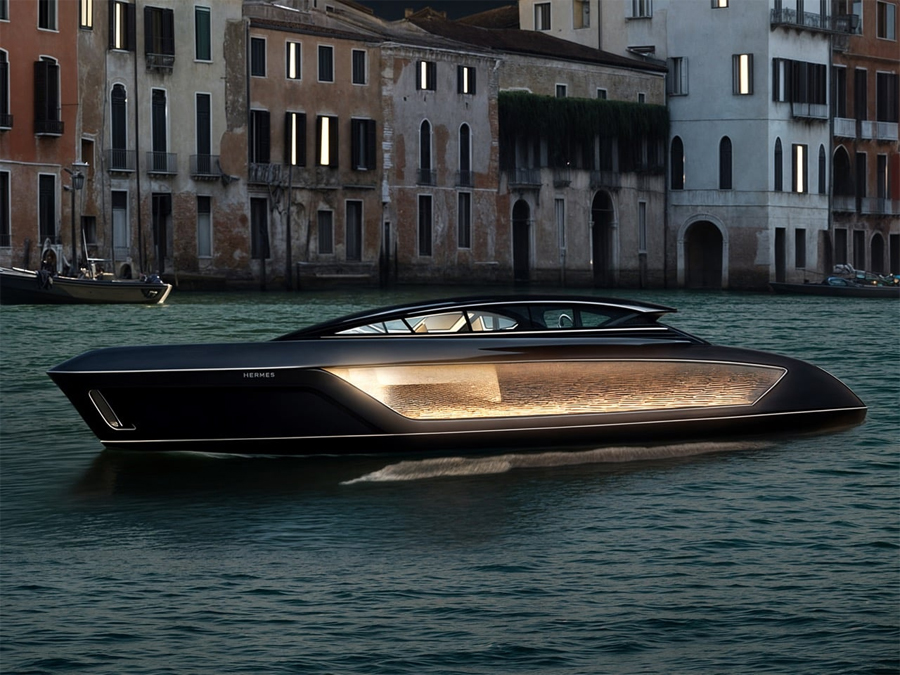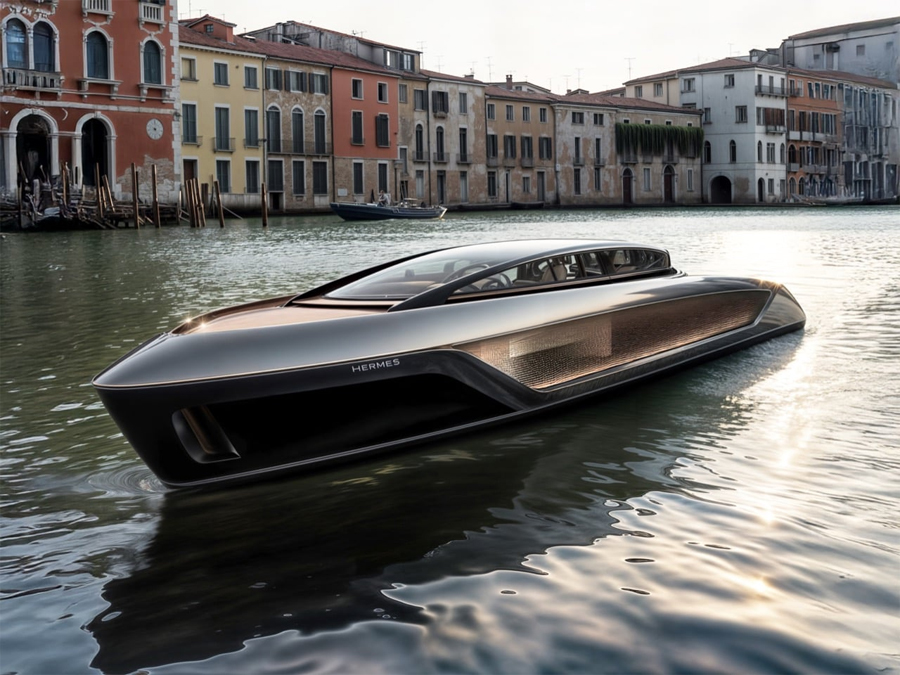
The visual tension is immediate. Classic gondolas glide quietly past centuries-old facades, while the Hermes Yacht concept cuts through the scene with sharp geometry and unapologetically modern lines. Designed by Paolo Demel, this 49-foot concept is not trying to blend in. It is meant to stand apart, using contrast as a design tool rather than something to soften or hide.
Demel describes the idea behind Hermes as futuristic elegance, a balance between luxury, performance, and restraint. The influence does not come from traditional yacht lineages but from haute couture, where surface treatment, material contrast, and proportion carry as much meaning as structure. That mindset shows in every aspect of the vessel, from its knife-edge bow to the textured bronze-toned side panels that shift character with changing light.
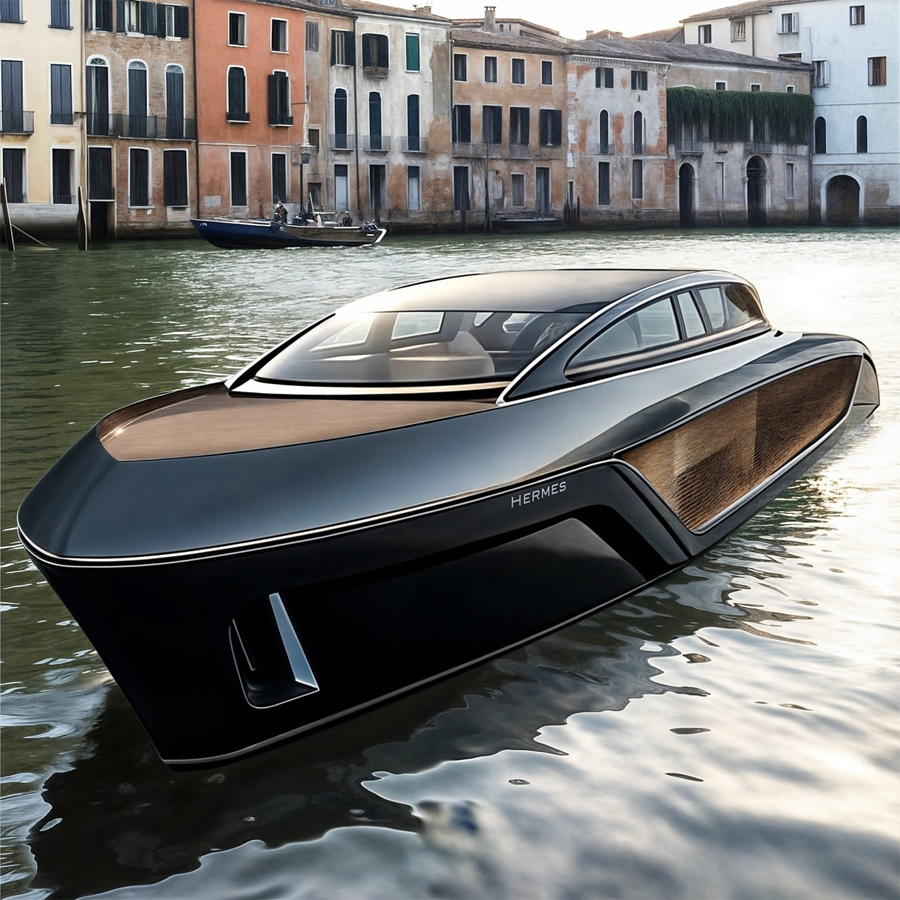
At 49 feet long, 14.5 feet wide, and roughly 9.5 feet tall, Hermes sits in a sweet spot between compact maneuverability and real interior volume. The hull relies on a fiberglass and aluminum combination to reduce overall mass without sacrificing rigidity. Lower weight directly improves efficiency, allowing higher speeds with less energy input. In marine terms, that simple physics advantage places the concept closer in spirit to the design logic behind some of the fastest speed boats, even though Hermes prioritizes balance over raw top-end numbers.
Hydrodynamics play a central role. The sharply defined bow reduces drag and improves water flow along the hull, translating into smoother cruising and better fuel economy. These principles mirror those found in performance automotive design, where aerodynamic gains compound quickly at higher speeds. In a city like Venice, where tight canals and limited sightlines shape movement, this precision becomes practical rather than theoretical.
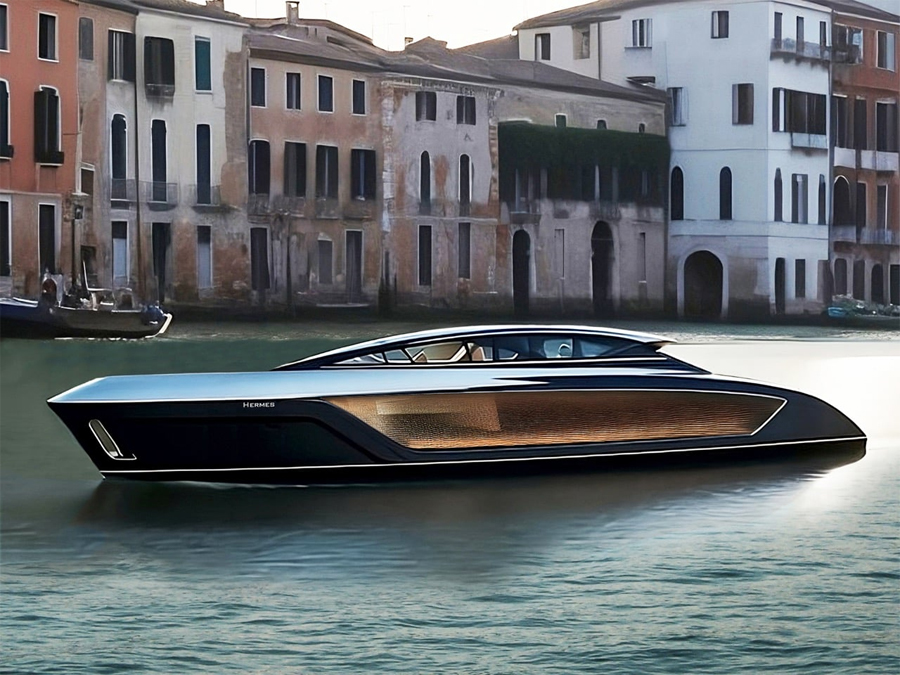
One of the more ambitious elements is the retractable keel and sail system. Instead of accepting compromise, Demel designed Hermes to physically change its configuration. Shallow draft while docked simplifies mooring and navigation in confined spaces. Once underway, the deeper keel and expanded sail surfaces improve stability and handling. The trade-off is mechanical complexity and maintenance, but the payoff is a vessel that adapts rather than settles.
The glass canopy wrapping the cabin reinforces that adaptability. It floods the interior with natural light while visually erasing the boundary between inside and outside. The yacht feels open without becoming exposed, a difficult balance that many luxury vessels attempt but rarely achieve cleanly. Materials inside follow the same philosophy as the exterior, restrained, tactile, and intentional rather than decorative for its own sake.
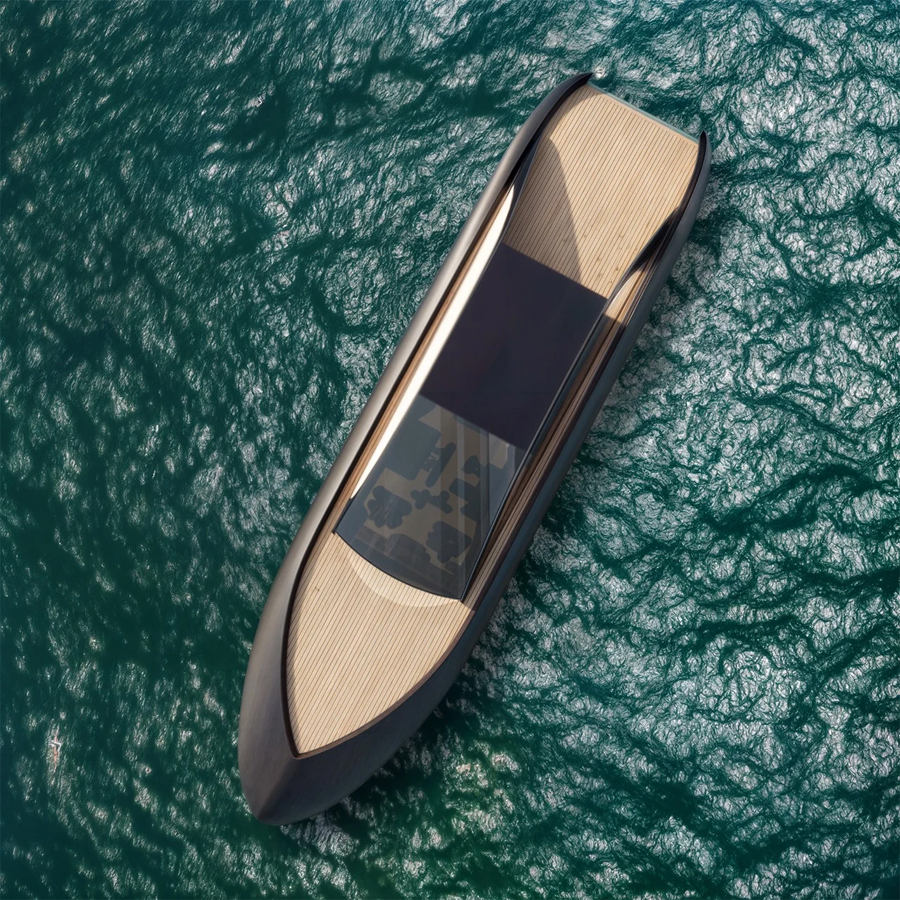
Hermes was developed over 18 months between Milan and Venice, and that dual context matters. Milan contributed fashion sensibility and industrial precision. Venice imposed spatial discipline and historical weight. Rendering the yacht in Venetian canals was not an accident but a statement. The design does not compete with history, nor does it mimic it. It coexists by being confident enough to remain itself.
Whether Hermes ever reaches production is uncertain. As a concept, it succeeds by showing how cross-disciplinary thinking can refresh a category often dominated by incremental change. By borrowing from fashion, performance engineering, and sustainable material strategy, Paolo Demel created a yacht that feels contemporary without chasing trends, and ambitious without relying on excess.