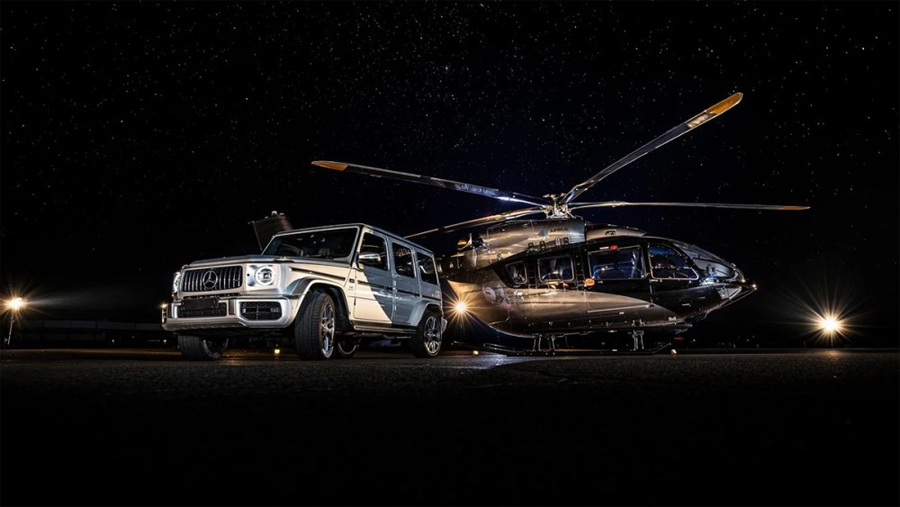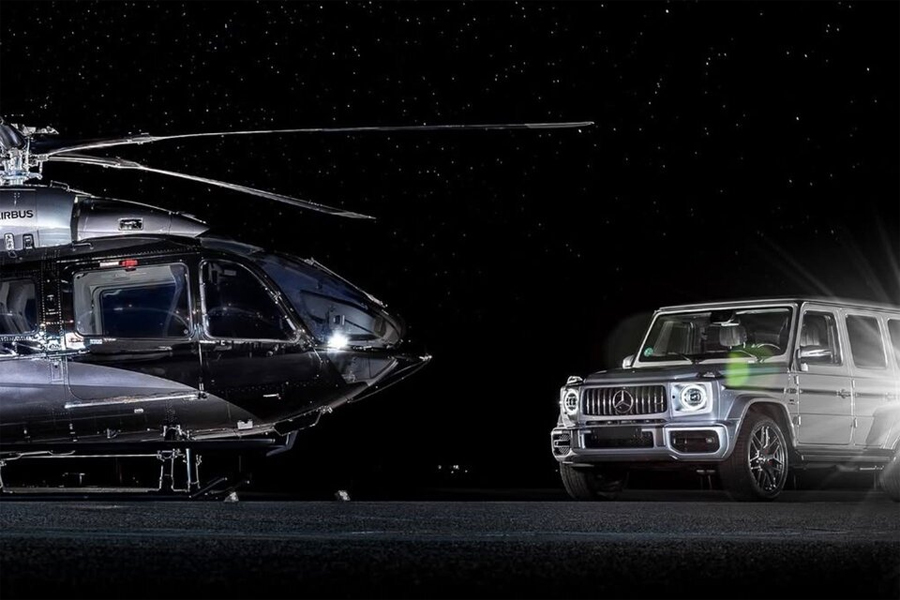
There is a particular kind of client that Airbus Corporate Helicopters and Mercedes-Benz have been thinking about for sixteen years. Not the charter passenger, not the offshore worker, not the emergency responder. The client who steps out of a Maybach at a private helipad, boards a helicopter, and expects the quality of their environment not to change. The ACH145 Mercedes-Benz Edition is the most considered answer yet to what that experience should feel like.
The partnership began in 2010, when ACH and Mercedes-Benz introduced the idea of bringing automotive design vocabulary into a helicopter cabin – an idea that, at the time, had no real precedent in the aviation industry. Twenty-six unique examples of the original ACH145 Mercedes-Benz Style were eventually delivered to customers. The collaboration agreement was renewed in 2021, this time with a specific mandate: go further. Not just styling references borrowed from the car division, but a genuine embedding of Mercedes-Benz’s current design philosophy, Sensual Purity, into every surface and spatial decision of the aircraft. The Edition name replaces Style for a reason.
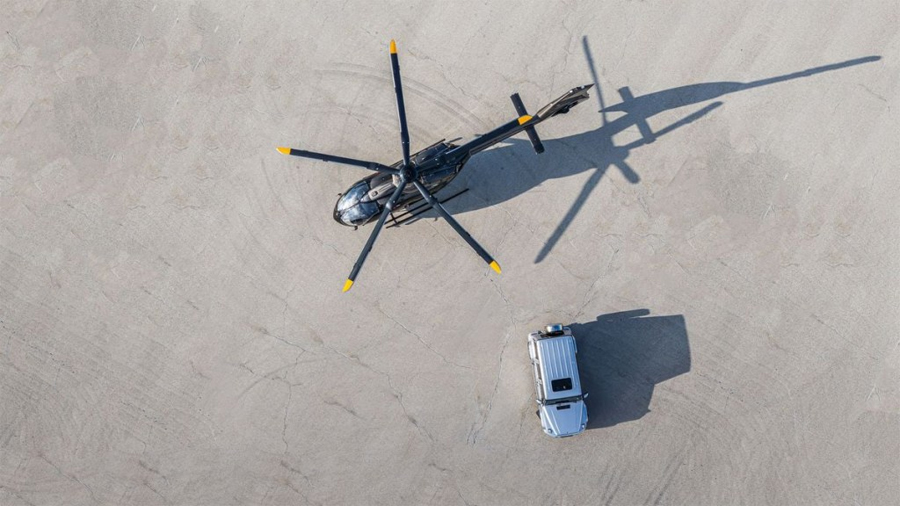
The technical platform underneath has been upgraded to match that ambition. Built on the latest five-bladed variant of the H145, the aircraft delivers 330 pounds of additional useful payload over its predecessor, reduced noise levels, and lower in-flight vibration – improvements that matter not just on specification sheets but in the lived experience of a two-hour flight over a city or a mountain range. The maximum cruise speed sits at 137 knots, endurance runs to approximately four hours, and the twin-engine configuration provides the operational reliability that clients at this level quietly expect and rarely think to ask about.
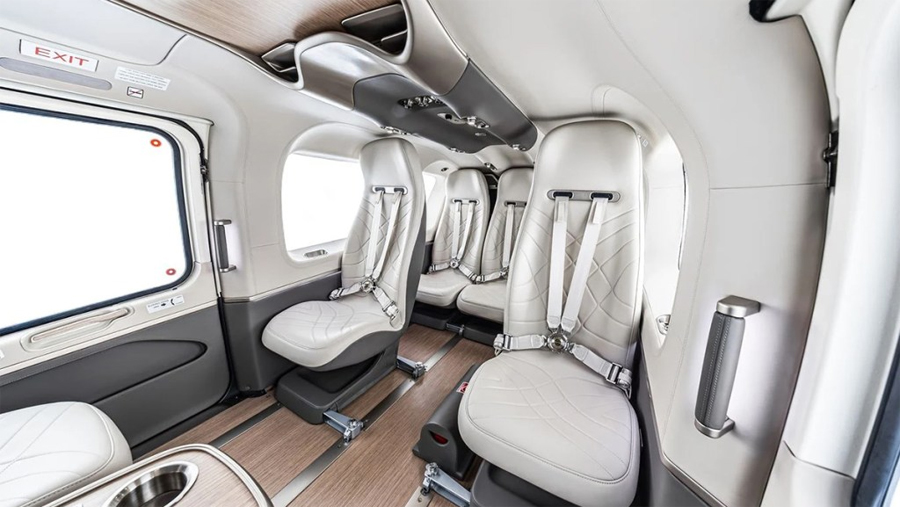
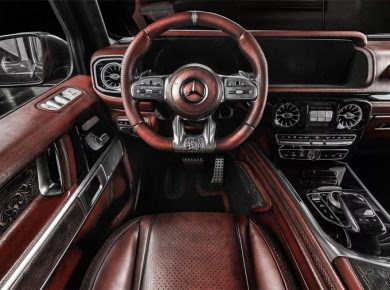
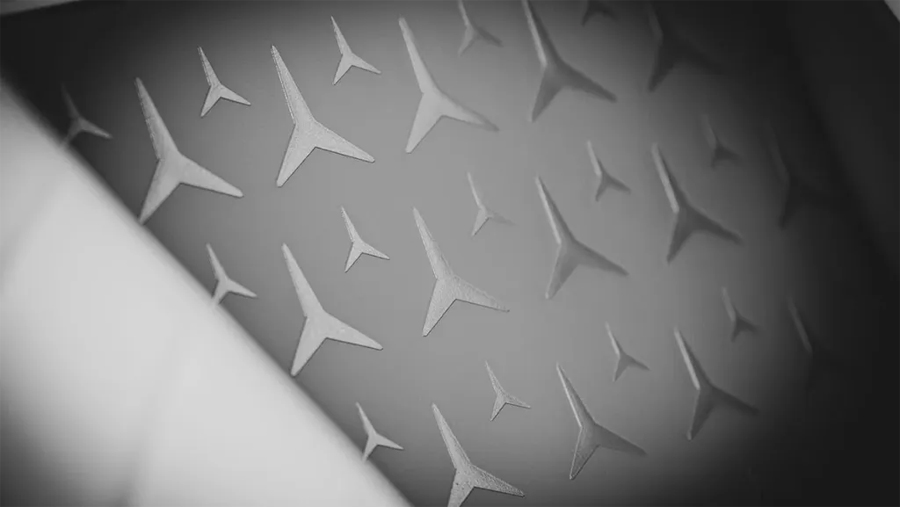
The interior is where the Edition earns its distinction. The cabin draws its spatial logic from the Mercedes-Benz EQS and the Maybach Ultimate Luxury show cars – a wraparound architecture defined by continuous, sculpted surfaces and an absence of the visual interruptions that make conventional helicopter interiors feel assembled rather than designed. Wood veneers introduce warmth. Metallic accents provide contrast. Leather is used not as a luxury signifier – at this level, leather is assumed – but as a material capable of delivering both comfort and tactile quality over the duration of a flight. The seats are sculpted to support the body during flight while maintaining a visual lightness that prevents the cabin from feeling heavy or crowded. Coordinated stitching runs across the interior with the kind of consistency that only matters when it is absent.
Buyers choose from six signature interior themes – Atlas, Meteor, Phoenix, Zenith, Polaris, and Solaris – and can configure the aircraft in four to eight-seat layouts across two or three rows. Cabinets integrate at the front and rear; compartments between seats handle carry-on luggage. For clients whose requirements fall outside the six named themes, bespoke configuration is available, as it generally is when the aircraft’s starting price is expected to land well above ten million dollars.
The choice of São Paulo for the unveiling was not incidental. The Brazilian city operates the world’s largest private helicopter fleet and the only urban airspace with a dedicated rotorcraft air traffic control system – a place where helicopters function as genuine infrastructure rather than occasional luxury. Launching there was a precise statement of intent: this aircraft exists for people to whom helicopter travel is not an event but a routine, and for whom the quality of that routine deserves the same attention as everything else in their professional and personal lives.
Sixteen years into the collaboration, the ACH145 Mercedes-Benz Edition represents the most resolved version of the argument that ACH and Mercedes-Benz first made in 2010 – that the language of automotive luxury is fully transferable to the air, and that the transition between one and the other should feel, for the right client, entirely seamless.