Pent has never been interested in quiet objects. This is the same European design house that turned treadmills and dumbbells into ceremonial pieces, objects meant to be acknowledged rather than hidden. With its audio division, the philosophy stays intact. Speakers are no longer furniture-adjacent utilities. They are statements.
The new line, known as Pent Audio, treats sound as a visual presence. These speakers do not blend in, and they do not attempt to. They hold eye contact. The centerpiece is Gulia, a loudspeaker priced between $7,200 and nearly $9,000 depending on how far you lean into customization. That number alone makes the intent clear. This is not a value play, not a numbers game for spec-sheet maximalists. Gulia exists in a different conversation entirely.
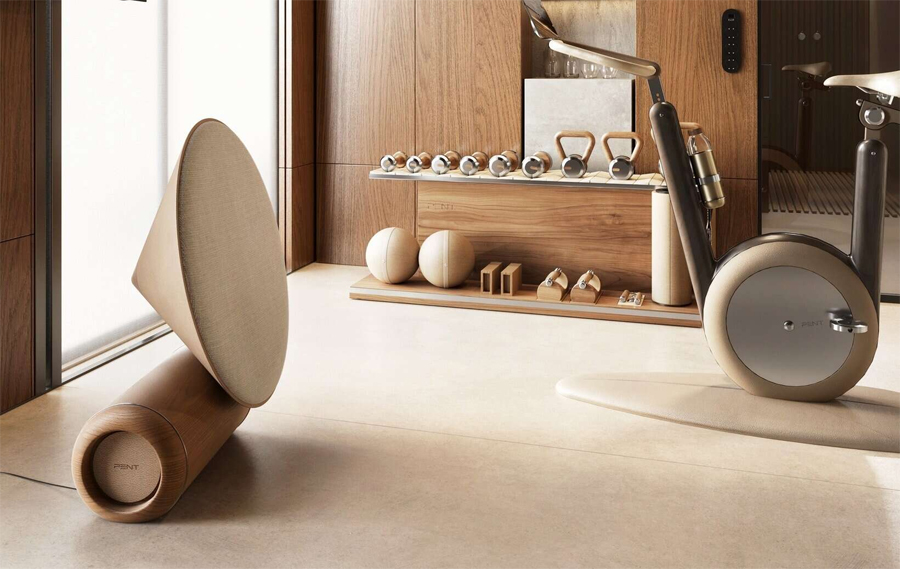
Visually, it reads as sculpture before anything else. A broad, assertive cone rests on a solid wooden cylinder, calm and grounded, almost defiant in its simplicity. The form feels deliberate and slightly confrontational, as if the object expects to be noticed and respected. Nothing about it suggests it should disappear into the background.
That attitude reflects the mindset of Marcin Raczek , Pent’s founder, who often speaks about design in terms of movement, ritual, and presence. There is a distinctly Polish sensibility at work here. Craft-forward, expressive, and uninterested in minimalism for its own sake. These speakers do not whisper quality. They announce it.

One of Gulia’s most unusual decisions is functional rather than visual. It does not require a pair. A single unit produces a full stereo image, eliminating the traditional left-right setup that dominates home audio. For some listeners, that will feel radical. For others, liberating. No cables stretched across the room. No rearranging furniture to satisfy symmetry. One object. One anchor point.
Inside the structure, the engineering follows the same philosophy of separation and clarity. A 6.5-inch woofer sits in the base, powered by an 80-watt Class-D amplifier. Above it, two midrange drivers and two silk-dome tweeters operate with their own dedicated amplification. Nothing competes for space or power. Each component has a defined role.
Pent describes the result as immersive sound without visual clutter. No towers flanking a television. No black boxes lurking at ankle height. Gulia stands alone, both physically and conceptually.
Connectivity is thoroughly modern. Bluetooth, Wi-Fi, AirPlay, Spotify, Tidal, Deezer, and internet radio are all supported. A dedicated app with multiroom functionality is in development, signaling that Pent understands design cannot compensate for unfinished technology. Elegance still needs reliability.
Materials, however, are where the brand fully leans in.
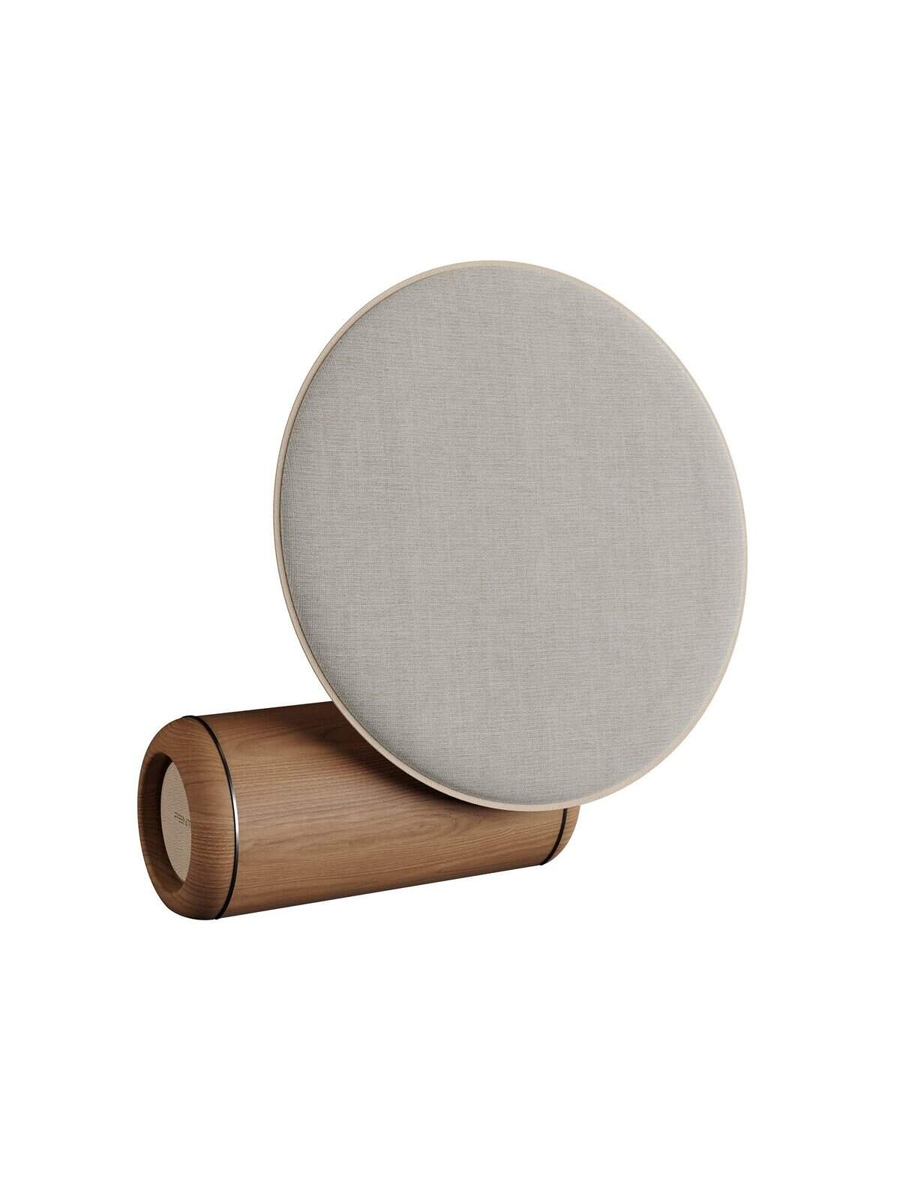
Gulia can be specified with the same attention usually reserved for luxury interiors. Wood options include walnut, ash, oak, and black ash. Leather-wrapped surfaces come in white, beige, darker beige, or black. Grilles follow suit, with tones that feel chosen by someone who owns actual fabric samples. Accents can be stainless steel or gold, depending on how subtle you want to be, or not.
For those who prefer guidance, four curated combinations are available. Even so, the process feels less like choosing a product and more like co-authoring an object. Pent encourages that mindset. Ownership here is meant to feel intentional.
This level of indulgence is not accidental.
Pent is not competing with mass-market wireless speakers or even established design-forward audio brands. The target audience is smaller and more specific. People who treat living spaces as extensions of identity. People who care deeply that nothing in the room feels arbitrary.
Gulia does not hide. It anchors.
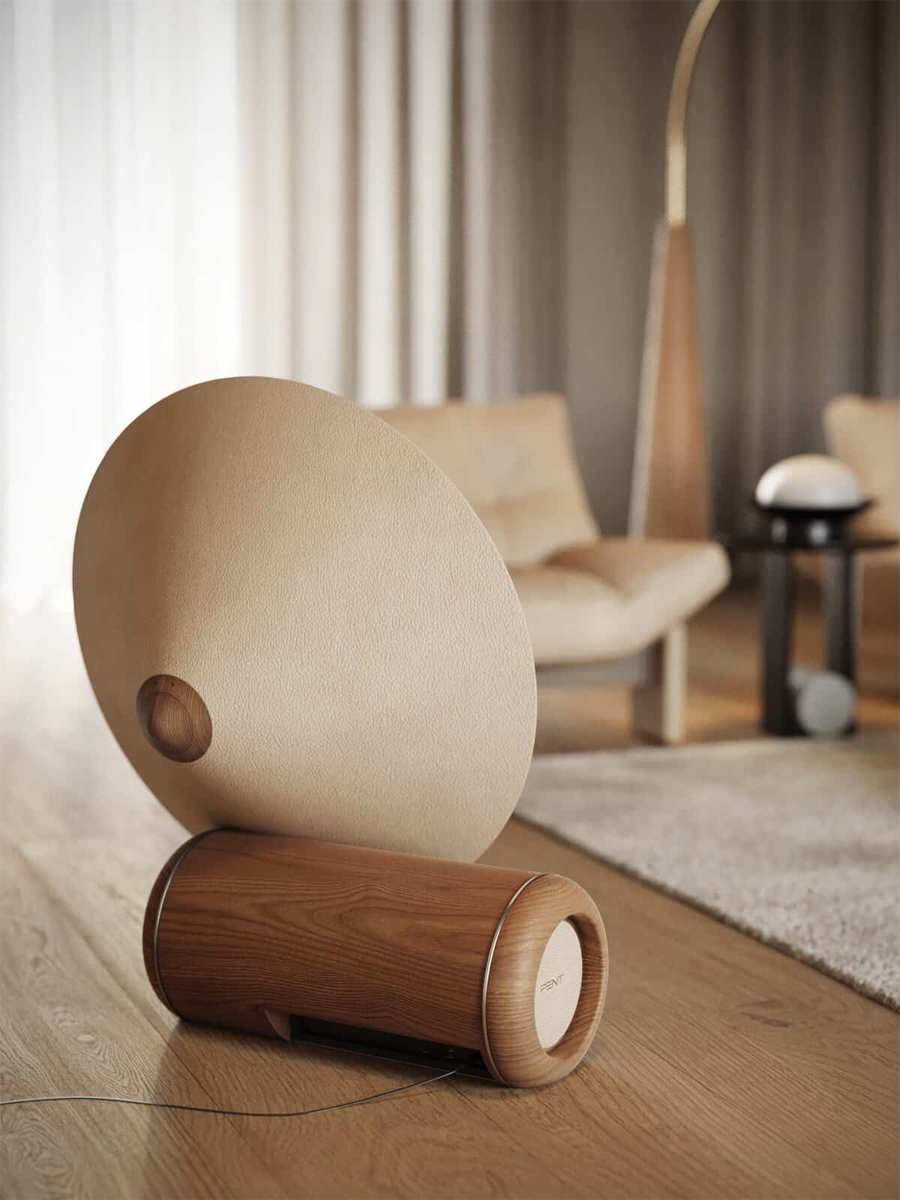
Whether that presence justifies an $8,000 price tag depends entirely on expectations. Invisible efficiency exists elsewhere, for far less money. But for those who want technology that invites conversation, that insists on being seen and touched, Pent makes a strong argument.
At minimum, Gulia forces an overdue question. Why have speakers spent decades apologizing for their existence? We live with them. We look at them every day. Perhaps they should finally act like they belong.
Pent seems convinced of that idea. It is hard not to see the appeal.