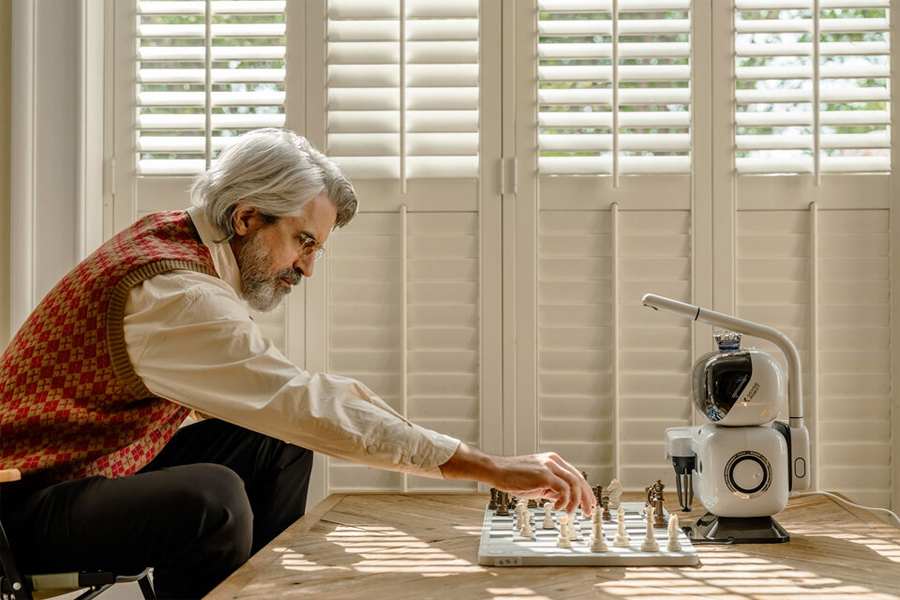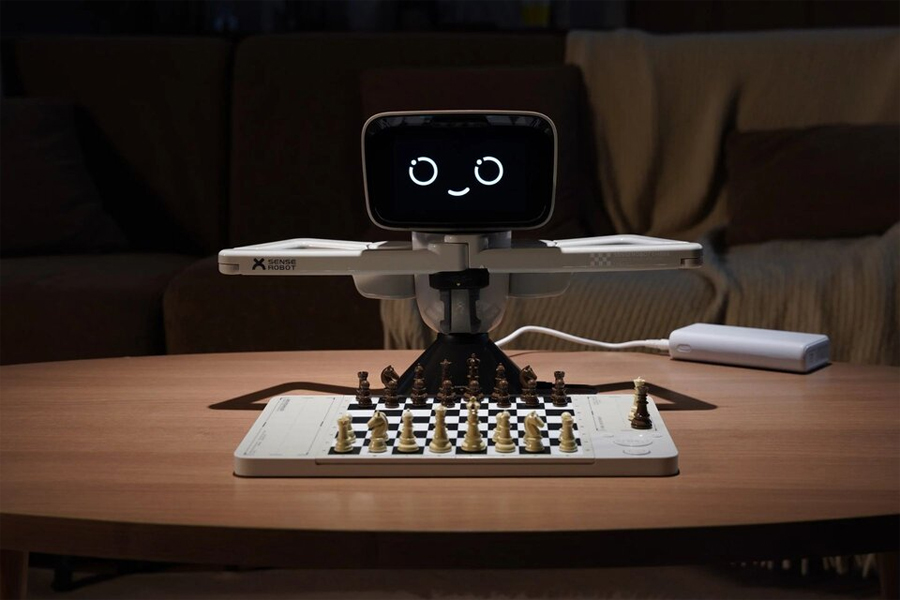
Chess software has been beating grandmasters for decades. What it has never been able to do is reach across a table and move a piece. That distinction – small in description, large in experience – is exactly what SenseRobot Chess Mini is built around.
The context matters. When The Queen’s Gambit landed in 2020 and sent millions of new players scrambling toward online platforms, chess completed its migration to the screen. Fast, frictionless, infinitely accessible – and completely disembodied. The tactile dimension of the game, the weight of a piece in your hand, the physical presence of an opponent across a real board, quietly disappeared. SenseRobot’s argument is straightforward: while digital platforms have transformed how chess is learned and analyzed, staring at a two-dimensional monitor strips away something fundamental that no amount of analytics can replace.
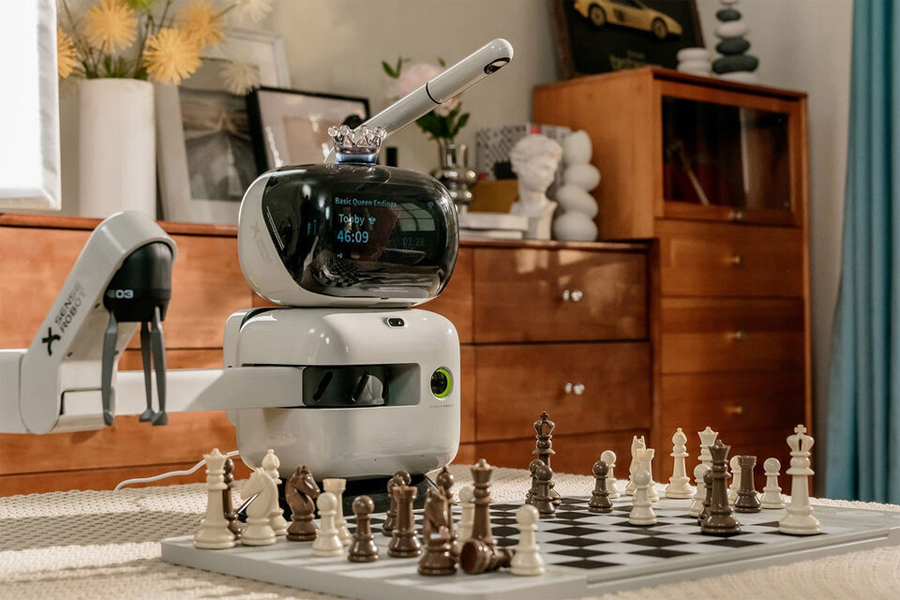
The company first drew attention in 2022 when it began shipping what it claims is the world’s first mass-produced AI robotic chess system – dual robotic arms that physically move pieces on a real board. Since then, it has shipped over 130,000 units across 29 countries, earned an official partnership with the European Chess Union, and collected an Innovation and Partnership Award. The Chess Mini is the next chapter: a compact version aimed at bringing the same technology to a broader and more price-sensitive audience.
The hardware is the central proposition. The robotic arm delivers millimeter-level positioning with a soft yet firm claw grip – strong enough to hold each piece securely, gentle enough to avoid damage – while a camera system reads board positions with over 99.9% recognition accuracy in real time. The whole package compresses into a footprint roughly equivalent to a 13-inch laptop, making it portable enough to carry to a chess club or set up on a coffee table without rearranging your life around it.
The AI underneath scales across 19 difficulty levels built on the Elo rating system. The top tier is not theoretical – it was put to the test in a competitive match in Toulouse in 2024, where the system beat professional competitors. For players at the other end of the spectrum, a built-in LLM functions as a live coaching layer, explaining the logic behind each move as the game unfolds rather than simply flagging mistakes after they’ve been made – a meaningful difference in how useful the feedback actually is for improvement.
The historical game library adds another dimension entirely. Load any of 100 famous games, watch the moves play out physically on the board piece by piece, then take control at any point and continue against the AI from that exact position. It works with the included set, third-party pieces, and custom 3D-printed pieces alike. The system also syncs with major online chess platforms, with no phone or external screen required.
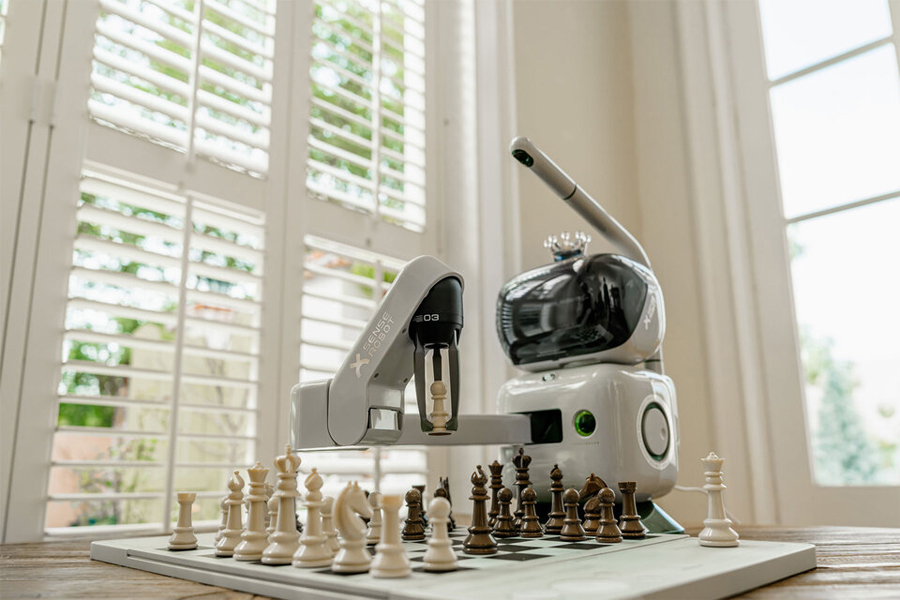
At CES 2026, André Vögtlin, President of Swiss Chess, spoke publicly about the product’s potential to reshape how chess is taught and played at the club level. That kind of institutional endorsement reflects something real: this is not a novelty product for people who want a robot on their shelf. It is a serious attempt to solve the problem of playing chess the way it was meant to be played, without requiring another human to sit across from you.
Early bird Kickstarter pricing is $399, with a planned retail price of $639. Global shipping to early backers is estimated to begin in July 2026. For anyone who has ever felt that grinding through online games on a glowing screen is missing something essential, that price point makes the answer to what it is missing considerably easier to justify.