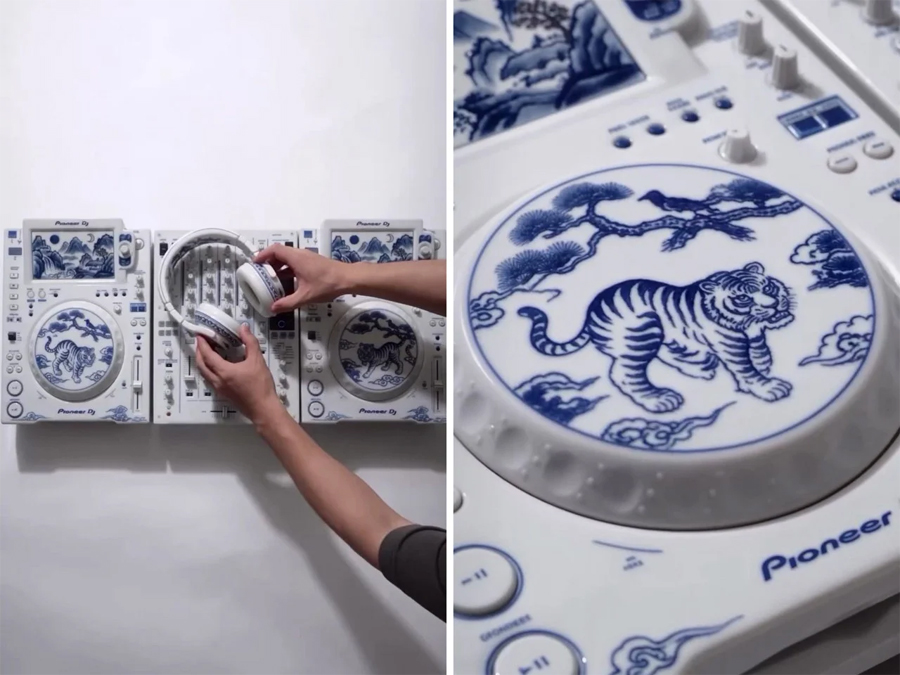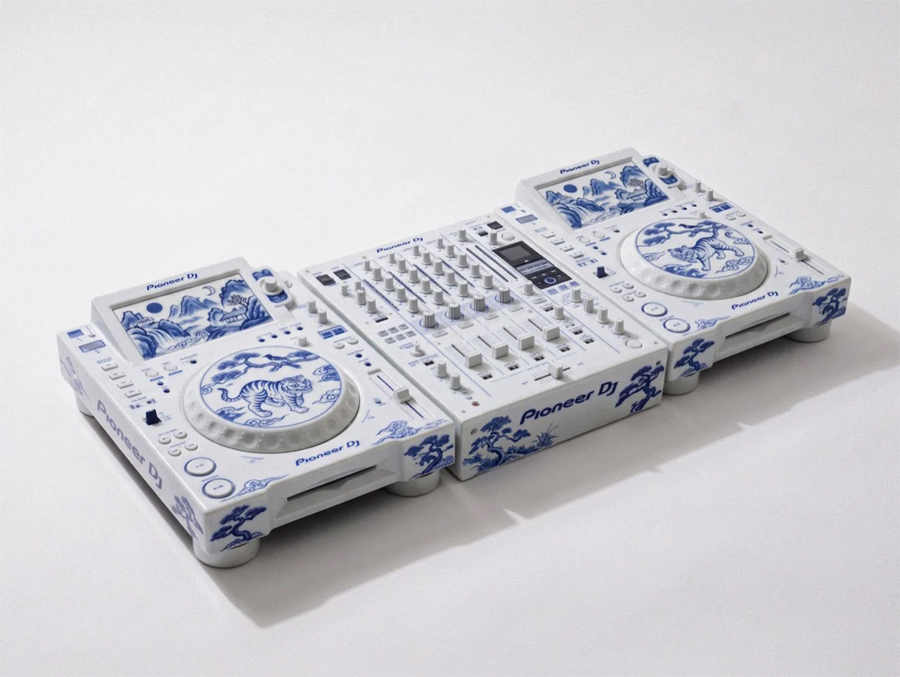
DJ equipment rarely looks like something you would display behind glass in a museum, but this unusual concept from designers patchkims and takitani.lab makes a convincing case for changing that. Dubbed the “Joseon Baekja Prototype,” the design reimagines a Pioneer DJ setup in the style of traditional Korean blue-and-white porcelain, transforming professional club hardware into an elaborate piece of decorative art.
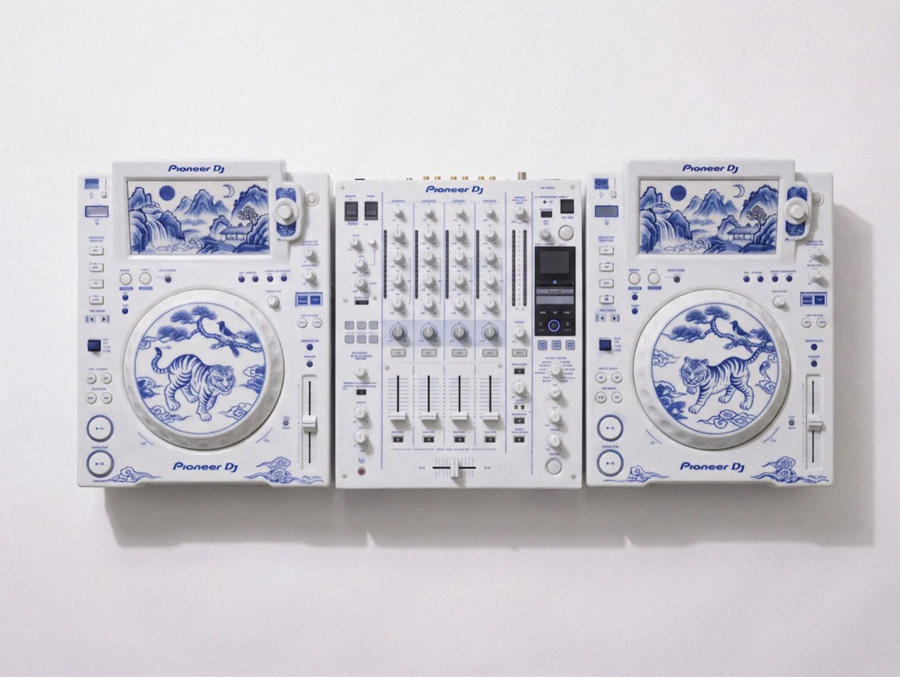
The concept includes two DJ decks and a four-channel mixer, all finished in a bone-white ceramic-inspired surface decorated with intricate cobalt-blue illustrations. Tigers, magpies, pine trees, and traditional landscape imagery replace the familiar industrial aesthetic of modern DJ equipment. The result looks less like something destined for an Ibiza nightclub and more like an artifact from a royal collection.
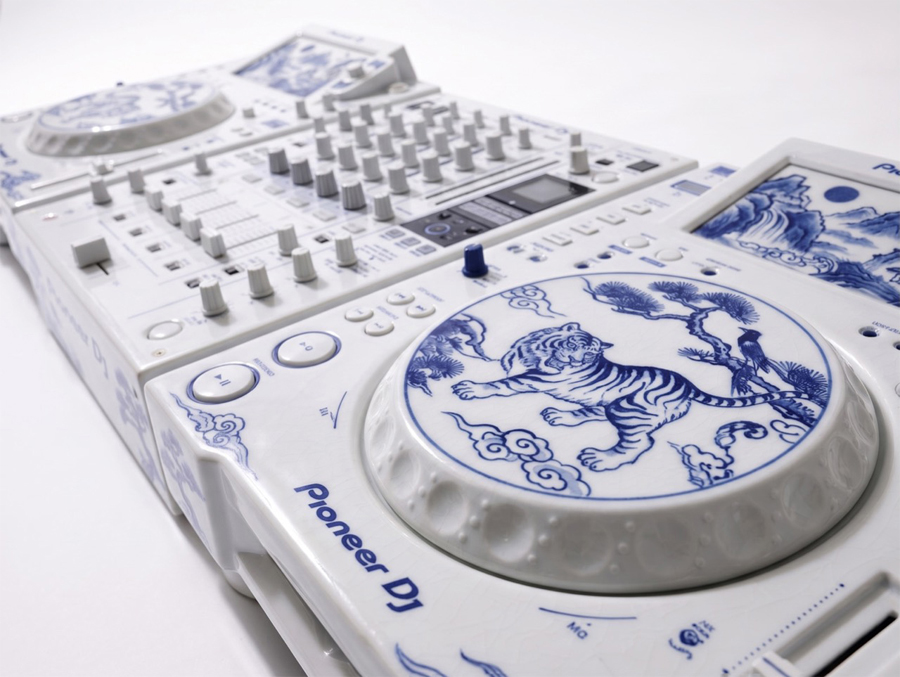
The most striking details appear on the jog wheels. Each one features a tiger and a magpie perched in a pine tree, referencing kkachi horangi, a traditional Korean folk-painting style. These works often depicted exaggerated, almost comical tigers alongside magpies, using humor and symbolism to comment on social hierarchy. Bringing these characters onto DJ platters creates an unexpected meeting between centuries-old visual storytelling and contemporary music culture.
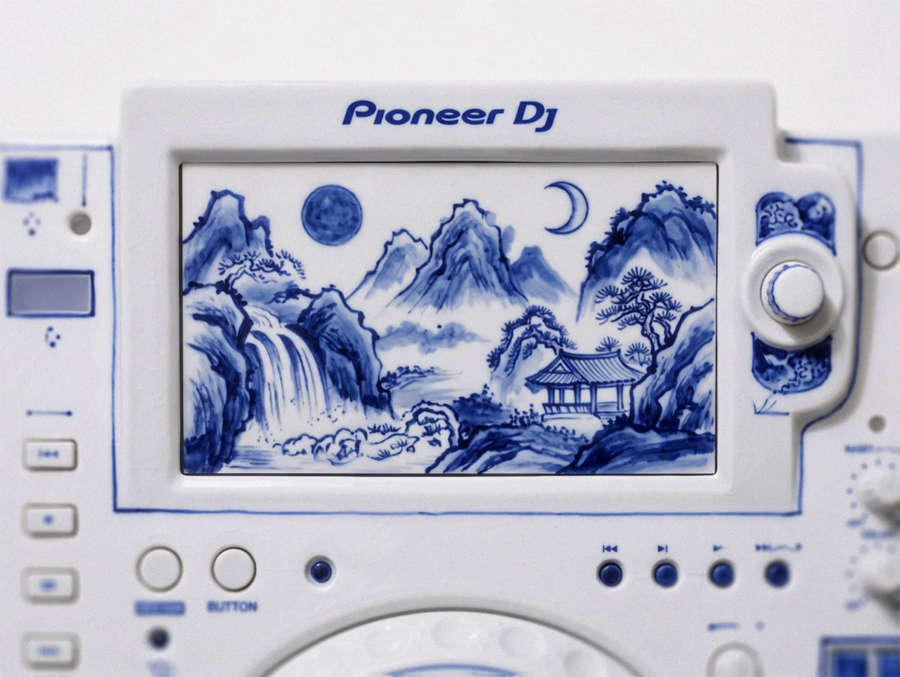
The displays continue the historical references. Instead of conventional waveforms and track information, the screens show mist-covered mountains, waterfalls, pavilions, and celestial imagery. Their composition recalls Irworobongdo, the painting of the sun, moon, and five peaks traditionally displayed behind the Korean king’s throne during the Joseon dynasty. On a DJ console, these royal symbols create a visual parallel between the monarch’s ceremonial seat and the elevated position of a headliner performing before a crowd.
The color palette is equally important. White porcelain decorated with cobalt blue has a long history in Korean ceramics, particularly during the Joseon period. The contrast between the pale surface and detailed blue painting gives the imagined equipment a refined, almost antique appearance. The concept translates that tradition into a contemporary object without losing the visual richness that made the original ceramics so distinctive.
Despite its convincing appearance, the Joseon Baekja Prototype is an AI-generated design concept rather than a production product. Its creators have presented it as a one-of-a-kind idea, and there is currently no indication that a physical version will be manufactured. The design draws inspiration from Pioneer DJ equipment, with the overall arrangement resembling an earlier generation of professional CDJ players and a central mixer.
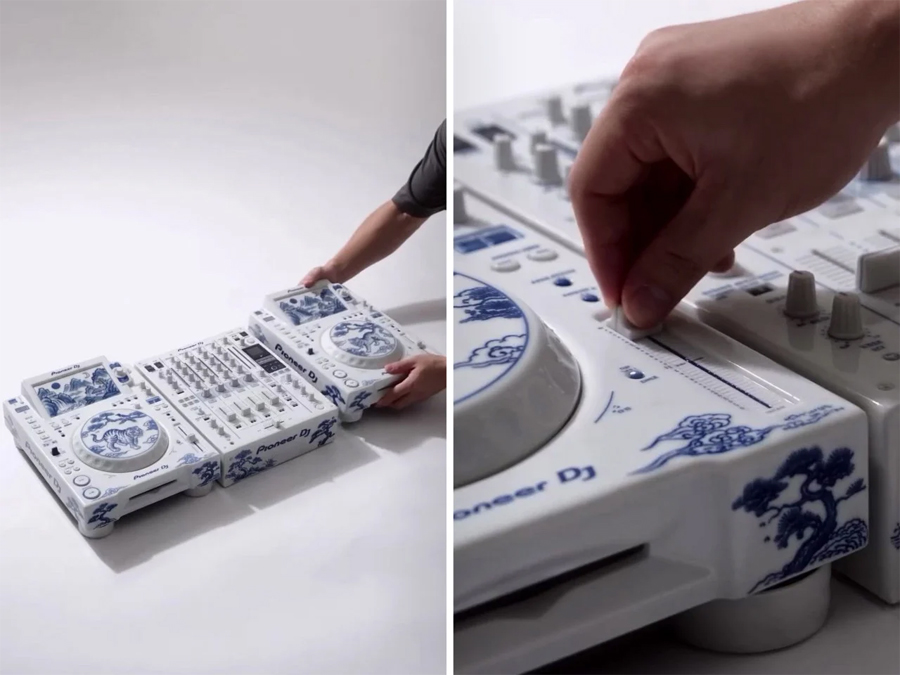
That distinction does not make the concept any less interesting. It demonstrates how familiar technology can be reimagined through cultural references, turning equipment normally associated with dark clubs and flashing lights into something that could occupy a place in a carefully curated interior. Whether or not it ever leaves the digital world, this porcelain-inspired DJ setup offers a fresh perspective on the relationship between music, industrial design, and traditional art.