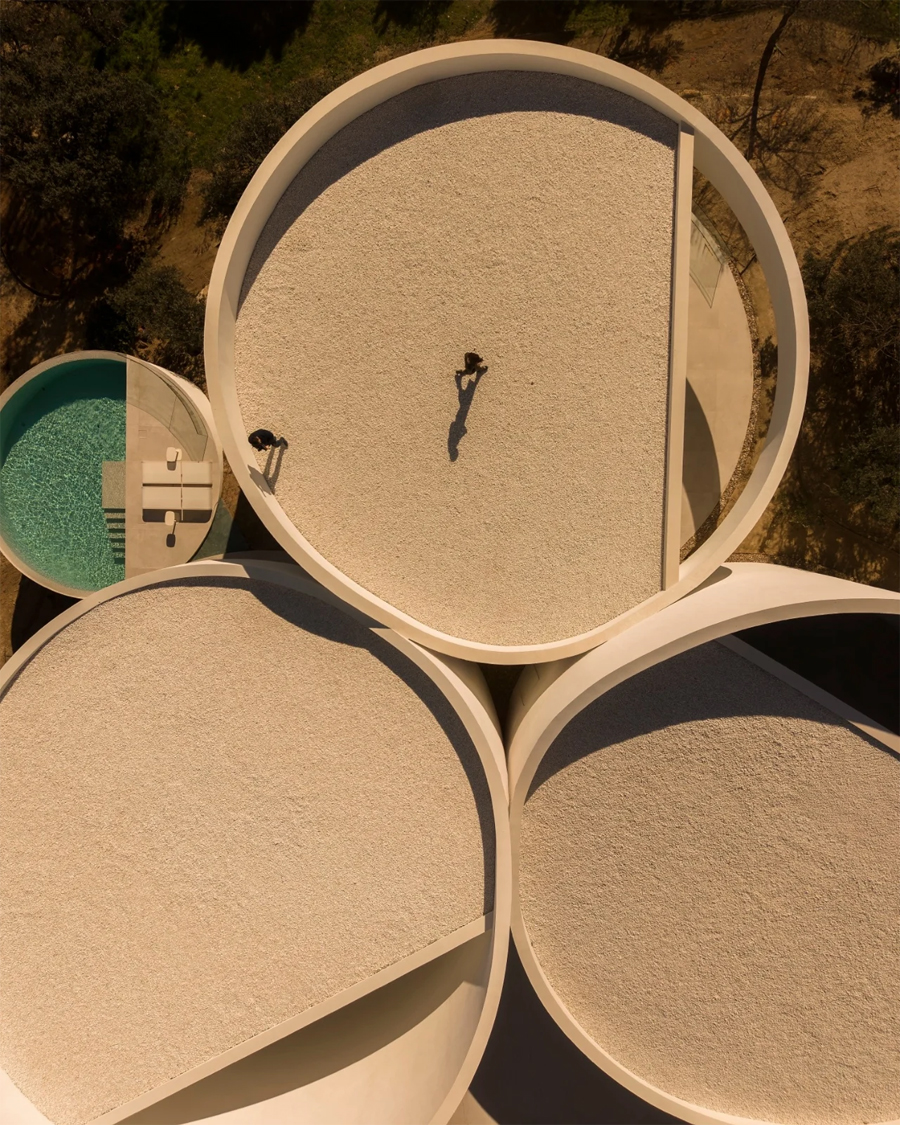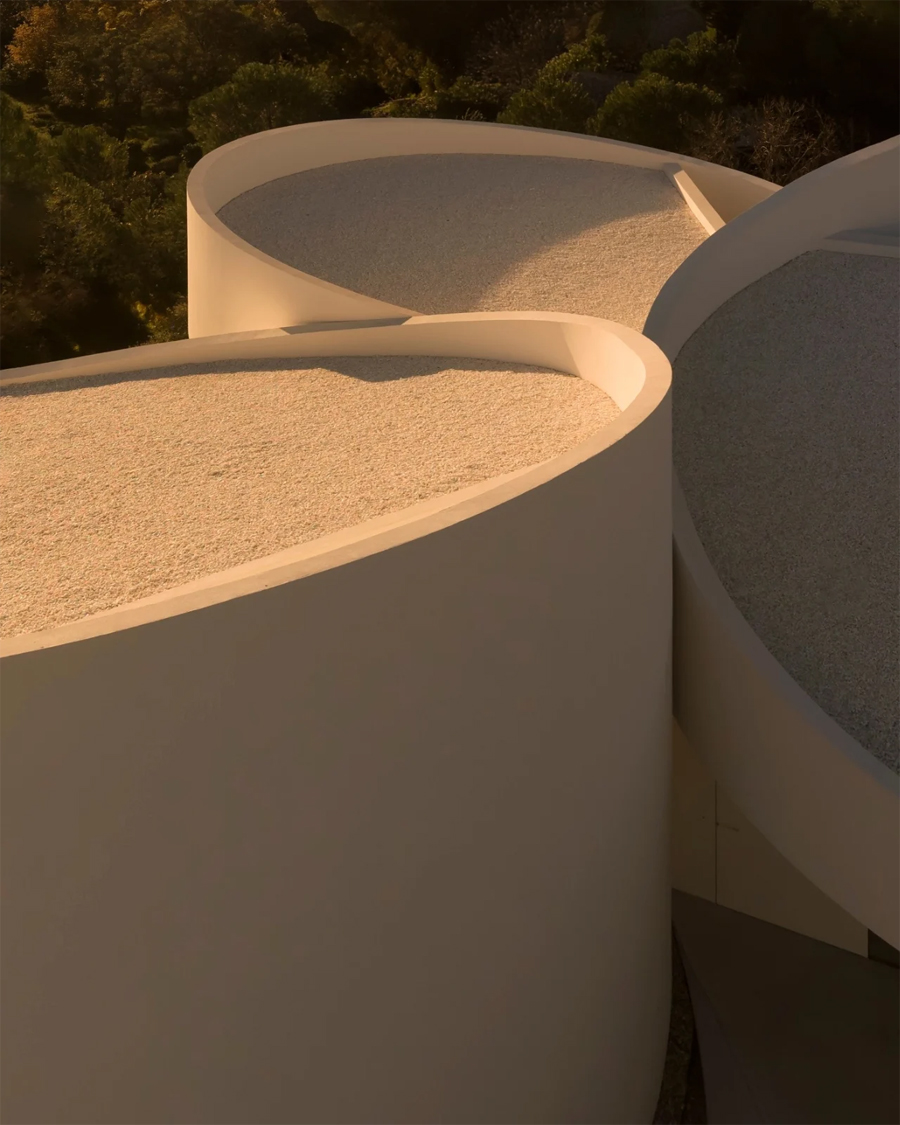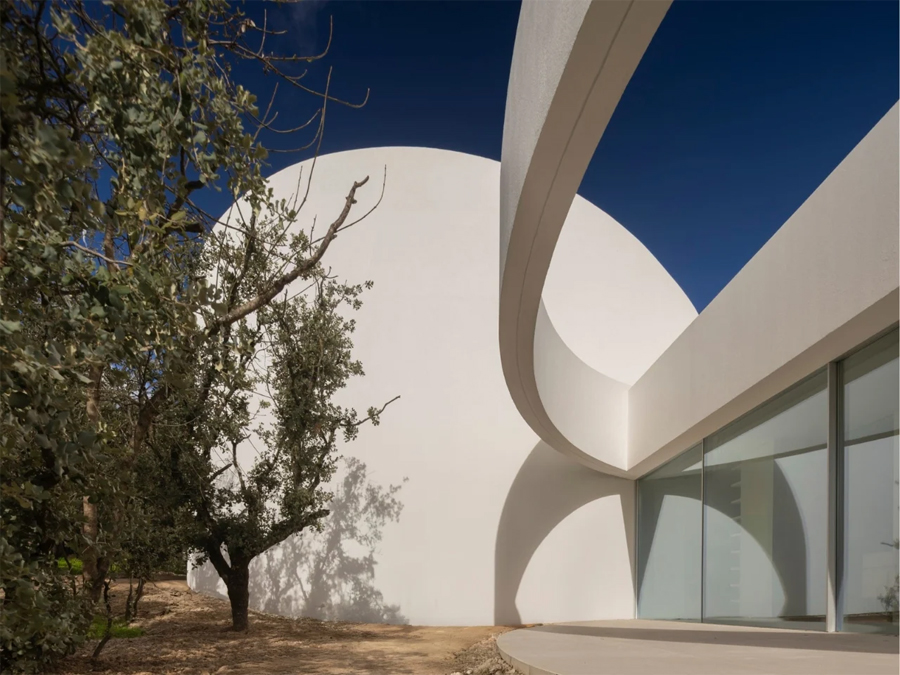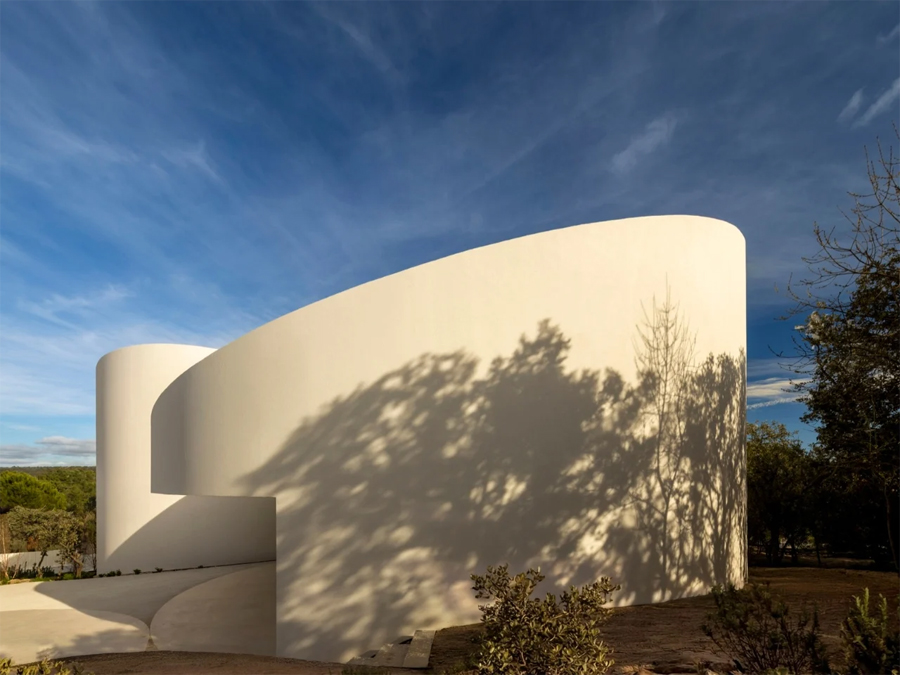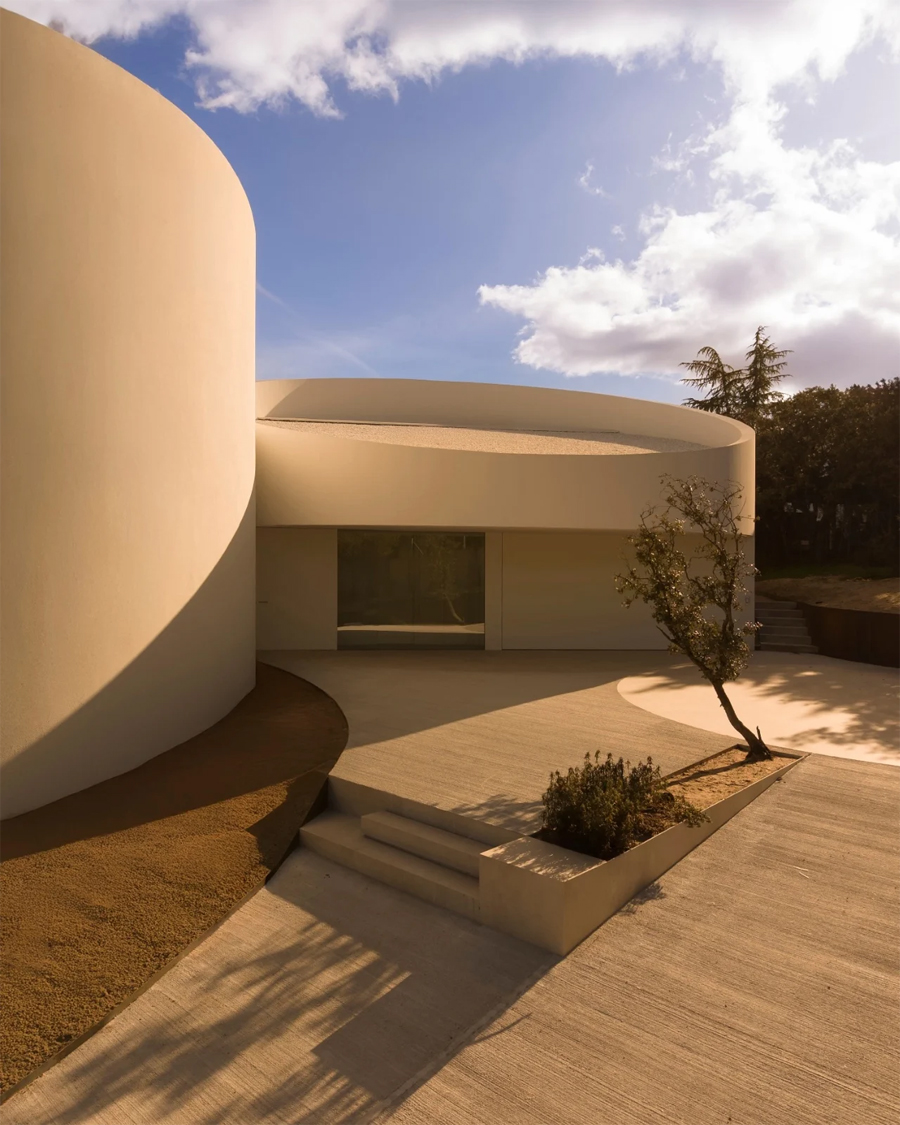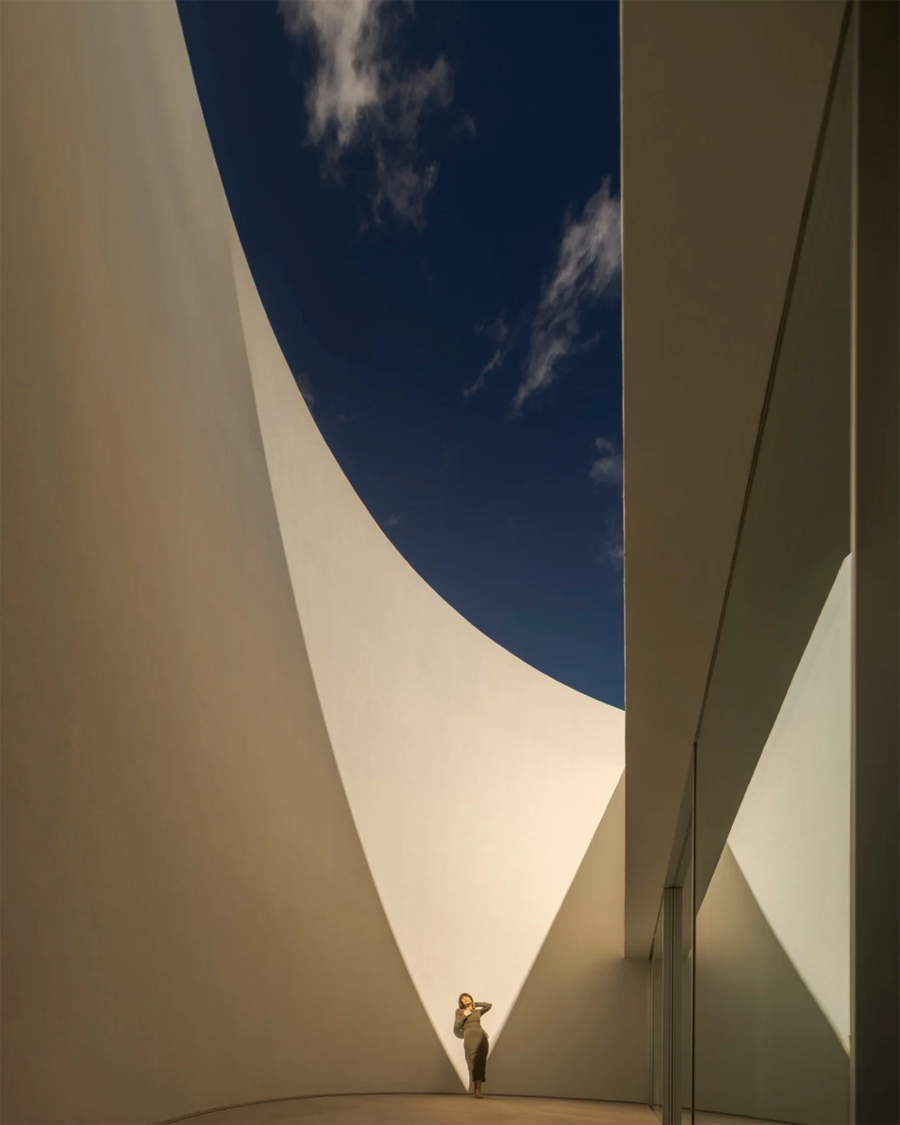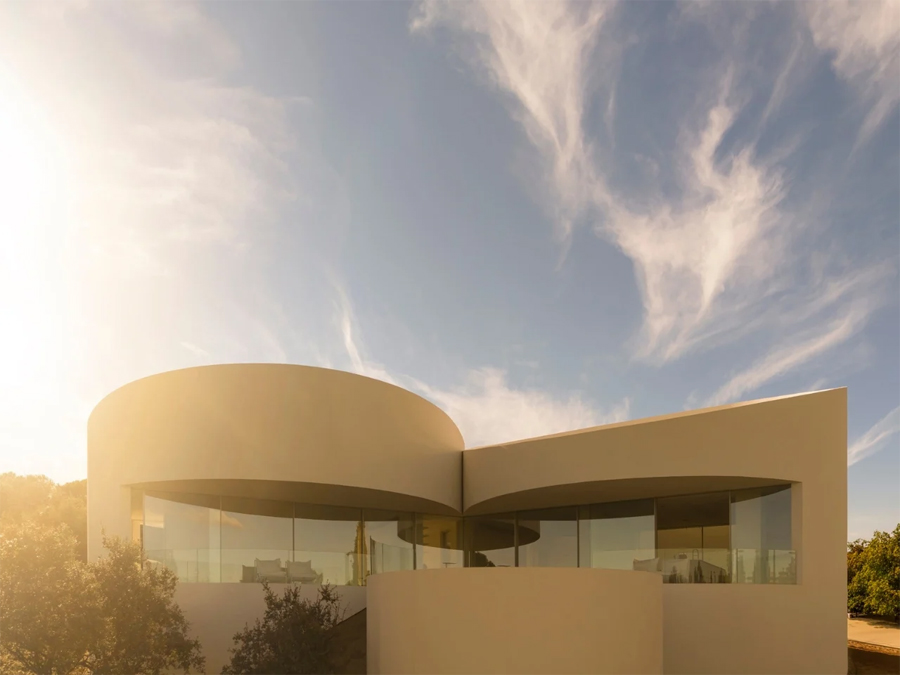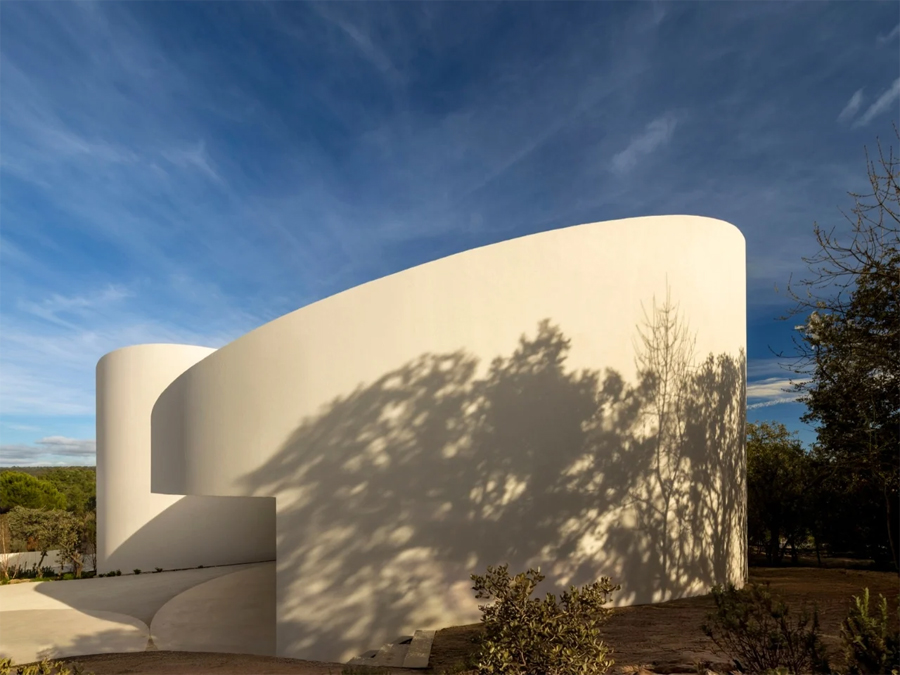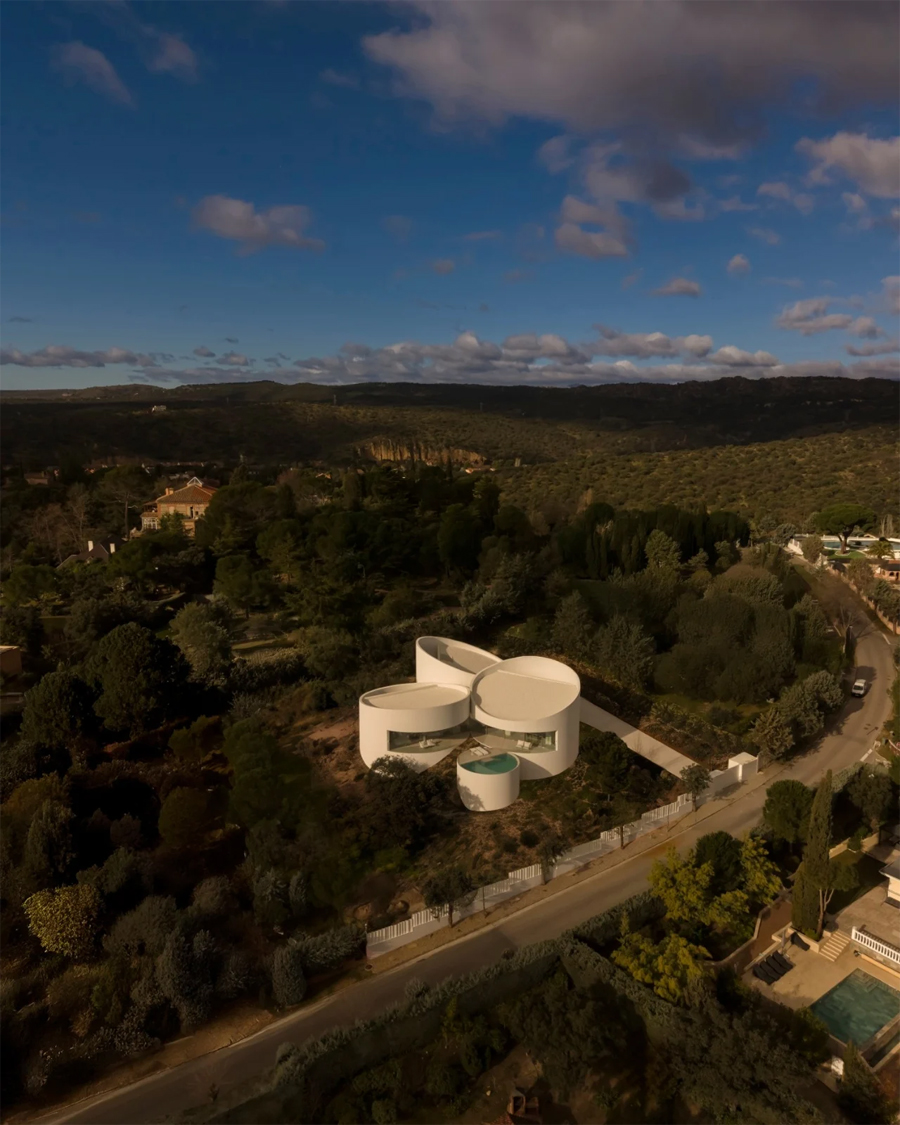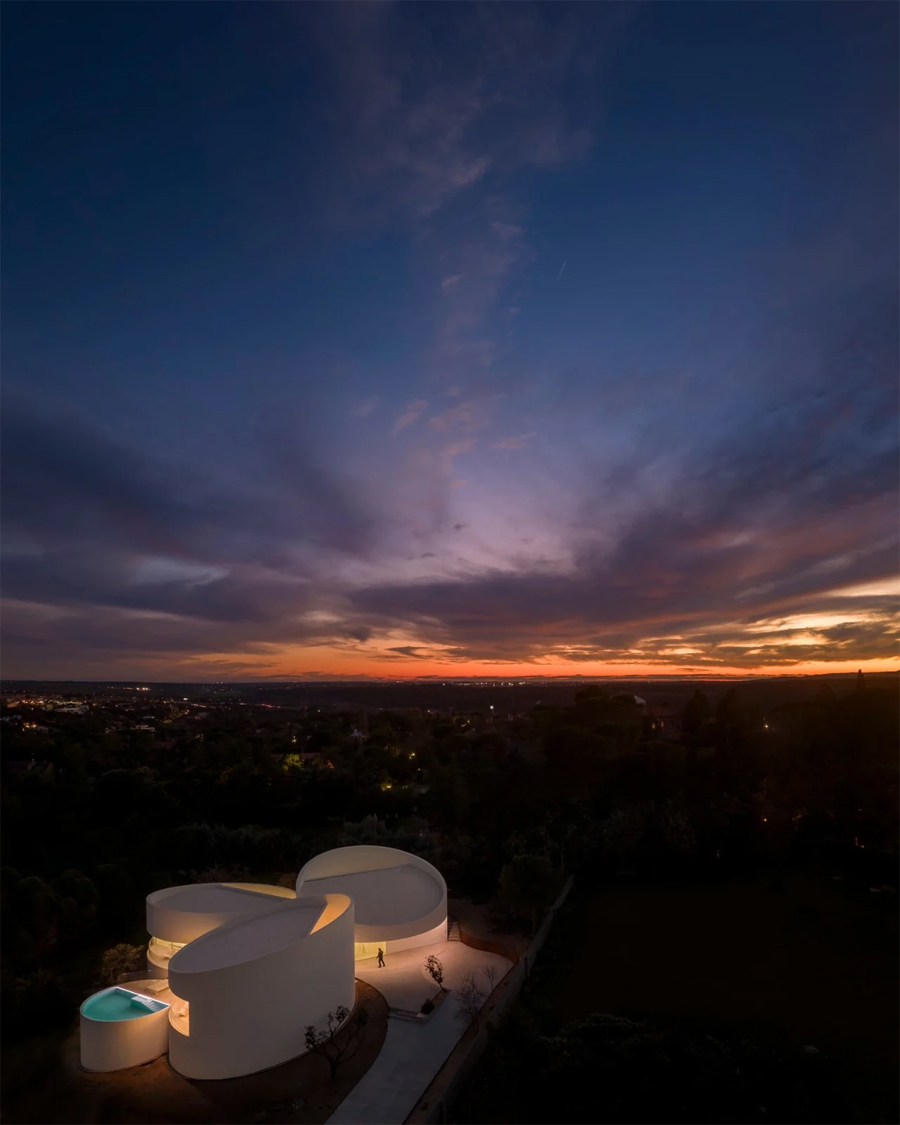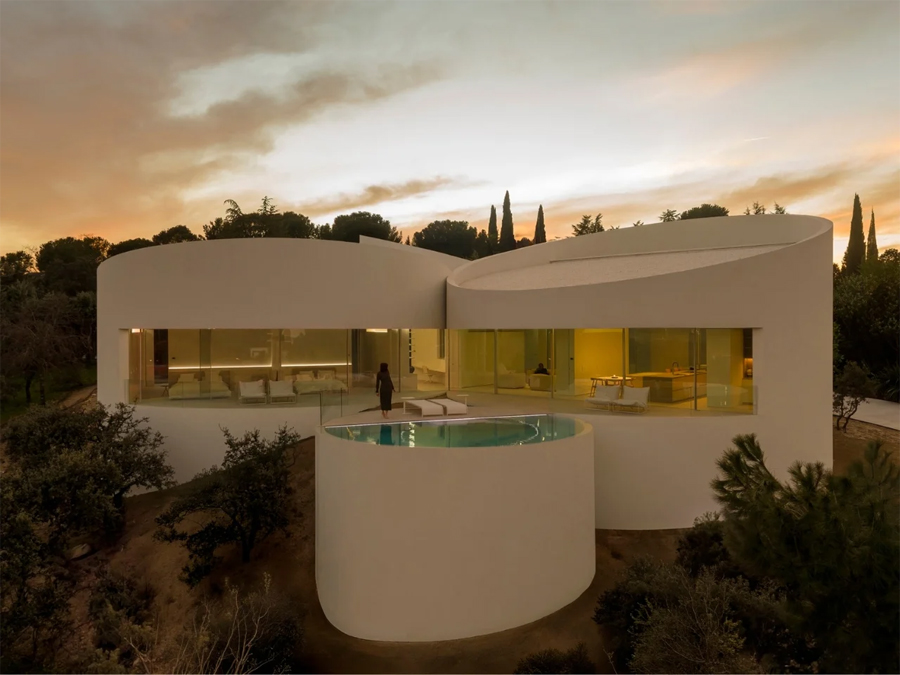
At first glance, this house in Madrid looks like an abstract architectural sculpture. Its unusual form is created from five intersecting cylindrical volumes that overlap and connect to create a surprisingly fluid family home. Designed by Fran Silvestre Arquitectos, the project shows how a simple geometric idea can produce a complex and highly livable space.
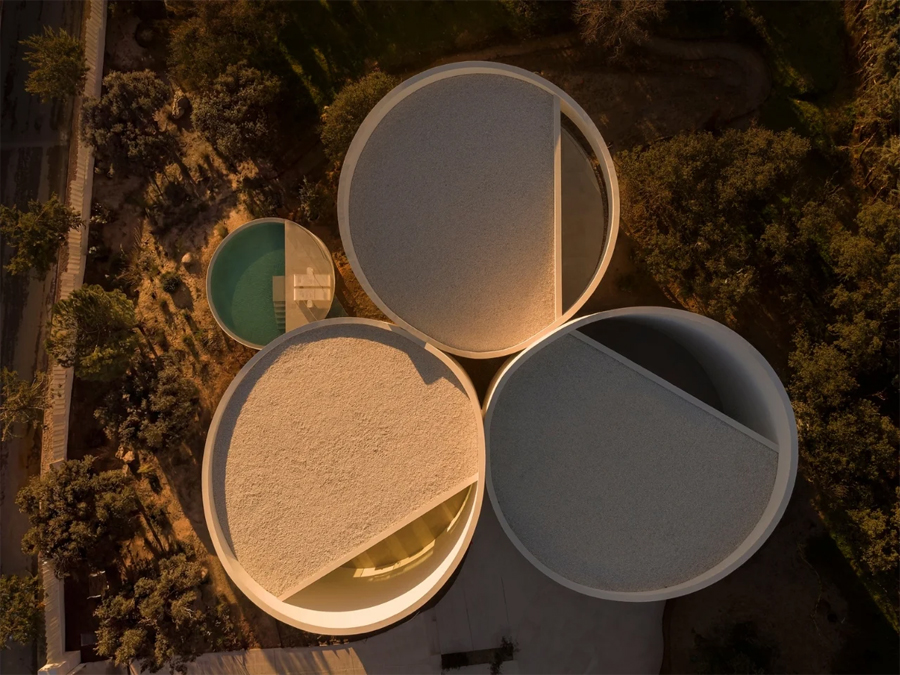
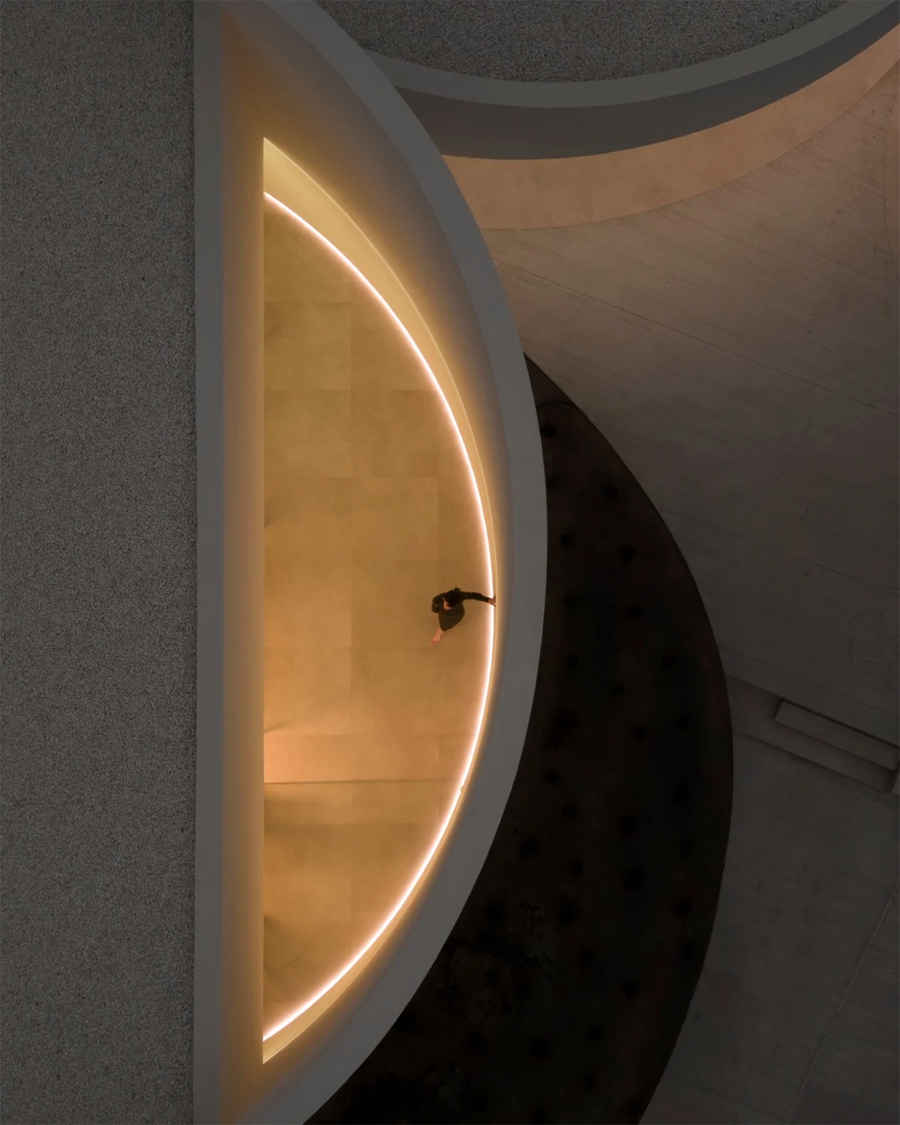
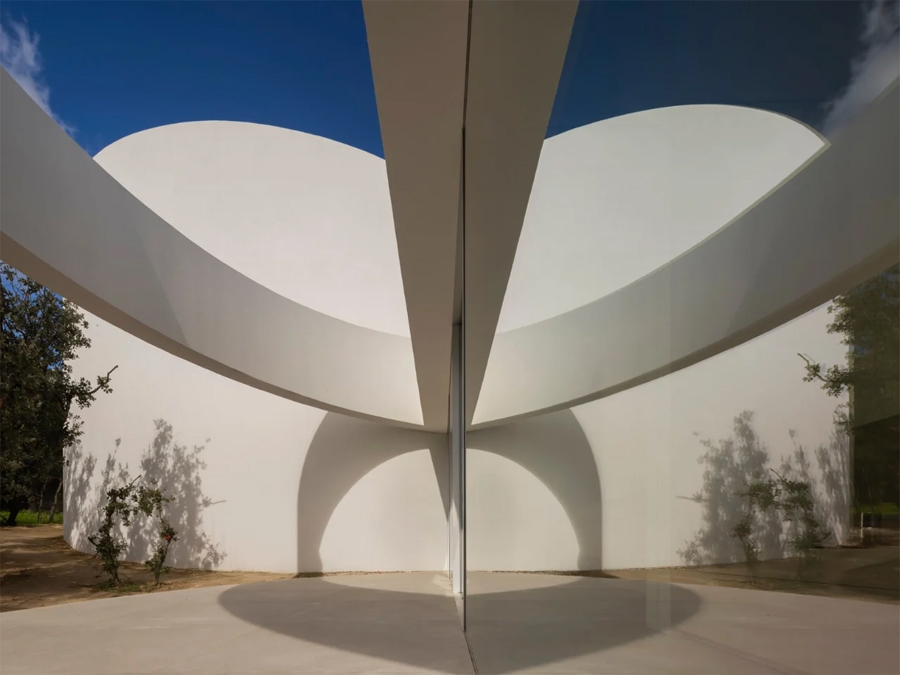
Rather than treating the five cylinders as separate buildings, the architects connected them through carefully designed junctions. These intersections create a series of orthogonal transitions that allow the spaces to flow naturally from one room into another. The result is an unusual floor plan that feels connected rather than fragmented, despite the home’s distinctive circular geometry.
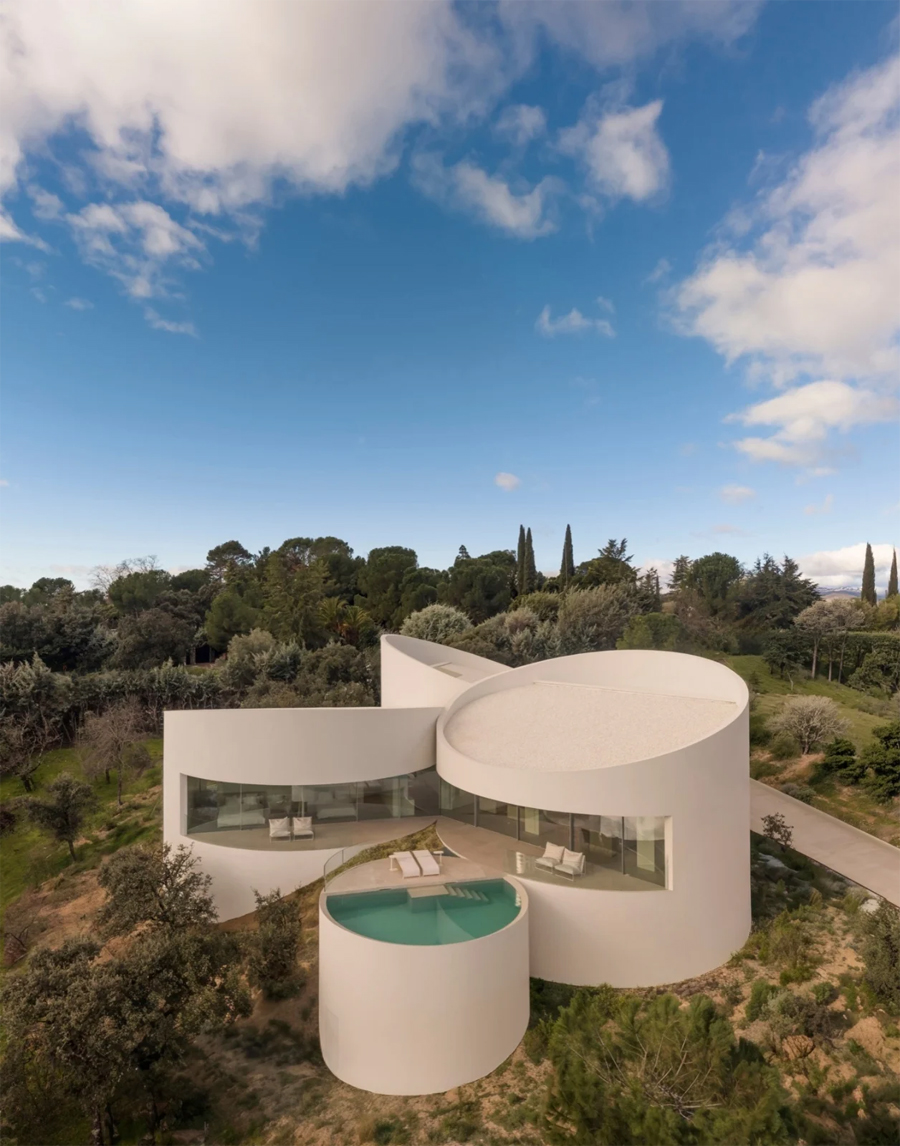
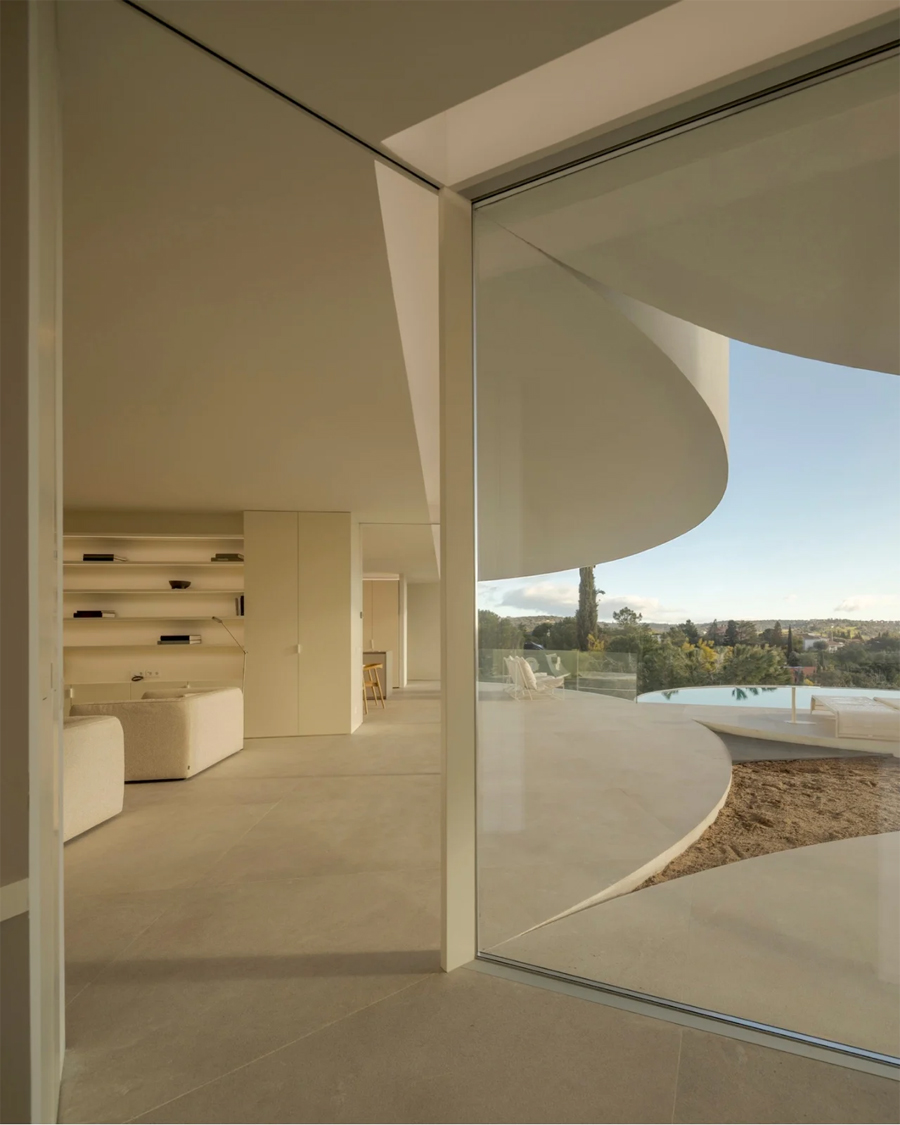
The curved forms also shape the way the house interacts with its surroundings. Each cylindrical volume creates its own relationship with the exterior, allowing different rooms to open toward specific views and outdoor areas. Large glazed sections bring natural light deep into the interiors while reinforcing the connection between the architecture and the landscape.
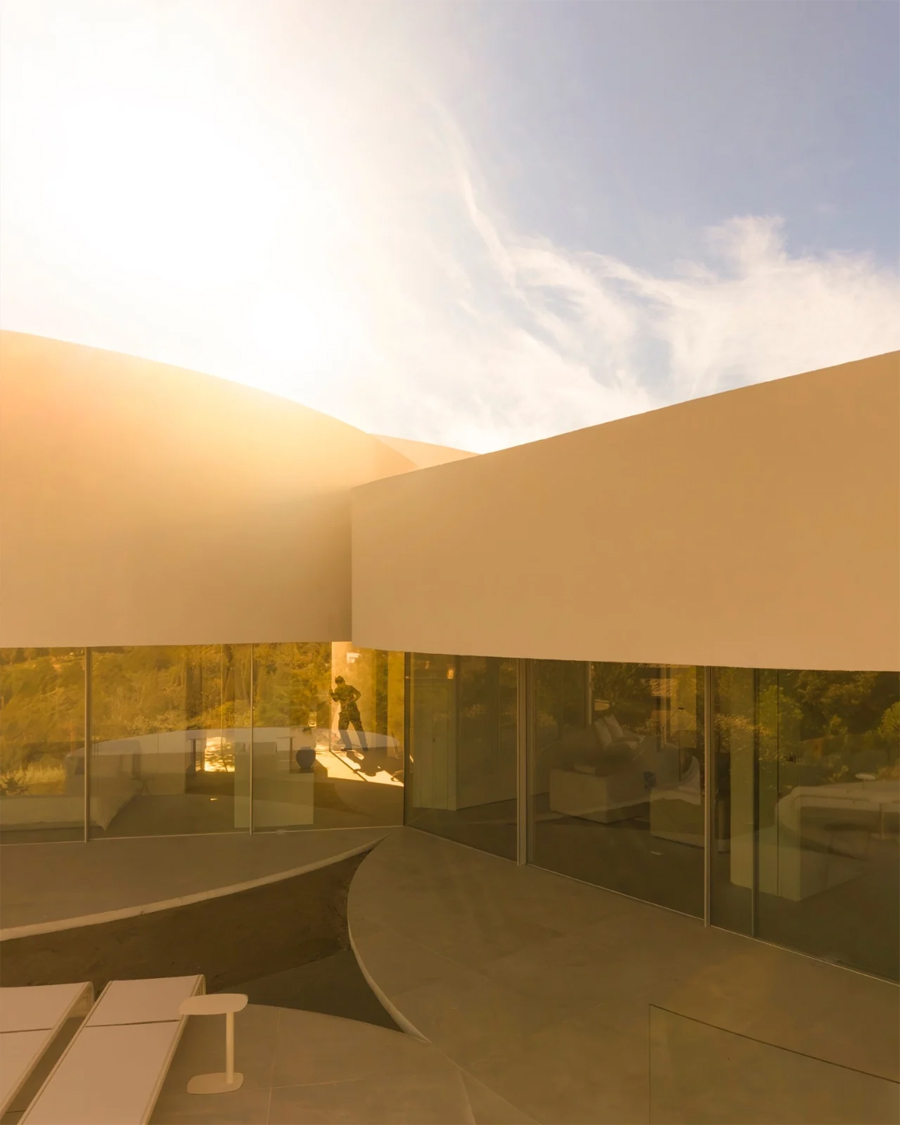
Inside, the unusual geometry becomes the defining feature. Curved walls and transitions replace the rigid corridors and rectangular rooms found in conventional homes, creating a sense of movement throughout the house. At the same time, the intersections between the cylinders provide practical spaces for circulation and help organize the different functions of the residence.
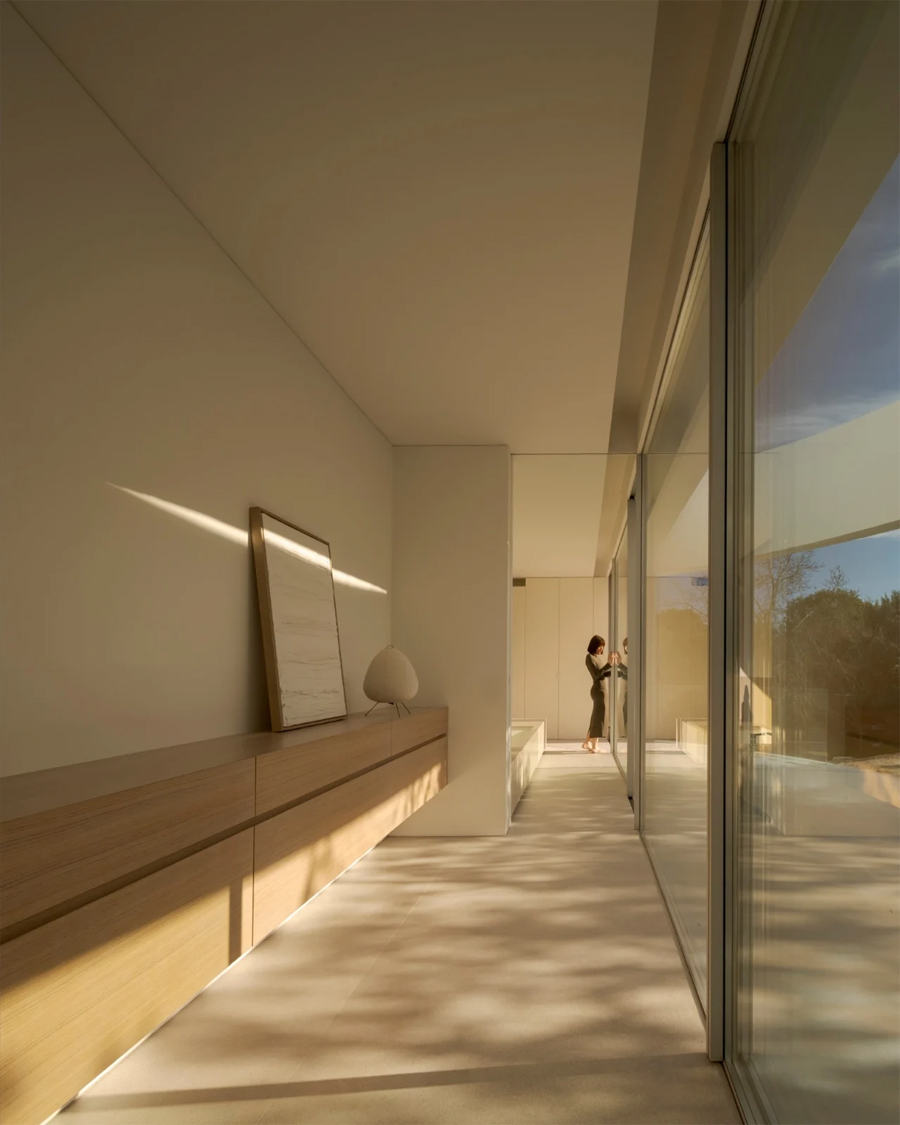
The project is a good example of how unconventional architecture does not have to sacrifice comfort or practicality. The five-cylinder concept may appear highly sculptural from the outside, but the spaces created within are designed around everyday life, with the geometry providing both character and a strong sense of connection between the home and its surroundings.
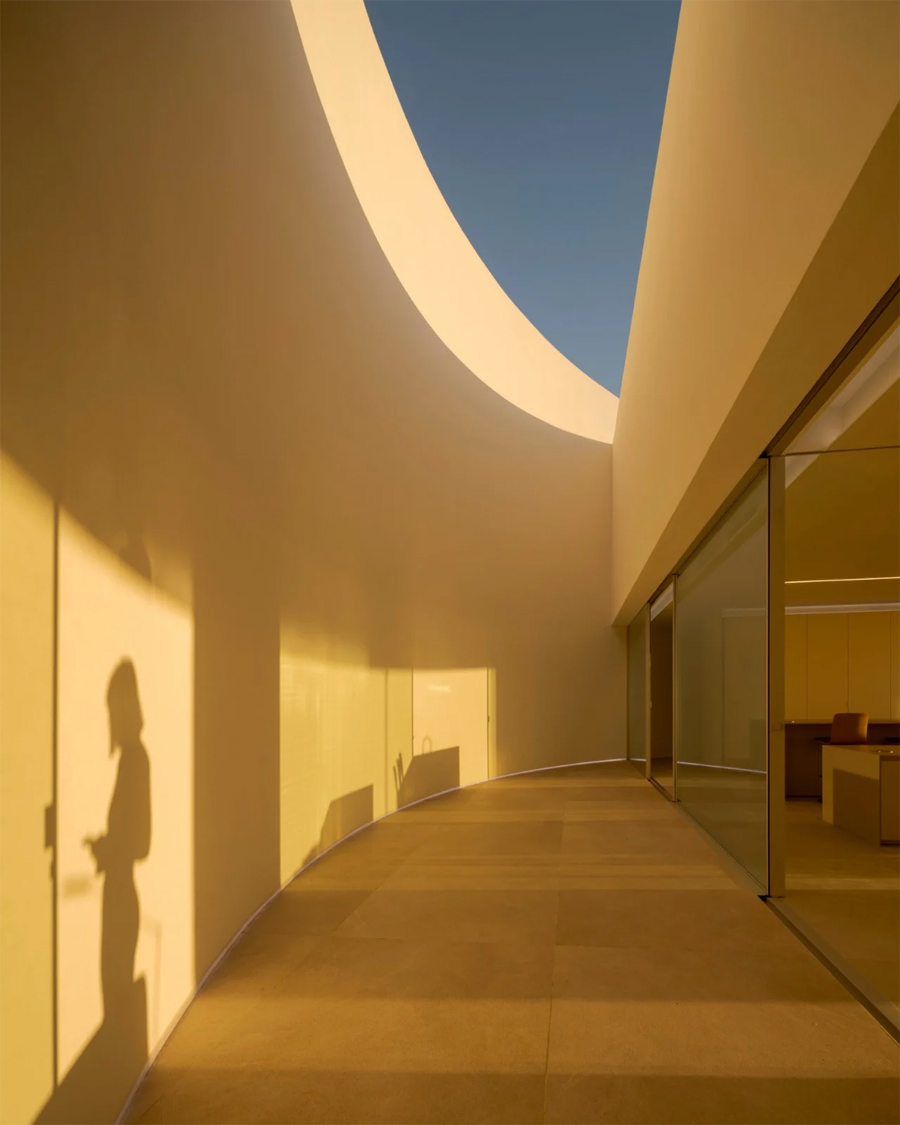
With its interlocking volumes and smooth transitions, the Madrid house demonstrates how a bold geometric concept can become much more than an architectural statement. The cylinders are not simply placed next to one another. They work together as a single composition, turning an unusual shape into a home that feels cohesive, dynamic, and surprisingly natural.