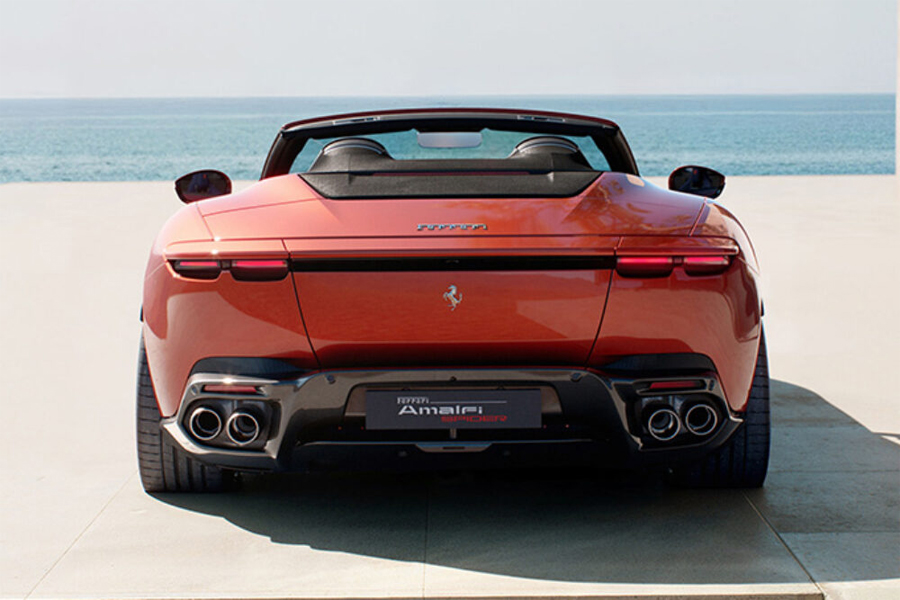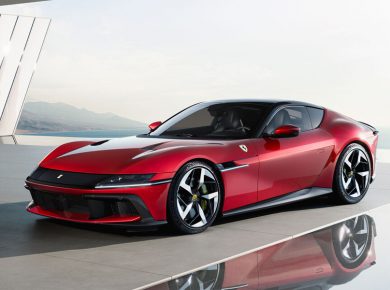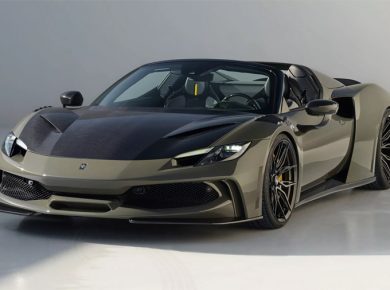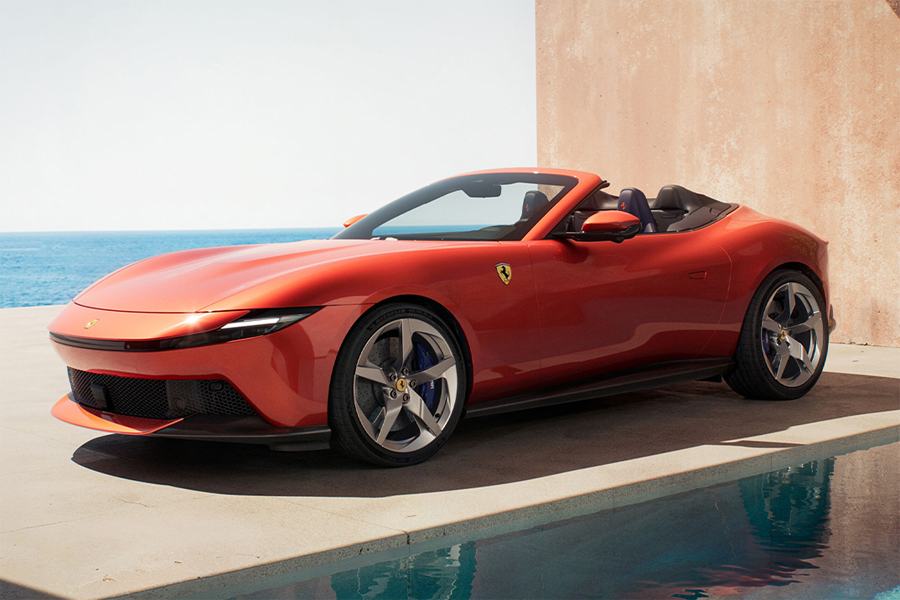
Ferrari has always understood the power of a well-chosen name. Monza evokes the raw heat of a banked circuit. Roma whispers of elegance and after-dark glamour. And the Amalfi? The Amalfi Coast is one of the most viscerally beautiful stretches of road in the world – the kind of place where taking the roof off isn’t a luxury, it’s practically a moral obligation. The Ferrari Amalfi Spider was unveiled on 12 March 2026, and if anyone was surprised, they probably haven’t spent much time with Italian sports cars.
Almost a year after the Amalfi coupe arrived as the successor to the Roma, Maranello has added the open-top variant that enthusiasts had been anticipating since the name was first trademarked. The coupe had barely reached US showrooms when the Spider appeared, which says something about the confidence Ferrari has in both models. Some cars feel like they need a convertible version to be complete. The Amalfi, with its long sculpted hood and theatrical proportions, is emphatically one of them.
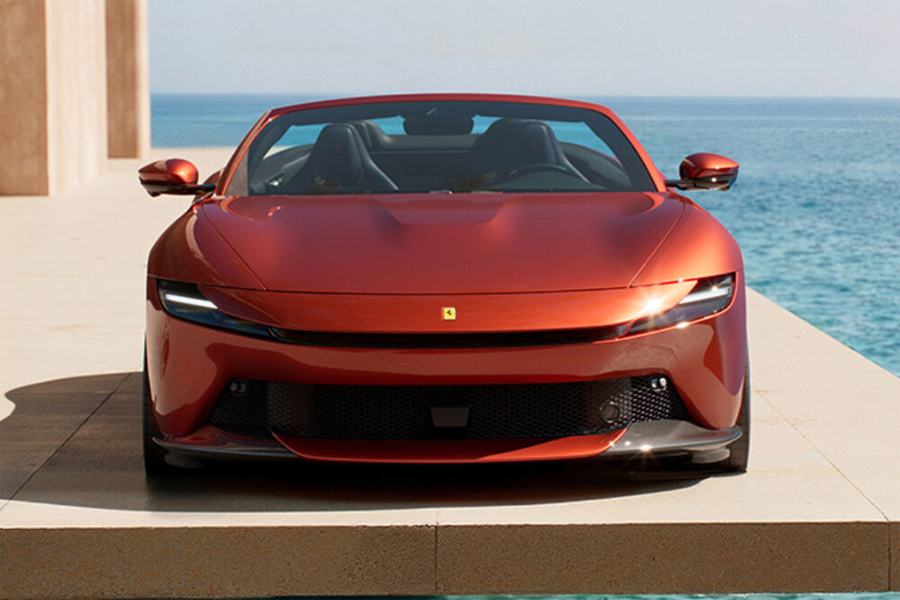
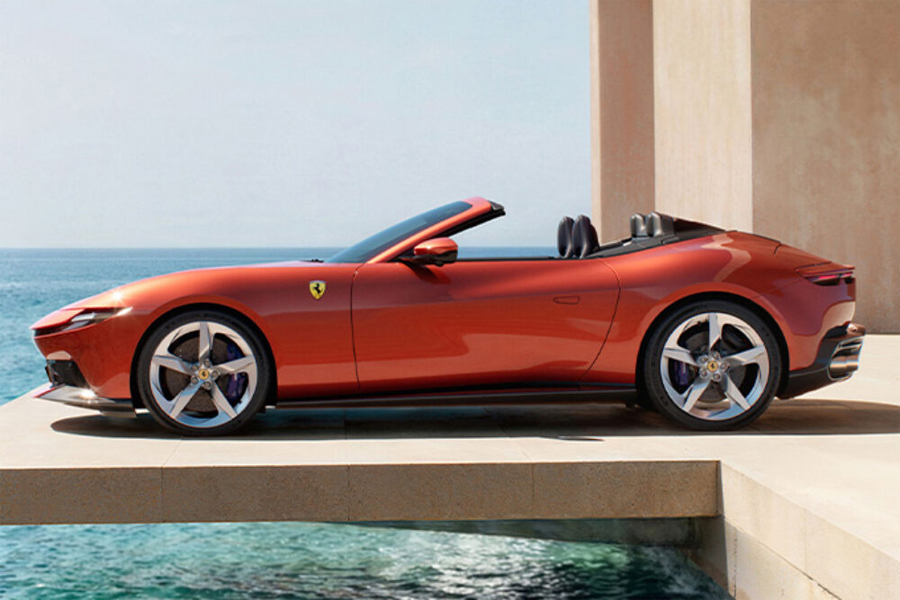
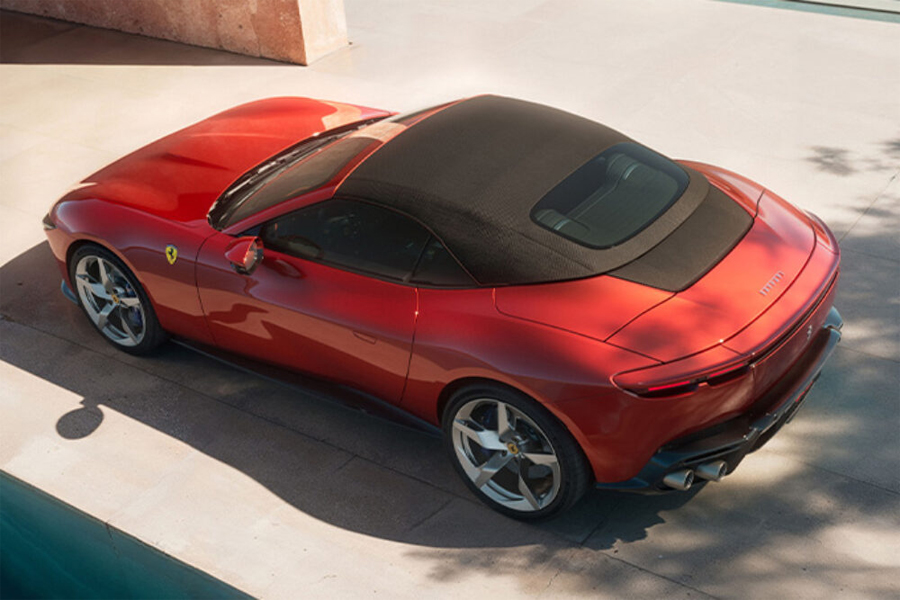
The centrepiece of the Spider is its soft top, and Ferrari has engineered it with the kind of attention usually reserved for the powertrain. The five-layer acoustic fabric roof is designed to mimic the thermal and sound-deadening properties of a hardtop, retracting in just 13.5 seconds at speeds up to 37 mph. When stowed, the folded roof sits just under 9 inches thick – compact enough that the Spider retains 172 litres of boot space with the roof down, and 255 litres with it up.
While earlier cars in the bloodline – the California and Portofino – used a folding hardtop, the Roma Spider returned to a fabric arrangement, and the Amalfi Spider continues that tradition. The decision suits the car. A hardtop mechanism adds weight and visual bulk that this kind of grand tourer simply doesn’t need. An integrated wind deflector rises from behind the passenger compartment at the touch of a button, and remains active at speeds up to 106 mph.
Under the long hood sits an updated version of the 3.9-litre twin-turbocharged V8 from Ferrari’s F154 family, producing 640 PS and 561 lb-ft of torque, with revised turbochargers spinning up to 171,000 rpm and a raised redline of 7,600 rpm. Power goes to the rear wheels through an eight-speed dual-clutch transmission first seen on the SF90 Stradale.
The 0–62 mph sprint takes 3.3 seconds – identical to the coupe, and a tenth of a second faster than the Roma Spider it replaces – despite an additional 190 lbs from the roof mechanism and structural reinforcement. Top speed is quoted at 199 mph. The Spider also carries over the Amalfi coupe’s three-stage active rear wing, which in its most aggressive setting generates up to 243 lbs of downforce at 155 mph – a notable achievement for a car that most people will buy for weekend coastal drives rather than track days.
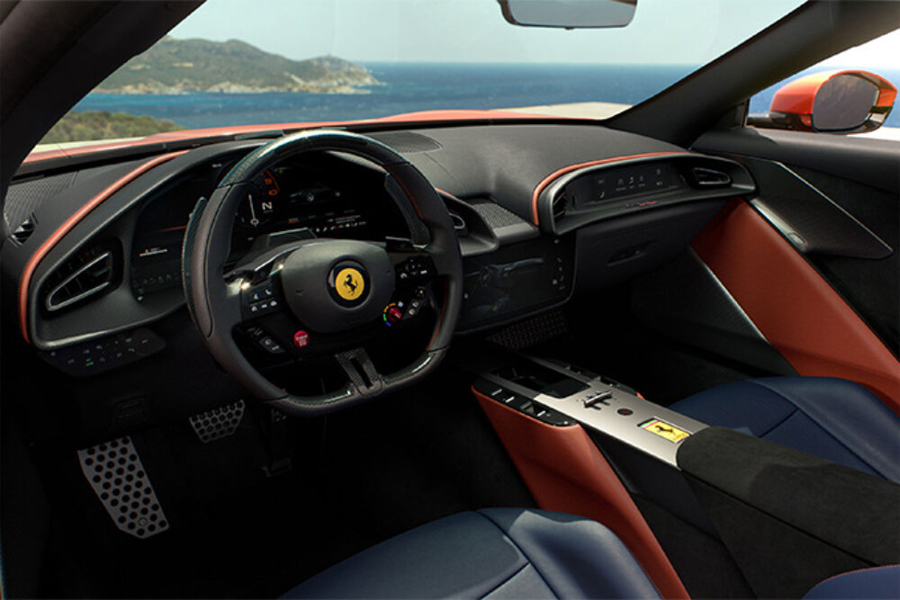
Inside, the dual-cockpit layout from the coupe is largely unchanged, dominated by a 15.6-inch digital cluster, a 10.25-inch central display, and an 8.8-inch passenger panel. Physical steering wheel buttons, rotary dials, and the anodized aluminium start button – briefly abandoned in the Roma era – are all back. The return of tactile controls was one of the most praised aspects of the coupe, and the Spider carries that decision forward.
Spider-specific touches include a monolithic cockpit integrating the instrument cluster and air vents into a single unified housing, and sail-motif door panels that quietly acknowledge the open-air character of the car. The interior detail, like the car overall, manages to feel special without being theatrical about it.
The soft top comes in six colours across two fabric types: four tailor-made options and two technical weave finishes, including the new Tecnico Ottanio – a muted teal with a three-dimensional shimmer. Alongside the Spider, Ferrari has also introduced Rosso Tramonto, a sunset red with warm orange undertones that extends the Amalfi Coast colour narrative established by Verde Costiera on the coupe. The two shades feel like a morning and evening version of the same coastline.
European pricing starts at around €270,000, with first deliveries expected in the early months of 2027. Ferrari has not confirmed US pricing, but with the Amalfi coupe starting at $266,810 stateside, the Spider is expected to land closer to $300,000. It will not have the soft-top super-sports car market entirely to itself – heavily updated versions of the Aston Martin Vantage Roadster and Porsche 911 Turbo S Cabriolet have both arrived in the past year – but Ferrari’s position in this segment has rarely depended on comparative logic.
The Amalfi Spider is not the most technically radical car Ferrari will make in 2026 – the brand has no fewer than five new models planned before the year is out, including its first electric car, the Luce. But it may well be the most immediately desirable. Not every Ferrari needs to rewrite the rulebook. Some just need to be exactly what they are – and this one, roof down on a coastal road, is very precisely that. Also be sure to check our list of the most beautiful cars in the world.