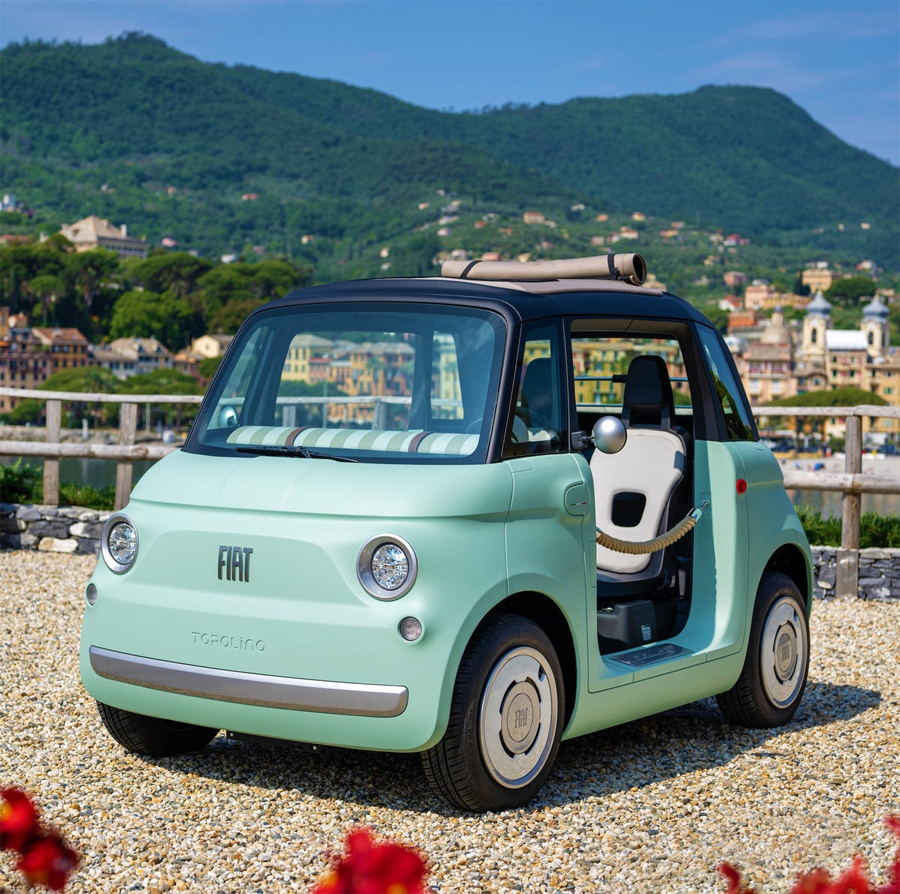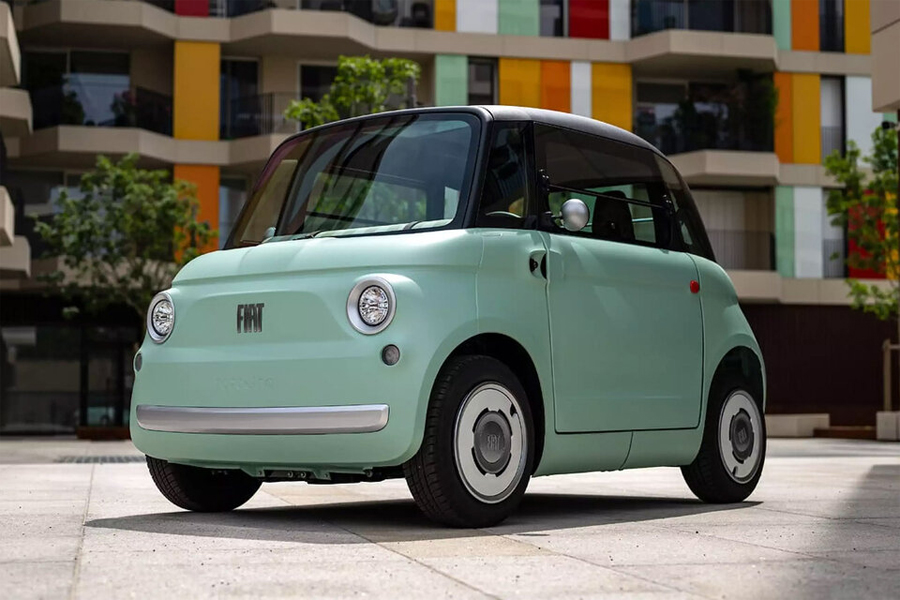
Fiat has built its reputation on small cars, but the Topolino sits in a category of its own. So compact that it does not legally qualify as a car in Europe, the Topolino is classified as a quadricycle, a designation familiar across EU cities but still unusual for the US market. That distinction may soon change. During Miami Art Week, Fiat’s CEO confirmed that the Topolino is headed to the United States, signaling a bold move in urban mobility rather than traditional automotive expansion.
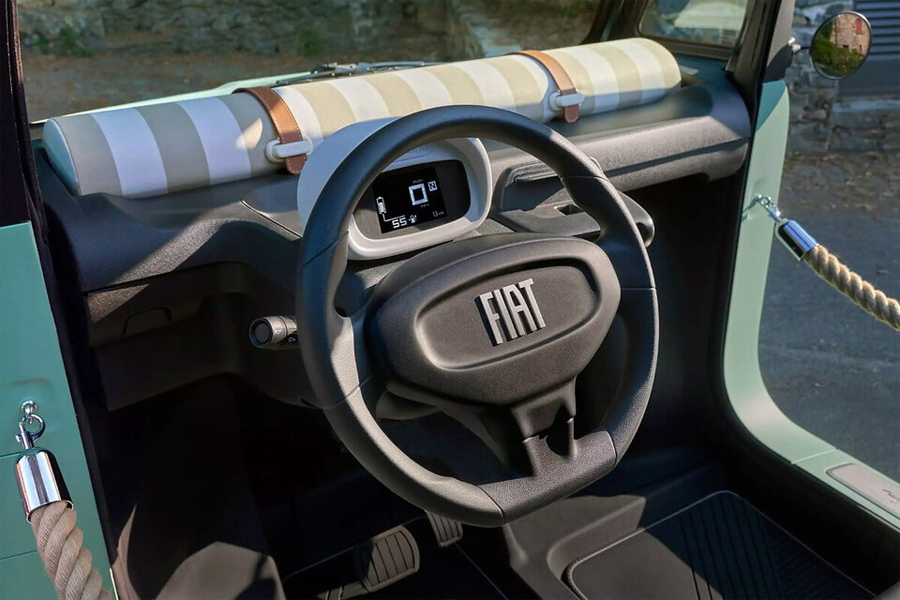
The proportions alone explain why the Topolino feels closer to design experimentation than conventional transportation. Measuring just over seven feet in length and roughly three feet in width, it occupies barely more space than a large motorcycle. Power comes from an eight-horsepower electric motor, with a top speed capped at 28 miles per hour and an estimated driving range of around 45 miles. These numbers place the Topolino far from highways and long-distance travel, but squarely within the rhythm of dense city environments.
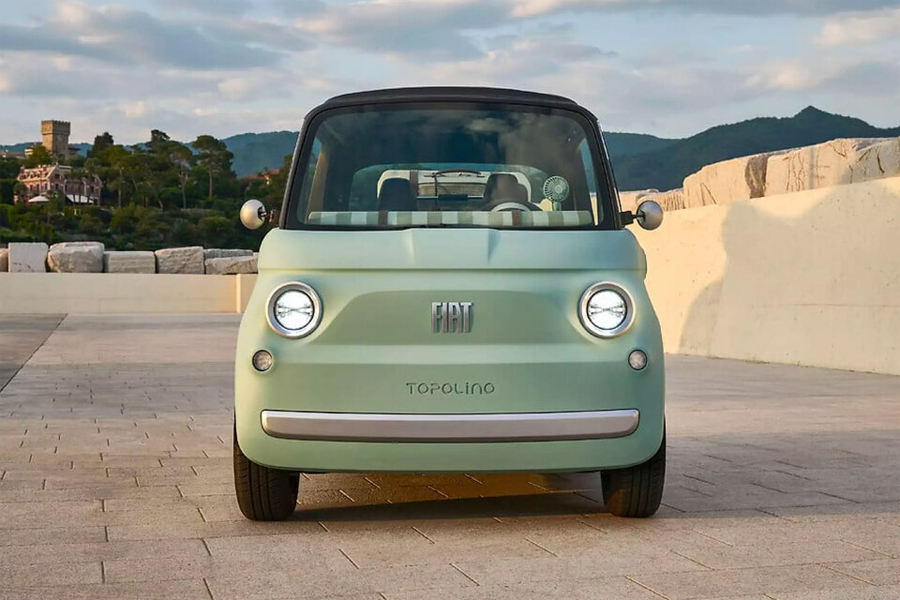
Fiat has not yet released full technical specifications or regulatory details for the US version. Based on its performance limits, the most likely classification would be a Low-Speed Vehicle. That would align the Topolino with street-legal golf carts and utility vehicles, restricting where it can be driven but opening the door to urban neighborhoods, campuses, coastal towns, and short daily commutes. In that context, its size becomes an advantage rather than a limitation.

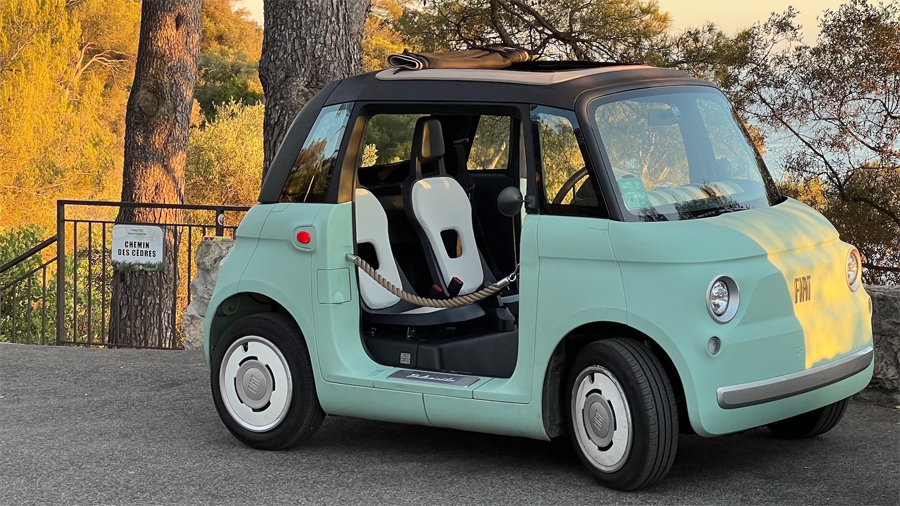
The potential US arrival also raises interest in the more playful Dolcevita version. In place of solid doors and a conventional sunroof, the Dolcevita swaps in a roll-back fabric top and rope-style door restraints. The result feels less like a car and more like a lifestyle object, clearly inspired by Mediterranean beach towns and slow, social mobility. If US regulations allow it, this variant could resonate strongly in warm climates where style often matters as much as practicality.

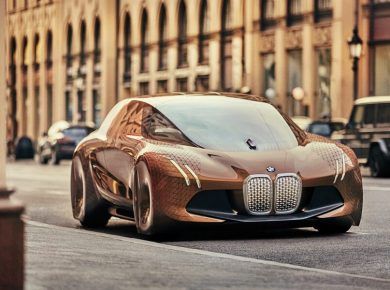
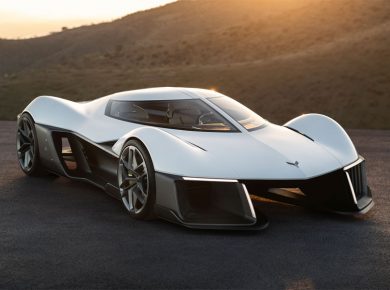
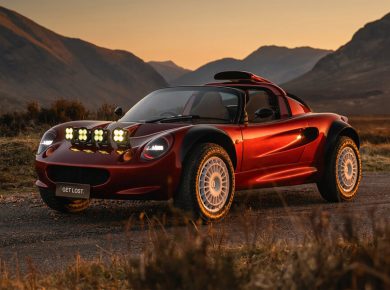
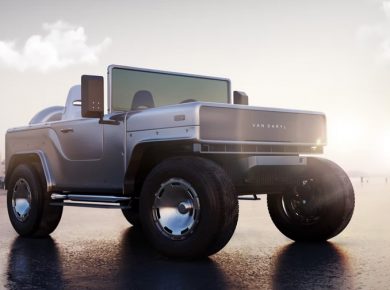
Viewed through a broader lens, the Topolino fits neatly into the growing conversation around car concepts that prioritize minimalism, energy efficiency, and space-conscious design. Instead of chasing power, speed, or luxury cues, Fiat is exploring how little vehicle is actually necessary for everyday movement. That question feels increasingly relevant as cities struggle with congestion, parking scarcity, and emissions.
The Topolino is not meant to replace a family car or compete with traditional electric vehicles. Its purpose is narrower and more deliberate. It offers a glimpse into a future where mobility is fragmented into multiple specialized solutions rather than one vehicle doing everything. In that sense, it stands closer to experimental car concepts than to mainstream production models, even as it prepares for real-world streets.
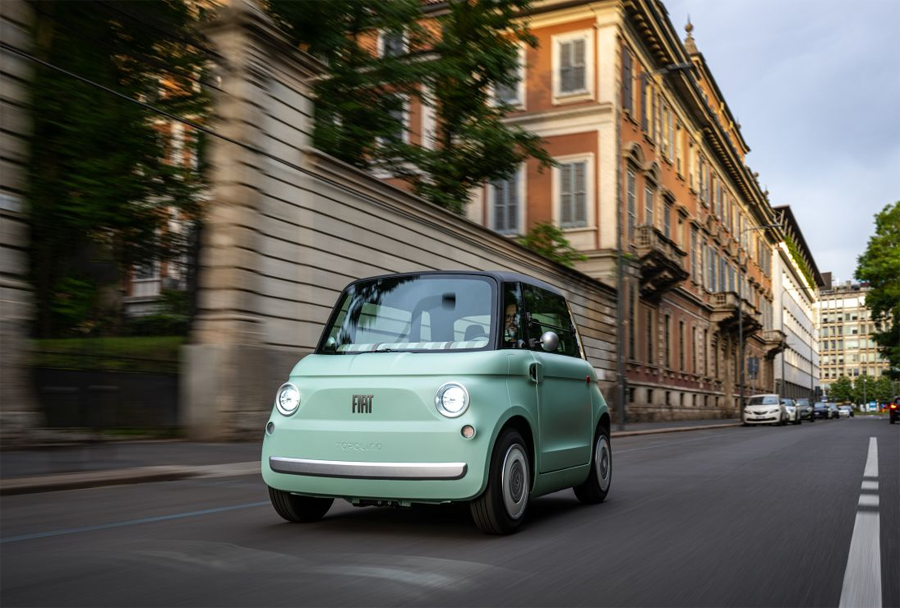
If Fiat successfully brings the Topolino to the US, it could redefine expectations for what personal transportation looks like in urban settings. Compact, slow, electric, and unapologetically limited, the Topolino challenges the idea that progress in mobility always means more. Sometimes, it means less done thoughtfully.