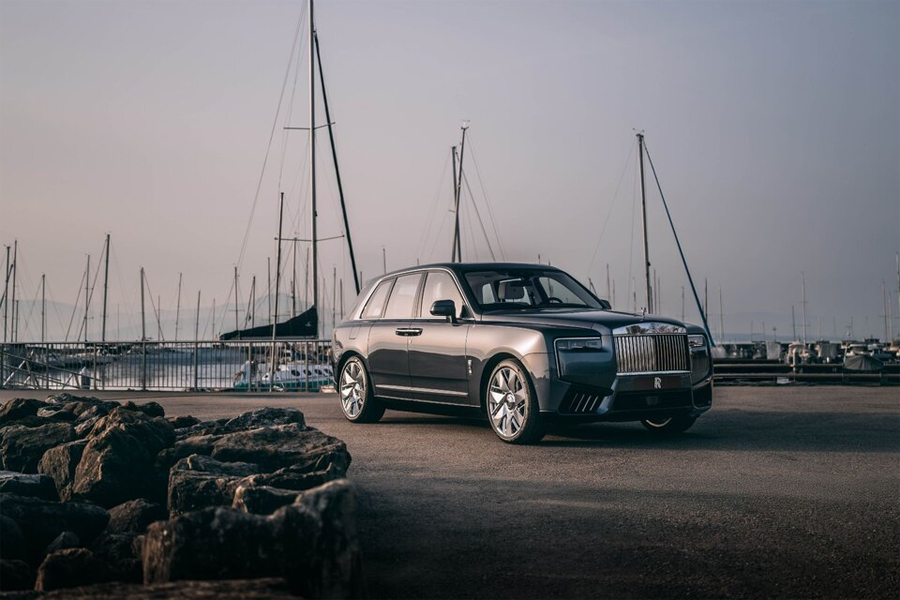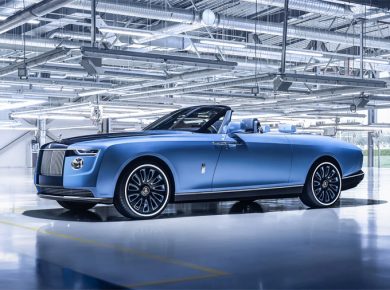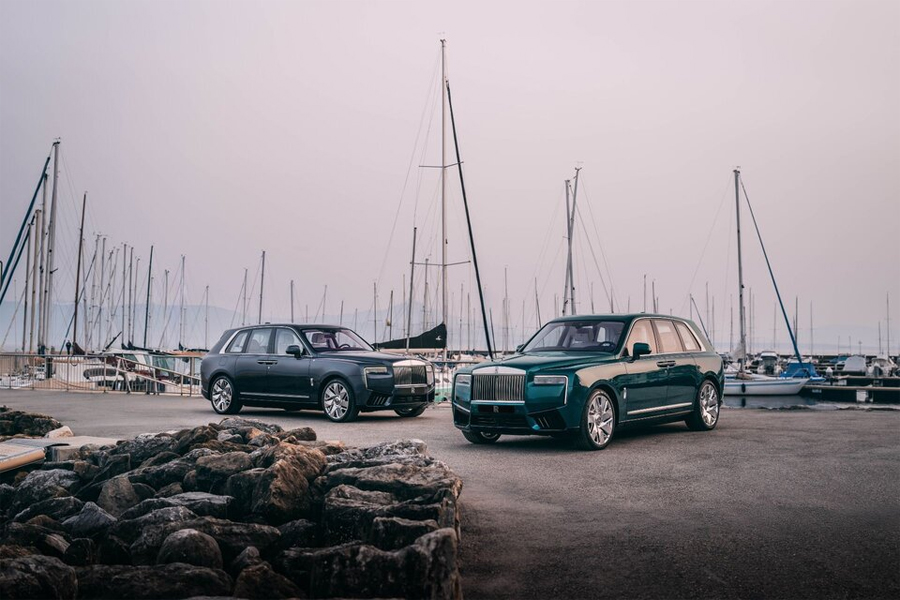
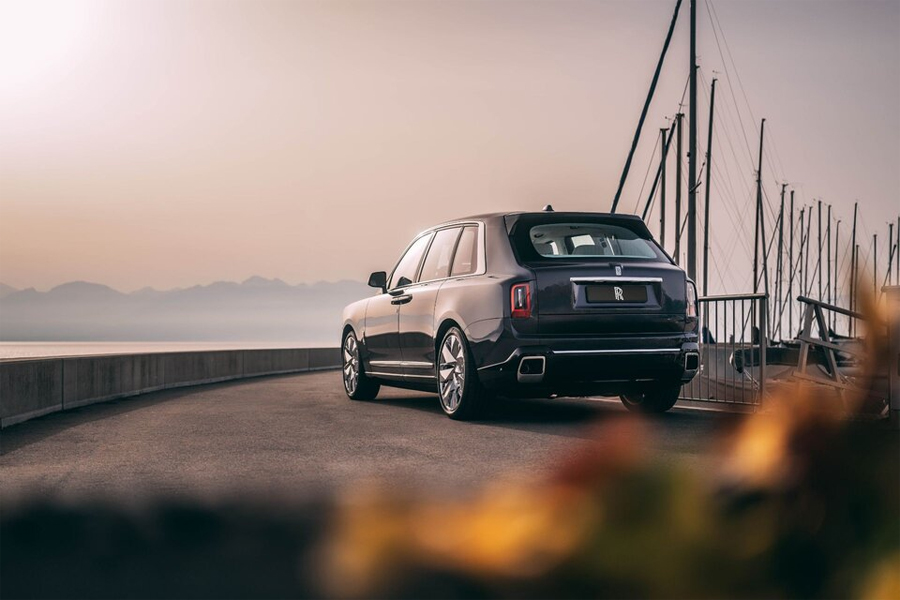
The connection between Rolls-Royce and the nautical world runs deeper than most automotive stories dare to go. Long before he met Henry Royce, Charles Rolls’ family owned the Santa Maria – a substantial schooner-rigged steam yacht that cruised throughout Europe in the late 1800s and early 1900s. More than a century later, that maritime heritage has found its most complete four-wheeled expression yet in the Cullinan Yachting: a collection of four Private Commissions that blur the line between road and sea with extraordinary confidence.
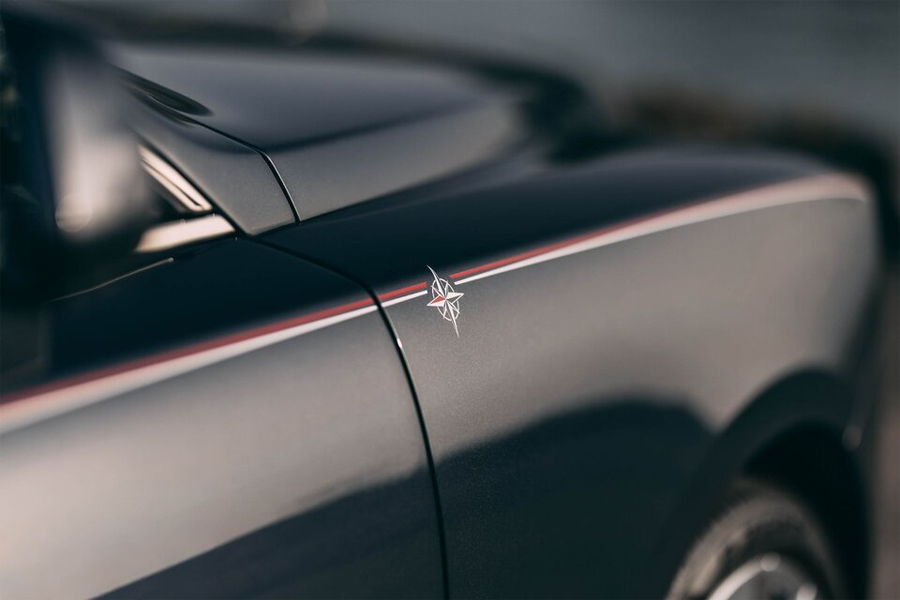
The first thing you notice is that each car has a story rooted in place. North arrives in Crystal over Light Blue, evoking the colder waters of higher latitudes. South wears a deep Crystal over Arabian Blue IV, capturing warmer climes. East is rendered in Dark Silk Teal, suggesting the calm and mystery of deep water, while West appears in Sapphire Gunmetal – the color of a storm-lit ocean sky. All four share a hand-painted compass motif on the front wings, a Twin Coachline in Phoenix Red and Arctic White, and 22-inch fully polished alloy wheels that subtly recall the mirror-bright brightwork of contemporary racing yachts.
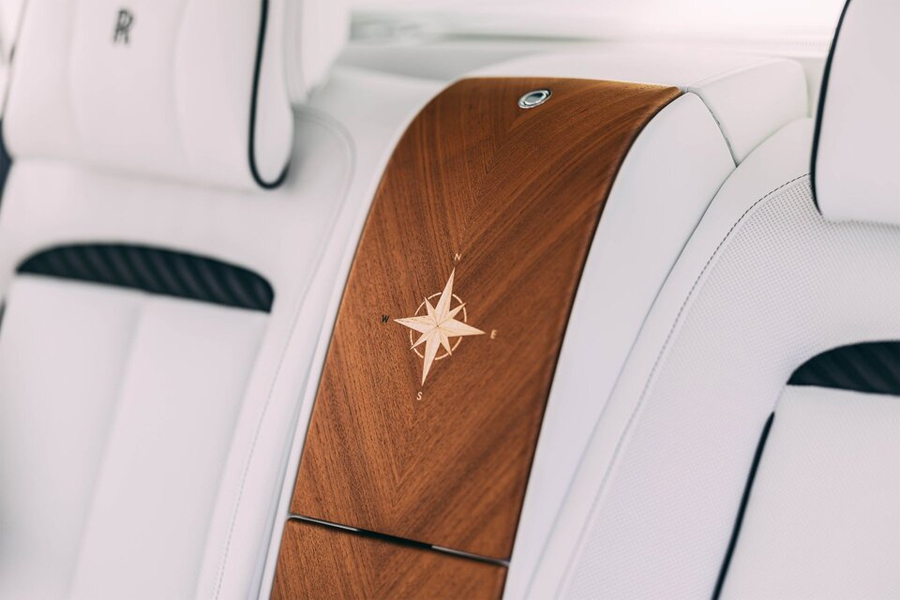
Beyond the paint, the Cullinan Yachting is fundamentally a showcase of what human hands can accomplish when given enough time and creative freedom. The hand-painted fascia – depicting the trailing wake of a tender heading toward a yacht at anchor – required two months of experimentation alone, refining paint combinations, application techniques, and lacquering processes. Crucially, the direction of the wake on each car reflects its own compass orientation, ensuring every commission is a true one-of-one. The craftsmanship extends to the rear of the cabin, where an intricate marquetry compass motif on the Waterfall console is assembled from more than 40 individual pieces of veneer in Sycamore, Teak, Ash, and Black Bolivar.
Step inside and the yacht references are everywhere – but never heavy-handed. Open-pore teak runs throughout the cabin, a material far more commonly found on yacht decks than in automobiles, lending warmth and genuine maritime authenticity. The seating tells its own story: Arctic White and Navy Blue leather wraps the interior, with contrast stitching, piping, and headrest monograms in Navy, while seat inserts carry a Bespoke rigging pattern hand-stitched by an artisan with a personal connection to the Royal Navy – each stitch echoing the structure of twisted nautical rope. Above it all, the ceiling becomes a navigational experience, with a unique Starlight Headliner of hand-placed fiber-optic stars arranged in patterns drawn from Mediterranean wind maps, subtly brightening and dimming to suggest shifting air currents overhead.
For all the poetry of its construction, the Cullinan Yachting remains a serious machine. Each of the four commissions is powered by the 6.75-liter twin-turbocharged V12, producing 553 horsepower and 664 lb-ft of torque – performance credentials entirely sufficient for a vehicle of this stature.
What makes the Cullinan Yachting more than a styling exercise is the internal consistency of its vision. Every detail – the rope-stitched seats, the teak panels, the painted wake on the fascia, the wind-map headliner, the compass on the Waterfall – connects back to a single idea. These four cars are not trying to be yachts. They are trying to carry the spirit of the sea – its navigational romance, its craftsmanship traditions, its sense of boundless direction – onto roads that their owners know just as well as open water. In that, they succeed completely. Also be sure to check our list of the most expensive cars in the world.