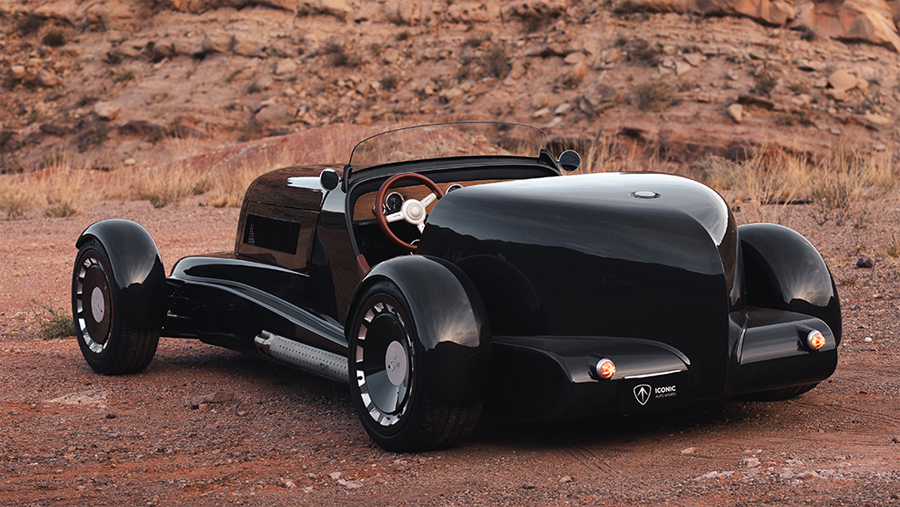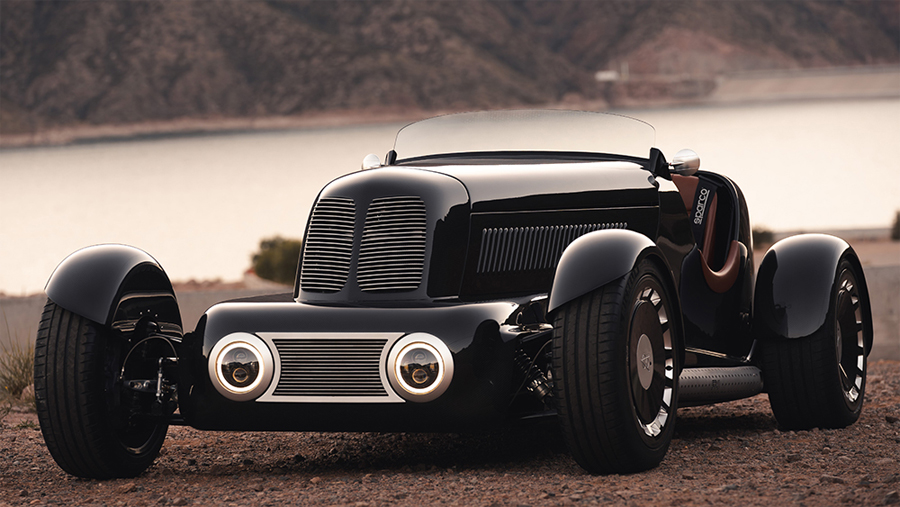
The most compelling restomods do not borrow nostalgia wholesale. They ask a sharper question: if the original idea were conceived today, with modern tools and materials, what would it become? The SP40 Restomod Speedster is a confident answer to that question. It channels the long, low, uncompromising spirit of 1930s streamliners and rebuilds it through contemporary coachbuilding, digital design, and precision manufacturing. Nothing here feels retro for the sake of costume. Every surface, every proportion, feels intentional and current.
At first glance, the form does most of the talking. The body is defined by vast, uninterrupted planes that stretch from nose to tail, avoiding decorative clutter in favor of tension and flow. The stance is aggressive but disciplined, with a sense of speed even at rest. This is not an homage that tries to pass as a period artifact. It openly embraces modernity, letting carbon fiber and CNC machining reinterpret a classic silhouette rather than imitate it. The result looks less like a restored car and more like an idea rendered in physical form.
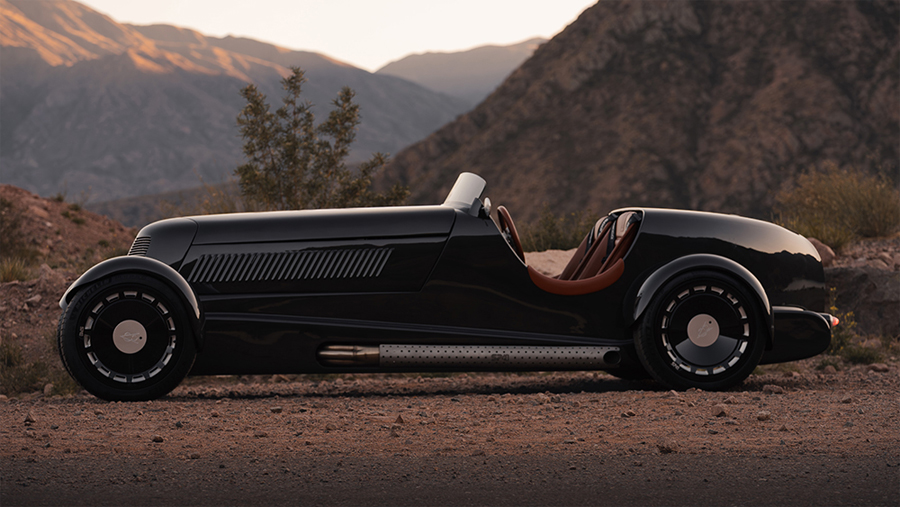
That approach naturally appeals to a specific kind of enthusiast. The SP40 is aimed at people who value craft over novelty, who appreciate restraint as a design virtue, and who understand that true luxury often lies in what has been deliberately left out. It belongs in the same mental space as hand-finished mechanical watches, carefully proportioned midcentury furniture, and objects designed to age with dignity rather than chase trends. The car does not attempt to overwhelm. It invites closer inspection.
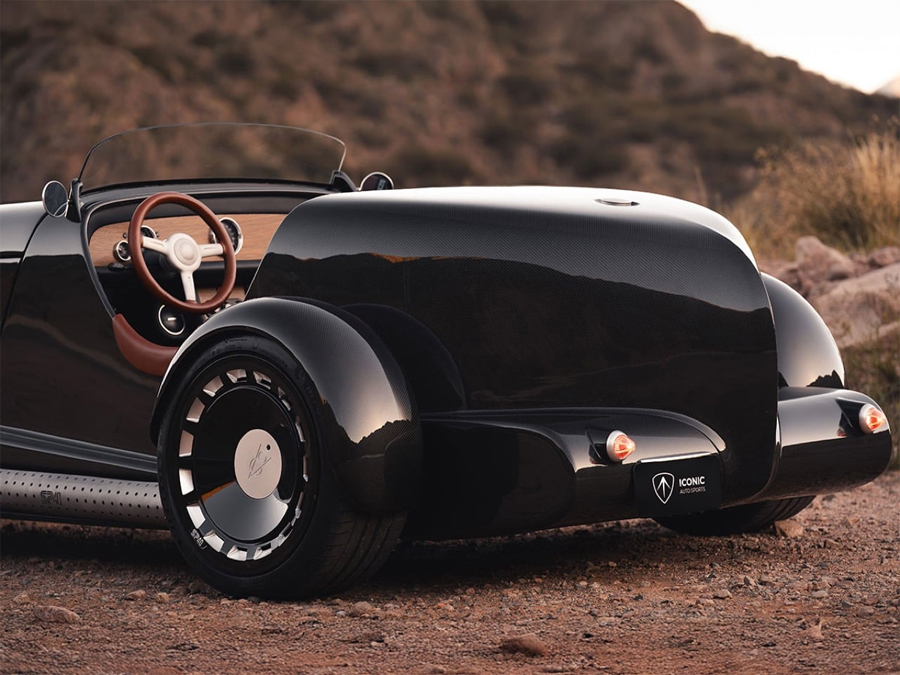
The engineering beneath the skin reinforces that mindset. The bodywork appears to be a full carbon fiber monocoque, not decorative carbon laid over conventional structures. The rear clamshell alone suggests serious technical ambition, since producing a carbon component of that size without distortion demands extreme control over tooling, layup, and curing. This is aerospace-level material science applied to an organic automotive form. With carbon as the primary structure, overall weight likely stays below 950 kilograms, a figure that would transform both responsiveness and feedback.
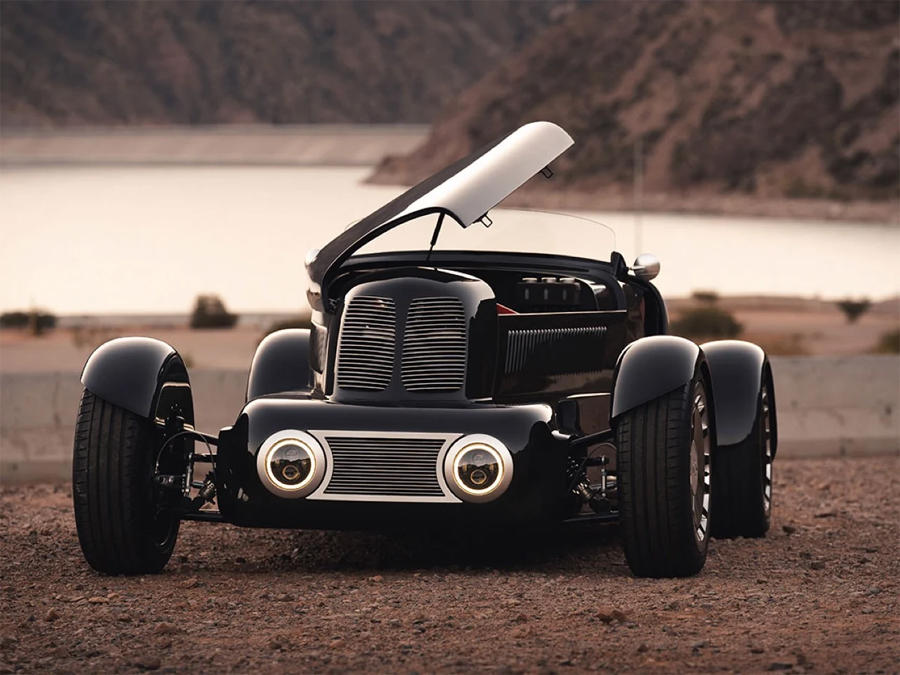
Up front, the exposed suspension components signal the same philosophy. These parts look CNC-milled from aluminum, shaped with modern kinematic modeling rather than inherited geometry. Every visible element seems designed to do its job cleanly and efficiently, without visual noise. The finish is so precise that the car starts to blur the line between vehicle and kinetic sculpture. It feels engineered, not assembled.
Inside, the SP40 becomes even more explicit about its priorities. The cockpit rejects digital overload in favor of tactile engagement. At its center sits a gated manual shifter topped with a wooden knob, a deliberate nod to mechanical interaction. This is not nostalgia theater. A gated shifter demands intent from the driver, turning each gear change into a conscious act. In an era dominated by paddles and algorithms, that choice feels almost radical.
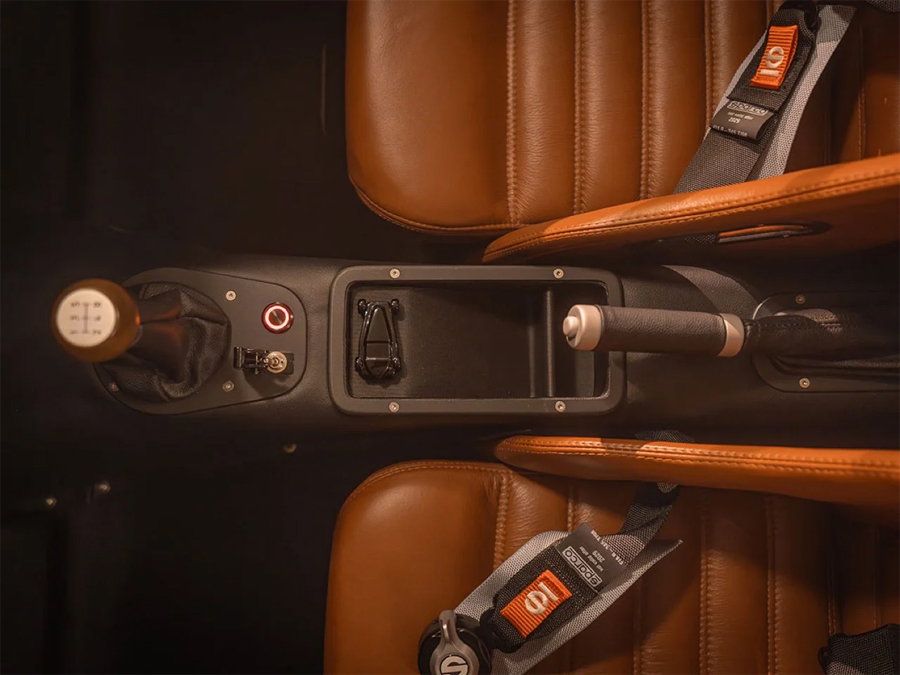
The dashboard follows the same logic. A simple wooden plank houses analog gauges that communicate information at a glance, without layers of software between driver and machine. Toggle switches, a pull-style handbrake, and visible fasteners reinforce the idea that every control exists for its feel as much as its function. Even the Sparco harnesses play a role beyond aesthetics. They underline that this is a performance-driven machine, not a styling exercise.
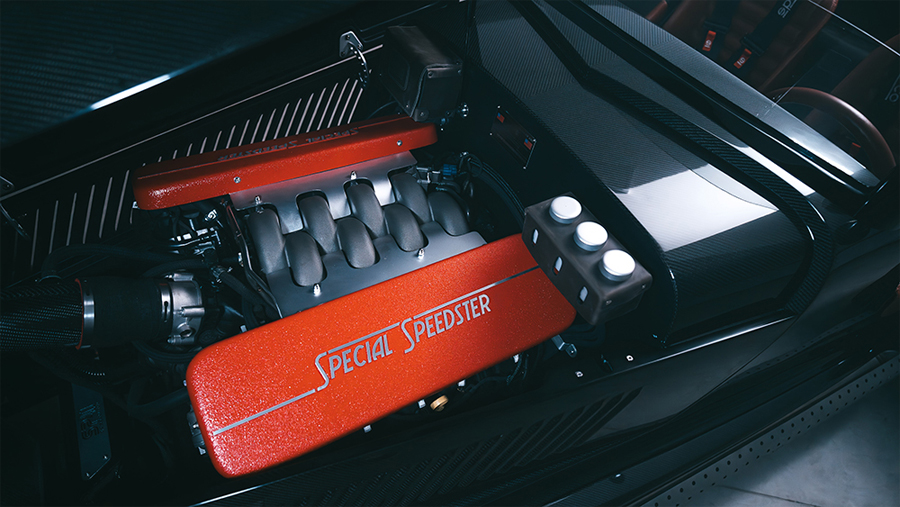
The mechanical heart of the SP40 is where modern capability fully asserts itself. The large front intake opening and side-exit exhaust strongly suggest forced induction, paired with a compact, high-output V8. A supercharged LT4 crate engine would be a logical choice, offering roughly 650 horsepower with broad, reliable torque. In a chassis this light, that power level would deliver extraordinary performance without resorting to complexity for its own sake. It is modern muscle refined through intelligent packaging and restraint.
The wheels neatly summarize the entire project. Their solid, aerodynamic presence echoes vintage aero discs, yet the turbine-like cutouts and two-tone finish place them firmly in the present. They are neither retro replicas nor futuristic experiments. They are exactly what this car argues for, familiar ideas executed with contemporary precision.
Ultimately, the SP40 Restomod Speedster is not trying to recreate the past. It is making a case for how technology should be used. Not to insulate the driver, not to replace involvement with automation, but to refine and intensify the analog connection that made driving compelling in the first place. It stands as a clear statement that progress does not have to mean distance, and that modern engineering can still serve the human hand, eye, and instinct. Also be sure to check our list of the most beautiful cars ever.