Some watches exist simply to tell the time. Others exist to hold it captive. The Piaget Limelight Gala has always belonged firmly in the second category, and the two new models introduced for spring 2026 make that case more compellingly than ever.
The Limelight Gala’s origins stretch back to 1973, when designer Jean-Claude Gueit presented a new jewellery watch at the Gstaad Palace – a setting that, in retrospect, could not have been more fitting. The watch emerged at a moment when Piaget was redefining the very idea of the jewellery watch, just four years after the Maison had unveiled its groundbreaking 21st Century Collection, a bold fusion of watchmaking and high jewellery that captured the spirit of a new, liberated generation. What Gueit created was something positioned between Piaget’s more theatrical cuff pieces and its quieter dress watches – a design with an asymmetrical oval case, diamond-set lugs that flowed along the bracelet, and a sense of movement that made the whole thing feel alive on the wrist.
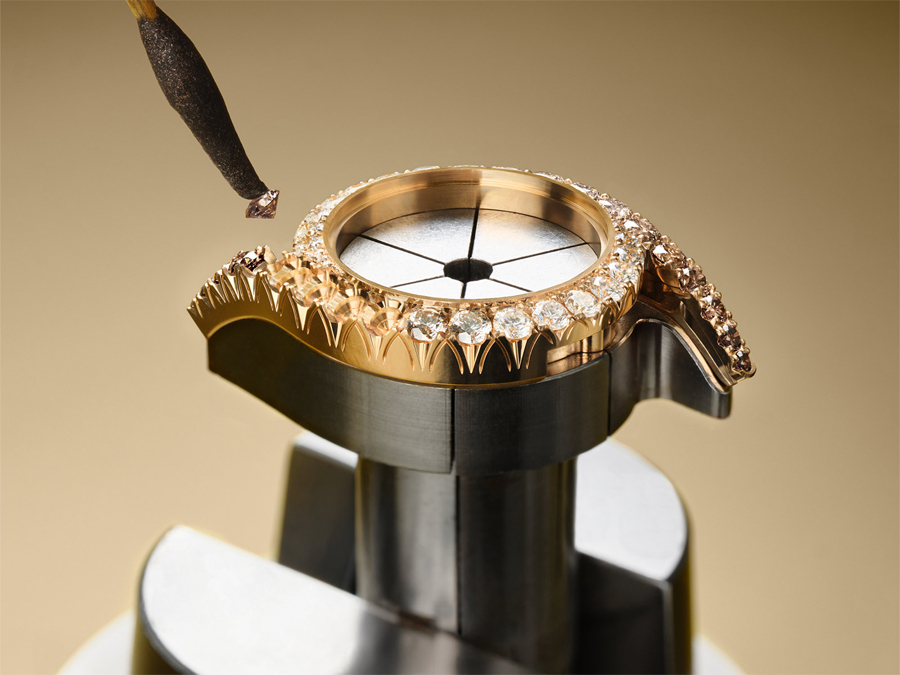
It quickly became synonymous with the glamorous world of the Piaget Society – Yves Piaget’s circle of artists, celebrities and tastemakers who defined the jet-set culture of the era. Over the five decades since, the collection has evolved through countless interpretations, incorporating coloured stones, enamel work, stone marquetry and other artisanal techniques. The two 2026 additions continue that tradition, each taking a different path while sharing the same underlying conviction that gold is not merely a material but a medium.
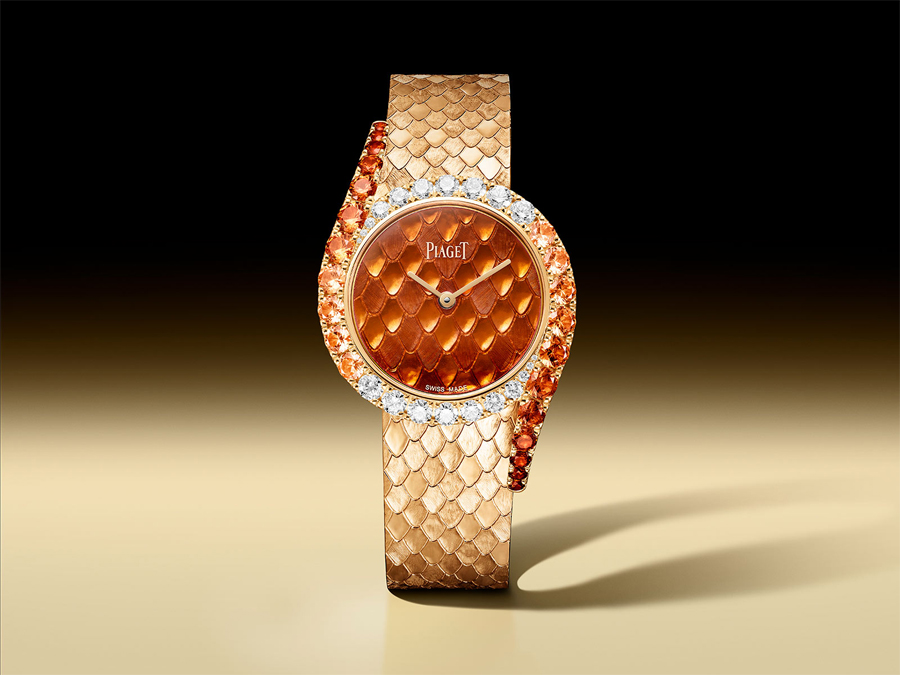
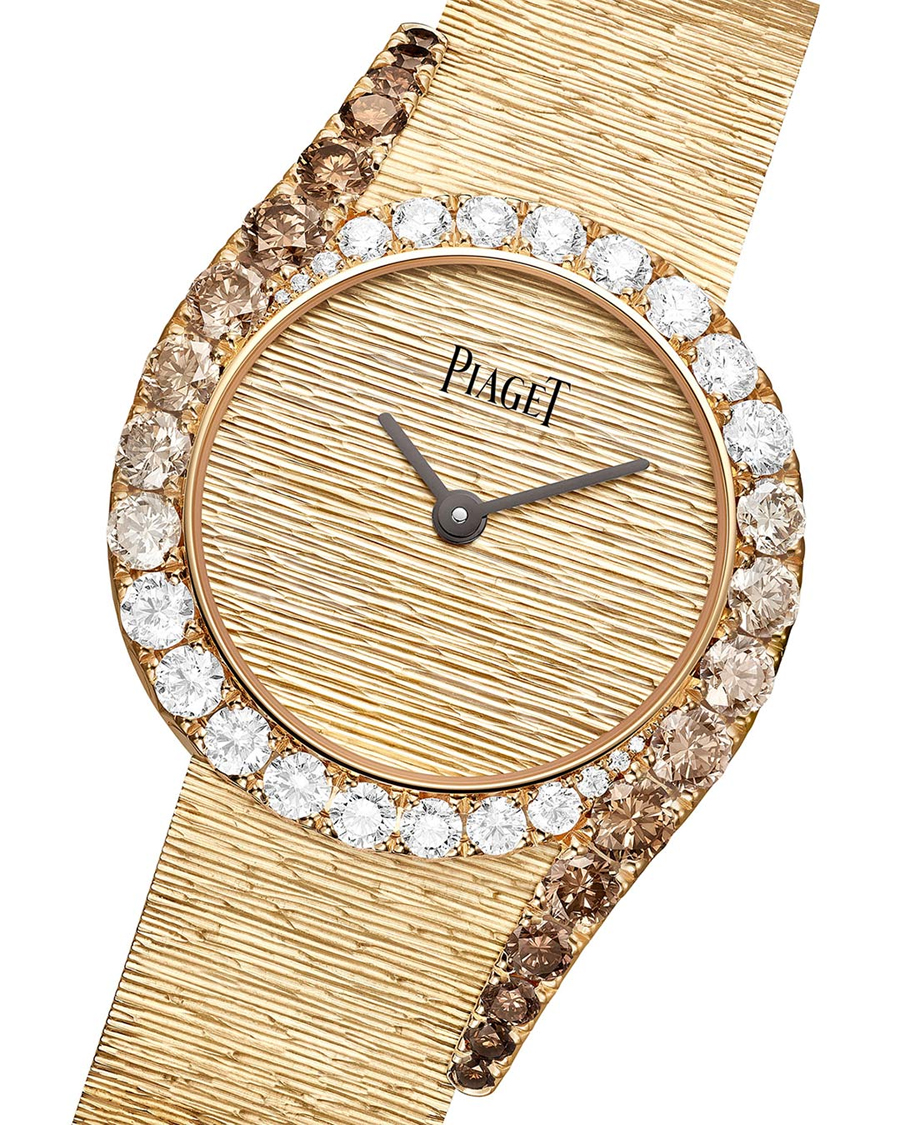
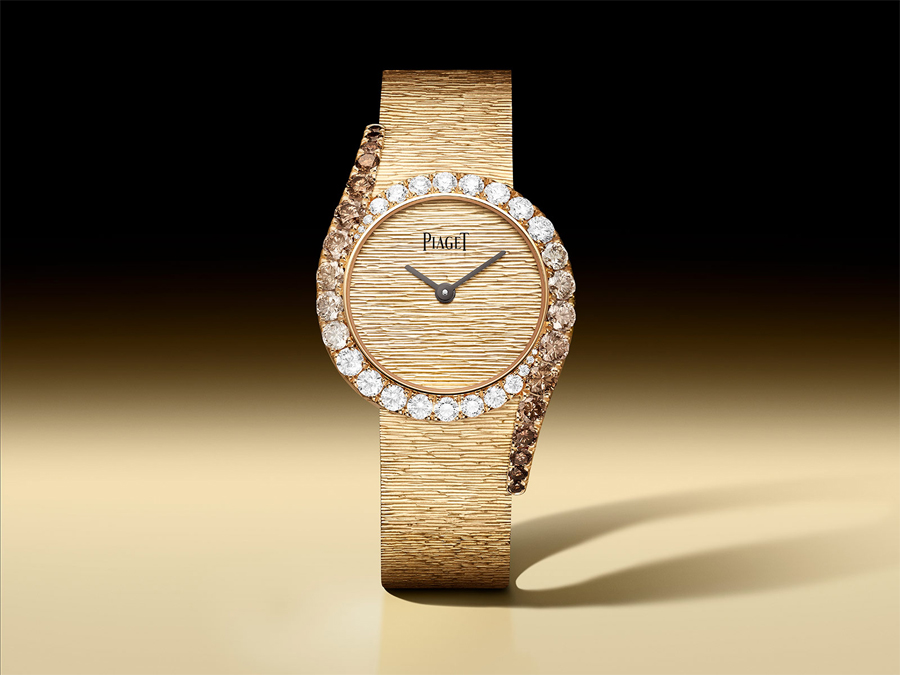
The first new model, ref. G0A51187, centres on a technique that Piaget has been refining since 1961. Décor Palace engraving predates the Limelight Gala itself, and in some ways it defines Piaget’s relationship with gold as eloquently as any of its movements define its relationship with mechanical watchmaking.
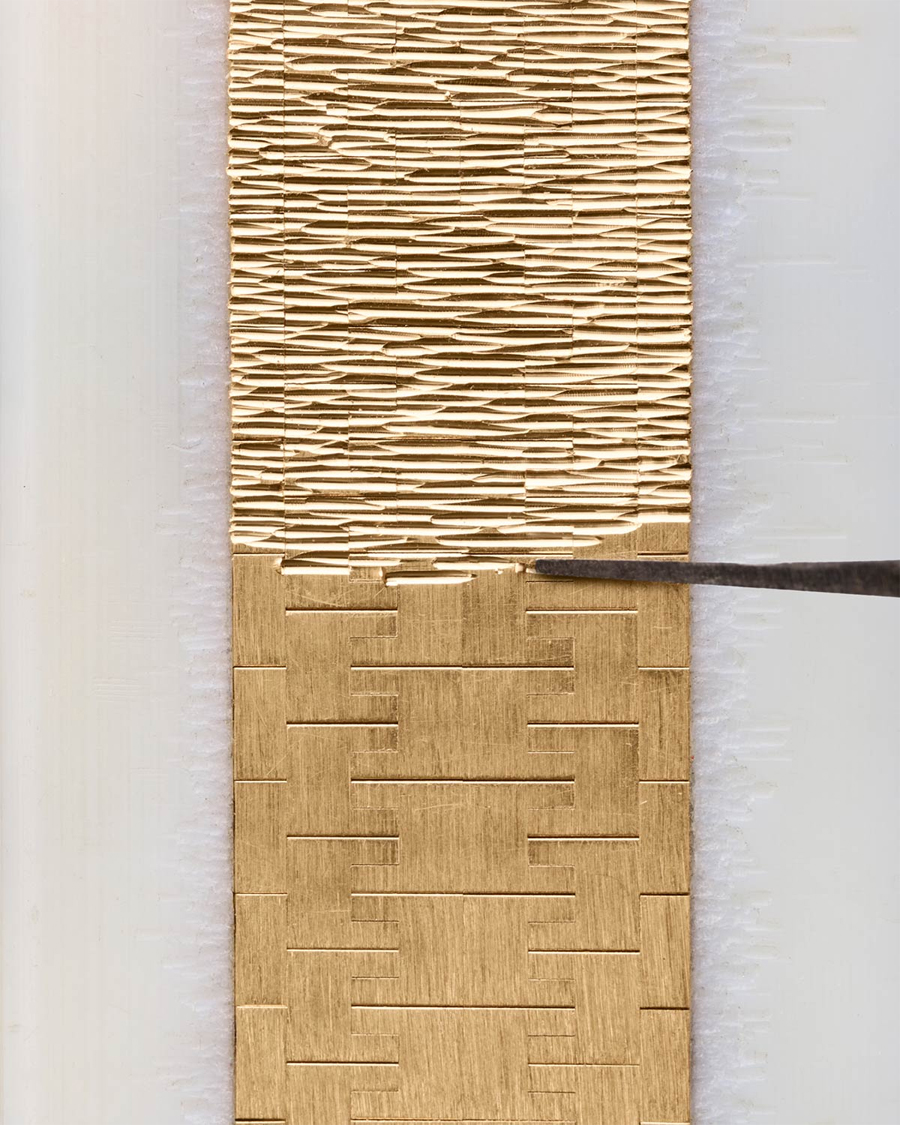
The process is deceptively straightforward in description and extraordinarily demanding in practice. Inspired by guilloché but executed entirely by hand, it is created by engraving fine lines into the gold using a burin, with each groove incised individually and the goldsmith removing the shavings after every movement of the tool. Because the work is done freehand, each piece will have its own distinct character – no two watches will ever be identical.

In this version, the engraving is applied across both the dial and the bracelet in rose gold, creating a textile-like surface that catches and redirects light as the watch moves. The gemstone composition reinforces the warmth of the gold: a gradual arrangement of 42 fancy coloured cognac diamonds and white diamonds produces a subtle colour gradient that shifts across the watch face and lugs. The overall effect is quiet but deeply considered – a piece for those who appreciate craft that reveals itself slowly.
The second model, ref. G0A51188, takes a considerably more expressive approach. Where the Décor Palace version rewards close attention, this one announces itself immediately.
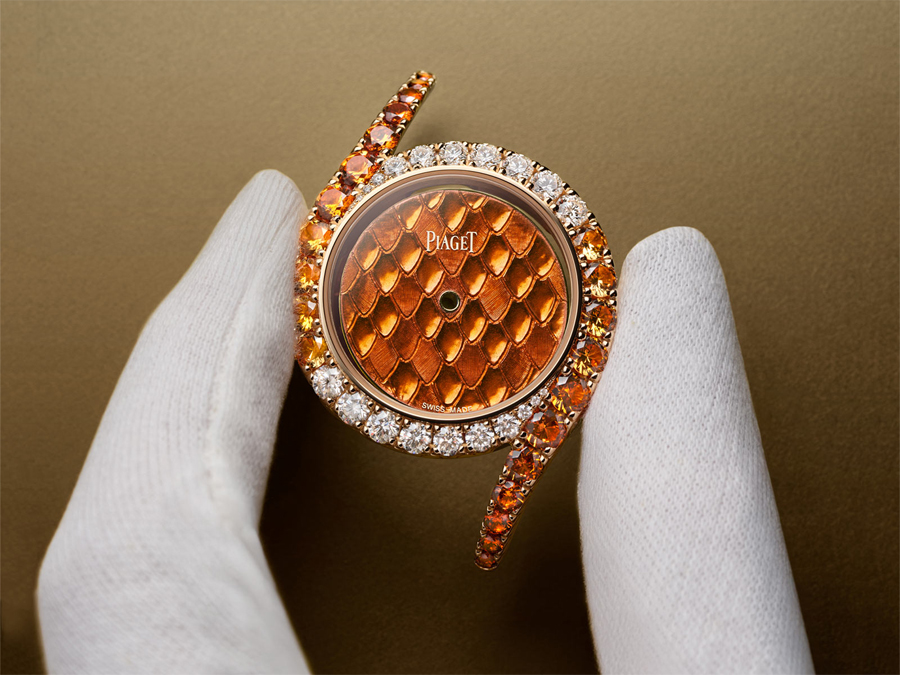
Its dial features vibrant orange Grand Feu enamel applied over gold that has been painstakingly engraved to replicate snake skin. The engraving technique – originally introduced in 2019 on the Extremely Lady watch – was designed to mimic the undulating scales of a reptile, with some scales polished and others engraved with fine lines, creating a spectacular play of light. The Grand Feu enamel, fired at high temperature directly onto that textured gold surface, takes on a luminosity that flat enamel simply cannot achieve.
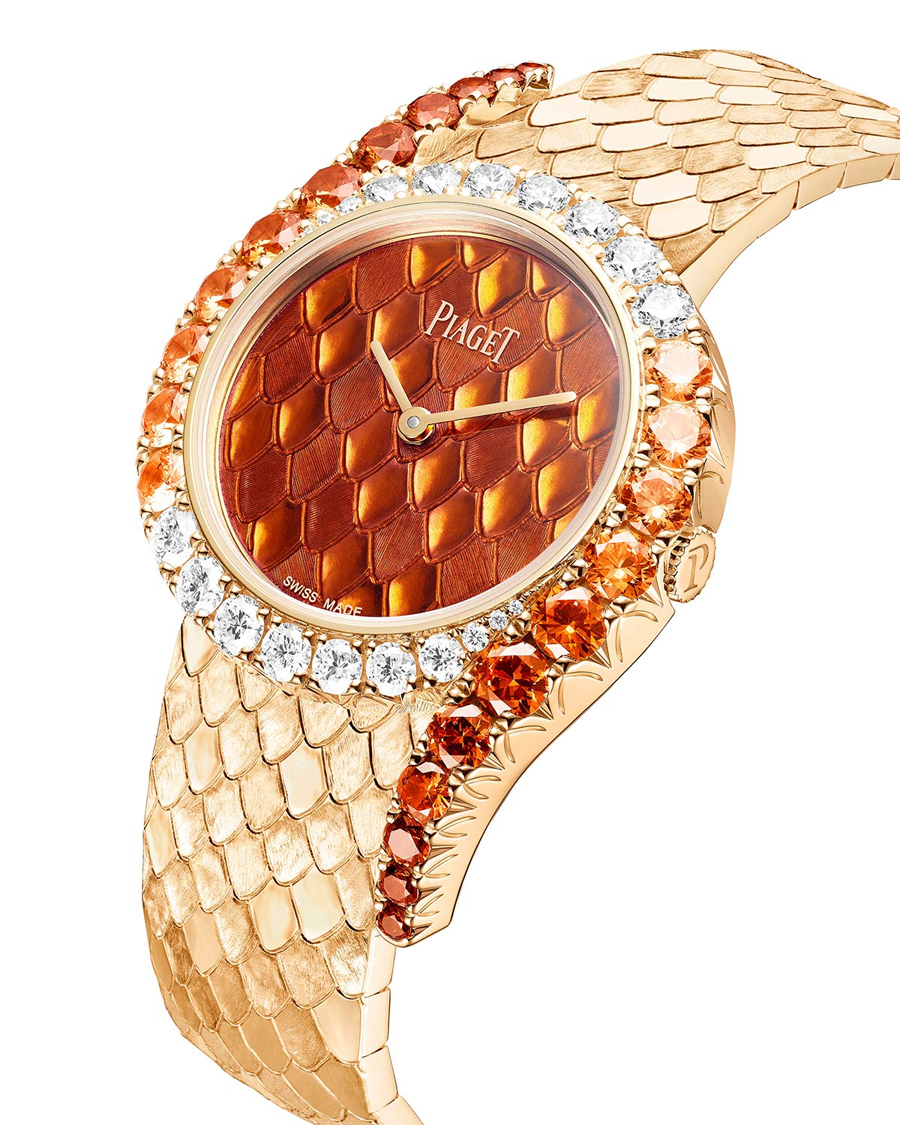
Surrounding the watch face are diamonds that flow into shades of deep orange spessartite garnets, creating a striking colour gradient that echoes the warmth of the dial. The bracelet continues the engraved snake-scale pattern, so the trompe-l’œil texture runs uninterrupted from dial to wrist. It is, by any measure, a bold piece – but one in which the boldness is entirely earned by the craft behind it.
Both new models are built around an 18K rose gold case measuring 32mm in diameter and 10mm in thickness, retaining the distinctive asymmetrical silhouette that has defined the Limelight Gala since its introduction. After years of running on in-house quartz movements, Piaget upgraded its Limelight Gala collection with mechanical movements in 2020. Both 2026 references are powered by the slim in-house automatic calibre 501P1, which measures just 3.6mm in thickness and offers a 42-hour power reserve.
The bracelet on both watches is meticulously articulated, achieving an exceptional suppleness that allows the watch to drape around the wrist with the softness of fabric – a quality central to Piaget’s identity as what it calls the House of Gold. Pricing is available on request.
Taken together, the two watches illustrate the range available within a single design language. One is introspective and textural; the other is vivid and immediate. Both are, unmistakably, Limelight Gala – and both demonstrate why, more than fifty years after Jean-Claude Gueit first sketched that asymmetrical case, the collection remains one of the most distinctive things Piaget makes. And don’t forget to check our list of the most expensive watches in the world.