Few sports cars have held onto the soul of lightweight, driver-focused performance as faithfully as the Caterham Seven. Barely changed in philosophy since its origins in the 1950s, it remains one of the purest expressions of British sports car culture. Now Caterham has teamed up with Hersham and Walton Motors, better known as HWM, to produce a special edition that digs into a fascinating and often overlooked chapter of British motorsport history. The result is the Caterham Seven HWM Edition, a car built to honor the small Surrey-based team that once punched well above its weight on the European Grand Prix stage.
HWM’s story begins in 1938, when John Heath established two small garages in Hersham and Walton-on-Thames. By the mid-1940s, he had joined forces with fellow racing enthusiast George Abecassis, and the pair eventually set about building their own competition machines. Their most celebrated creation was the 1951 HWM-Alta single-seater, a car that racked up seven victories, seven second-place finishes, and ten third-place results across international events. That record was remarkable for such a modest operation, and the car’s driver lineup made it even more significant – among those who raced it was a young Stirling Moss, for whom it provided one of his earliest Formula 1 appearances. HWM was, by many accounts, the first British team to claim a Grand Prix victory in the post-war era, a distinction that has largely slipped from public memory. The new Caterham edition is as much about reclaiming that history as it is about celebrating the partnership between two brands rooted in the same spirit of no-frills, handcrafted British performance.


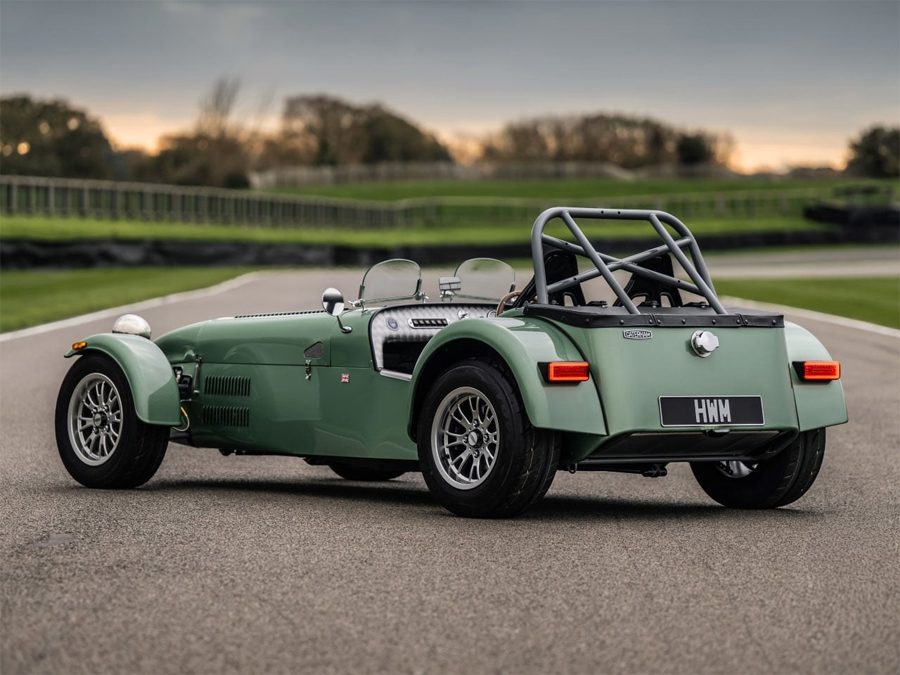
Only 19 examples of the HWM Edition will be made available in the UK, a number that deliberately mirrors the total production run of the original HWM-Alta race cars. Each one is finished in HWM Green, a color that was not simply approximated but digitally scanned directly from one of the surviving 1951 racers that HWM still owns today. The exterior carries a series of period-inspired details: side panel louvres drawn from the Alta design, a bespoke nosecone grille, and suspension components including wishbones, the anti-roll bar, and headlight brackets all finished in Retro Grey. A chrome fuel filler cap sits centrally on the bodywork, and a dedicated HWM Caterham badge on the nosecone marks this out as something beyond a standard Seven.


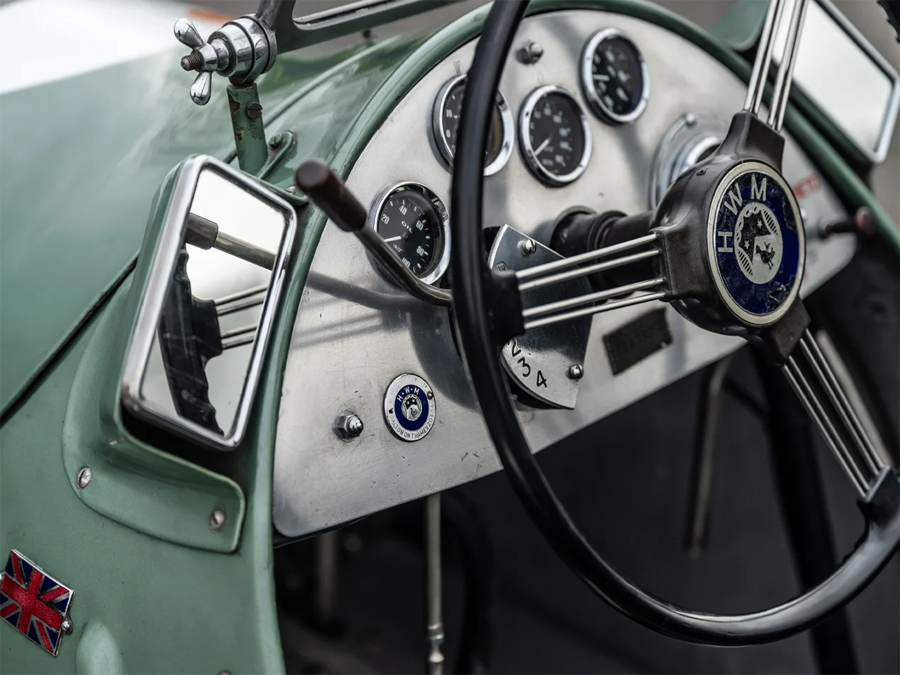
Inside the tight cockpit, the vintage character is even more pronounced. The SuperSprint dashboard is crafted from hand-turned aluminum and fitted with classic Smiths chrome dials alongside a solid metal master cut-off switch – details that would look at home in a period race car. The steering wheel is a polished wooden Moto-Lita quick-release unit, while the gear lever and handbrake are finished in chrome, rising from a transmission tunnel painted in matching body color. Buyers can opt for either leather-trimmed seats or lightweight composite racing shells, both of which carry embroidered HWM branding. Each car also carries a numbered plaque on the passenger side of the dashboard confirming its status as one of just 19 built.


Beneath all the heritage dressing lies the mechanically accomplished Caterham Seven 420 platform. Power comes from a naturally aspirated 2.0-liter Ford Duratec four-cylinder engine producing 210 horsepower at 7,600 rpm, driving the rear wheels through a five-speed manual gearbox. Thanks to the Seven’s famously low kerb weight, the power-to-weight ratio works out to around 375 horsepower per tonne. That translates to a 0-60 mph time of 3.8 seconds and a top speed of 136 mph – figures that make it a genuinely fast machine by any measure, not just by historical standards.

Pricing starts at £57,990, roughly $78,000, which represents a premium of around £16,000 over a standard Seven 420. For that money, buyers receive not just a set of visual upgrades but a meticulously considered tribute to a team that took on the greatest names in European motor racing with little more than ingenuity and determination – and occasionally won. Also don’t forget to check our list of the most beautiful cars of all time.