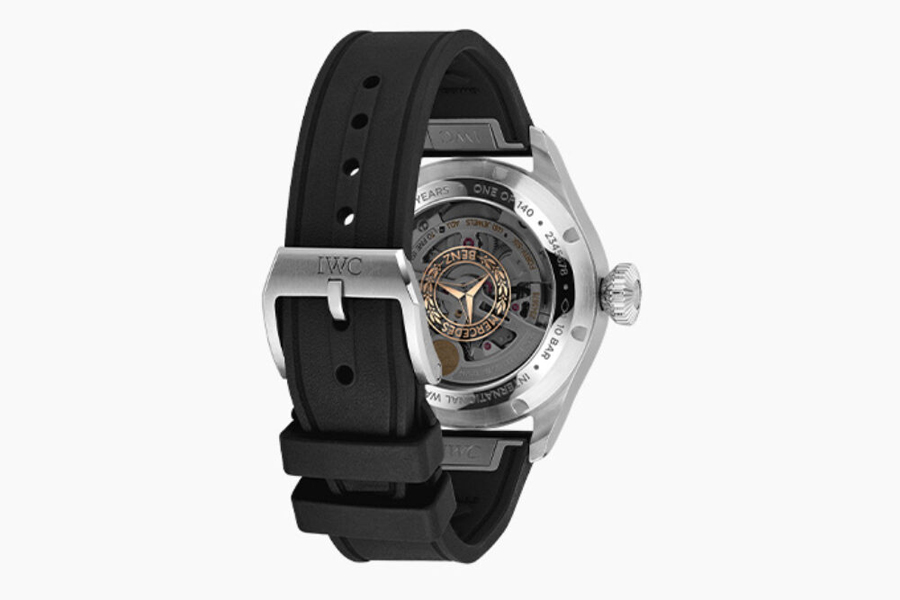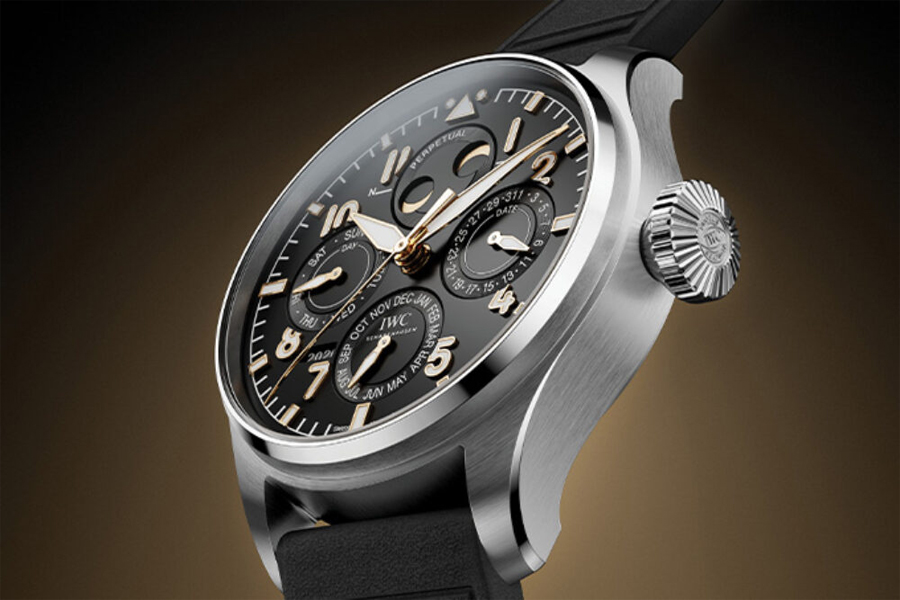
IWC Schaffhausen has created a special Big Pilot’s Watch to celebrate Mercedes-Benz and its 140th anniversary. Limited to just 140 pieces, the Big Pilot’s Watch Perpetual Calendar ProSet 140 Years Mercedes-Benz combines the brand’s newest mechanical innovation with subtle references to automotive history.
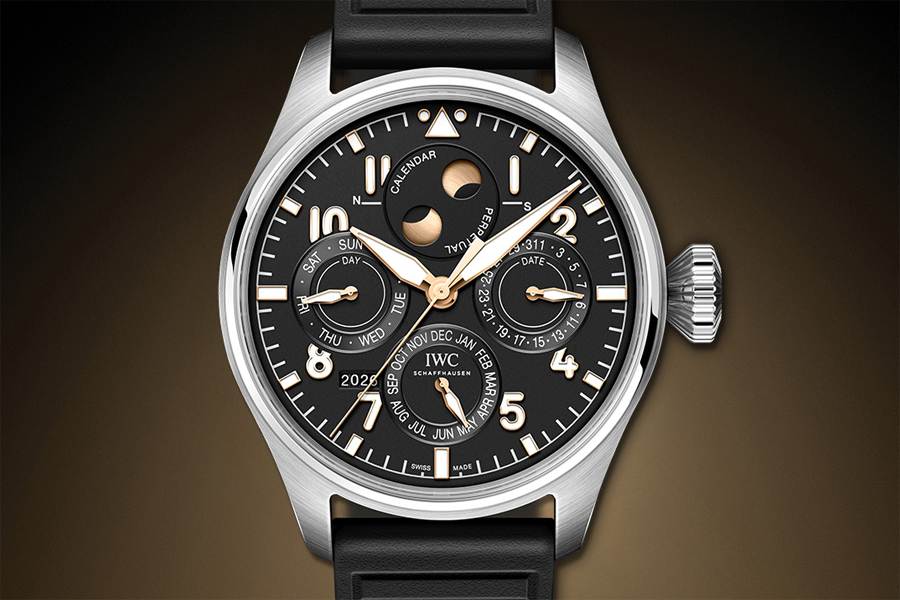
The watch is built around IWC’s new ProSet perpetual calendar, introduced earlier this year. Its most important innovation is surprisingly practical. The entire calendar can be adjusted both forward and backward using a single crown position. Date, day, month, year, and moon phase remain synchronized, eliminating the complicated correction process traditionally associated with perpetual calendars.
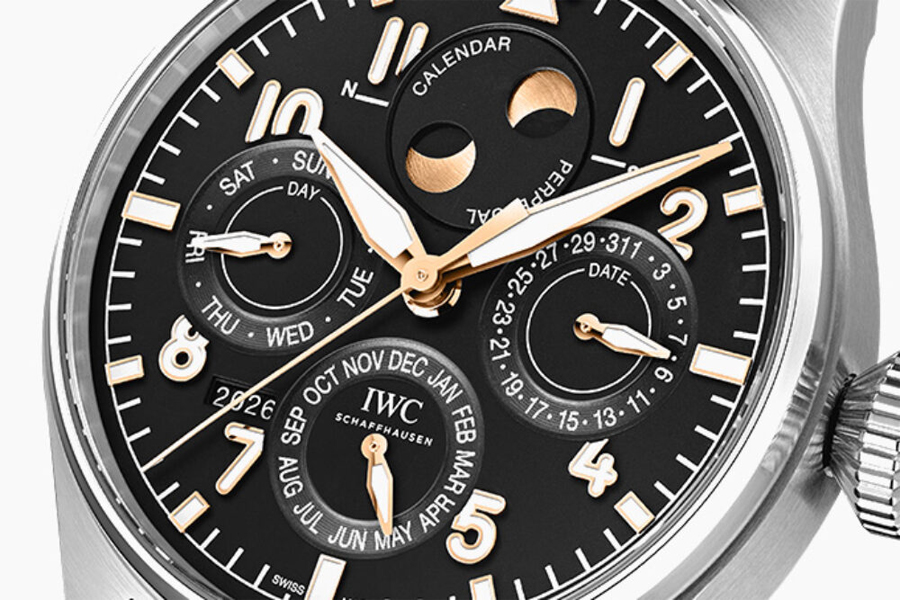
The technology behind that simplicity is anything but simple. The ProSet mechanism uses a completely gear-based architecture protected by multiple patents, with some of its most intricate components produced using the LIGA microstructuring process. The movement is the in-house Calibre 82665, which operates at 4 Hz and provides a 60-hour power reserve through IWC’s ceramic-enhanced Pellaton winding system.
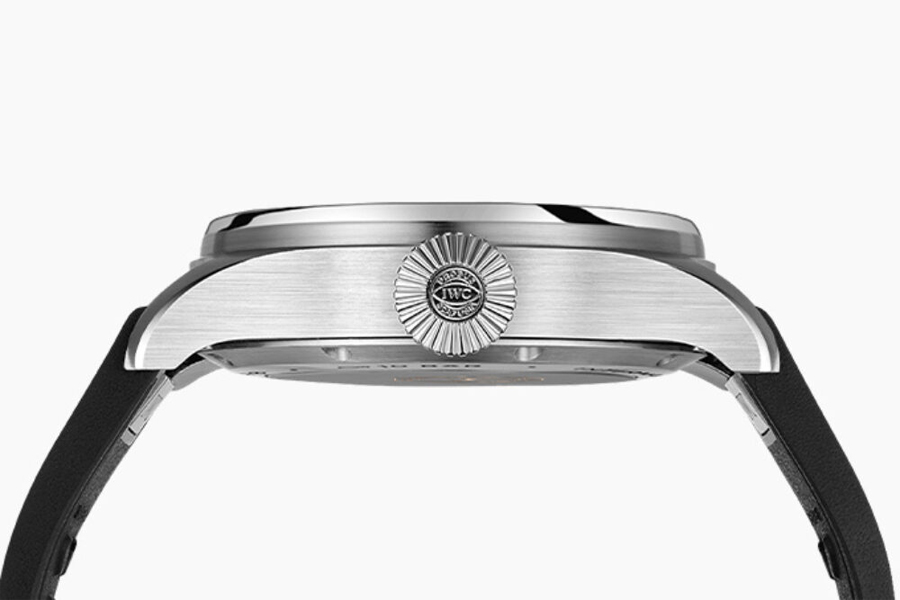
The 42mm stainless steel case combines brushed and polished surfaces with a black dial, gold appliqués, and gold-plated hands. Four subdials display the perpetual calendar functions, while IWC’s Double Moon indication tracks the lunar cycle with an accuracy of just one day every 1,040 years. A four-digit year display sits between 7 and 8 o’clock.
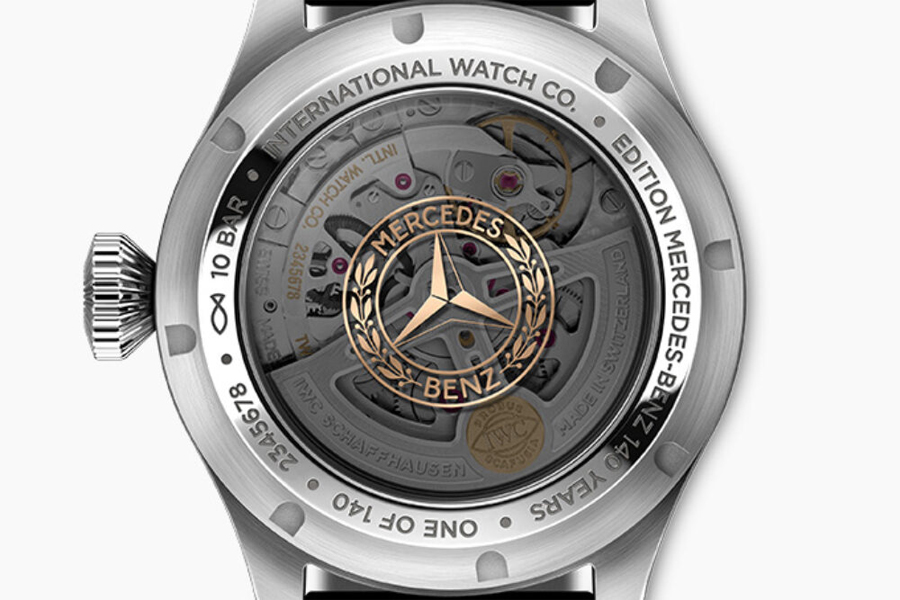
The automotive connection is most visible on the sapphire caseback. The movement is decorated with the original Mercedes-Benz emblem introduced in 1926, when Daimler and Benz merged. The historic logo combines the Benz laurel wreath with Daimler’s three-pointed star, adding a particularly fitting detail to a watch celebrating 140 years of automotive engineering.
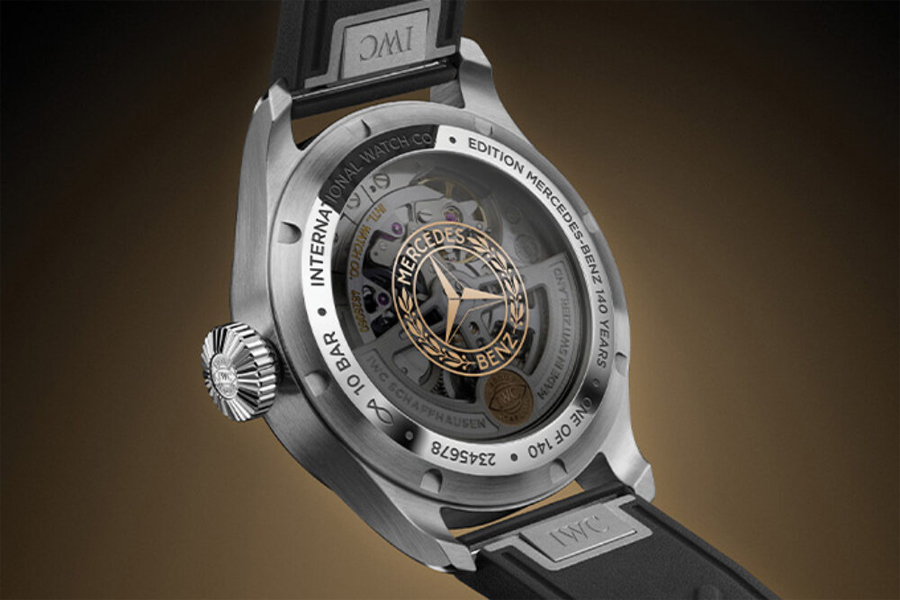
The watch is water-resistant to 100 meters and comes on a black rubber strap equipped with IWC’s EasX-CHANGE system. Limited to 140 individually numbered pieces, it is priced at $47,200.
Rather than covering the watch in obvious motorsport references, IWC has kept the design relatively restrained. The result feels more like an engineering tribute than a racing-themed accessory, bringing together two companies whose histories have been shaped by precision, mechanical innovation, and a willingness to rethink how complex technology should work. And don’t forget to check our list of the most expensive watches in the world.