Few names in the history of Mercedes-Benz carry the same aura as Rudolf Uhlenhaut. An engineer, test driver, and uncompromising perfectionist, Uhlenhaut helped shape the brand’s most legendary and beautiful machines. He was instrumental in developing the Mercedes-Benz 300 SL Gullwing , and he famously drove racing prototypes through Stuttgart traffic as if they were daily commuters. The most extreme expression of his work, the Mercedes-Benz 300 SL Uhlenhaut Coupe , became the stuff of myth. In 2022, one example sold through Sotheby’s for $143 million, making it one of the most valuable cars ever auctioned.
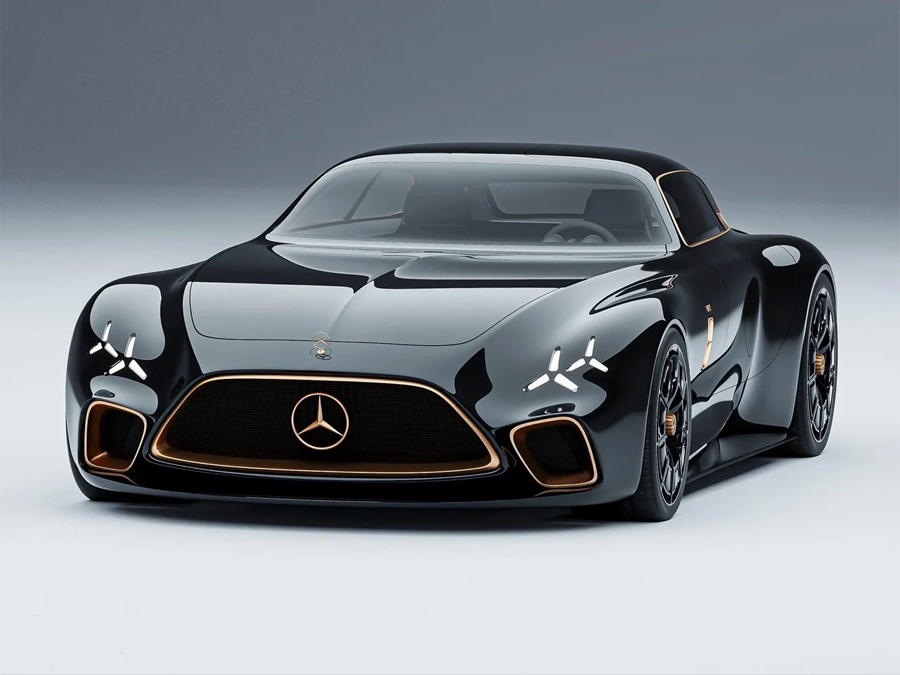
Against that backdrop, naming a concept after Uhlenhaut is not a casual gesture. It is a declaration. Designer Gabriel Naretto understood the weight of that history and responded with a machine that respects the past without becoming trapped by it. The Mercedes-AMG Uhlenhaut Shooting Brake concept feels less like nostalgia and more like a parallel timeline in which the Gullwing never stopped evolving.
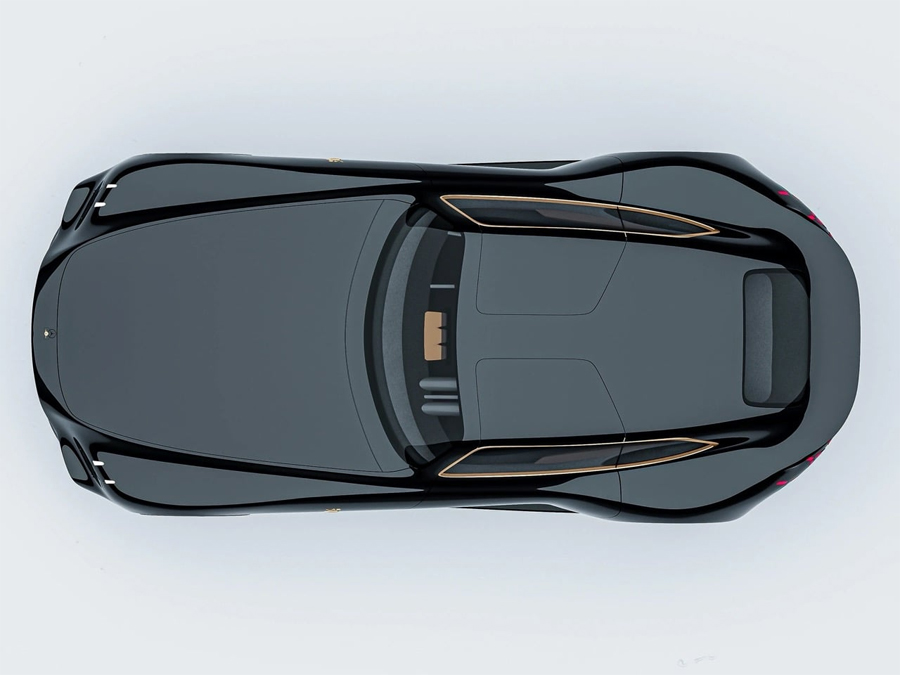
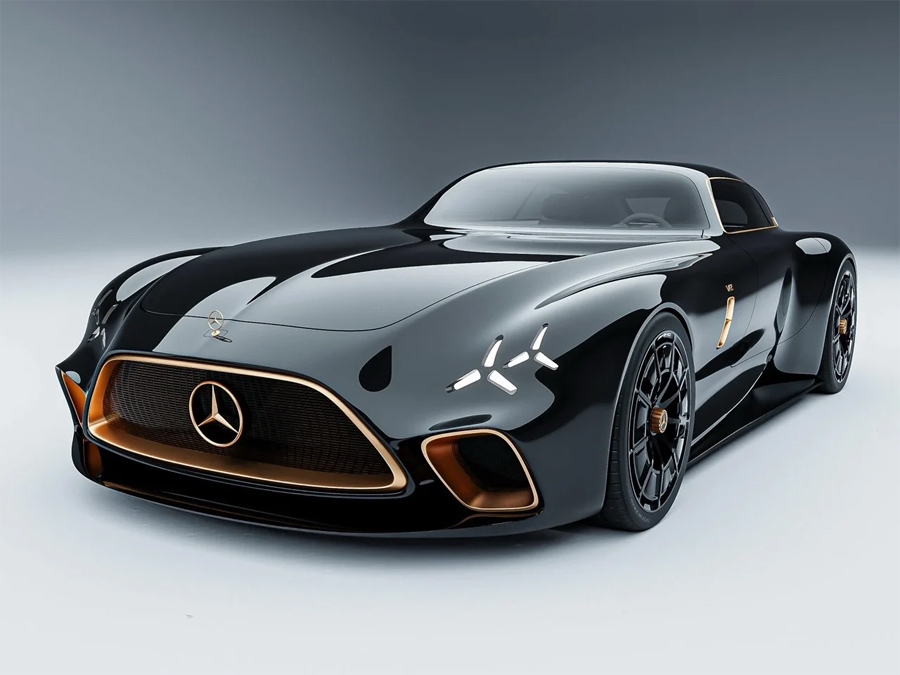
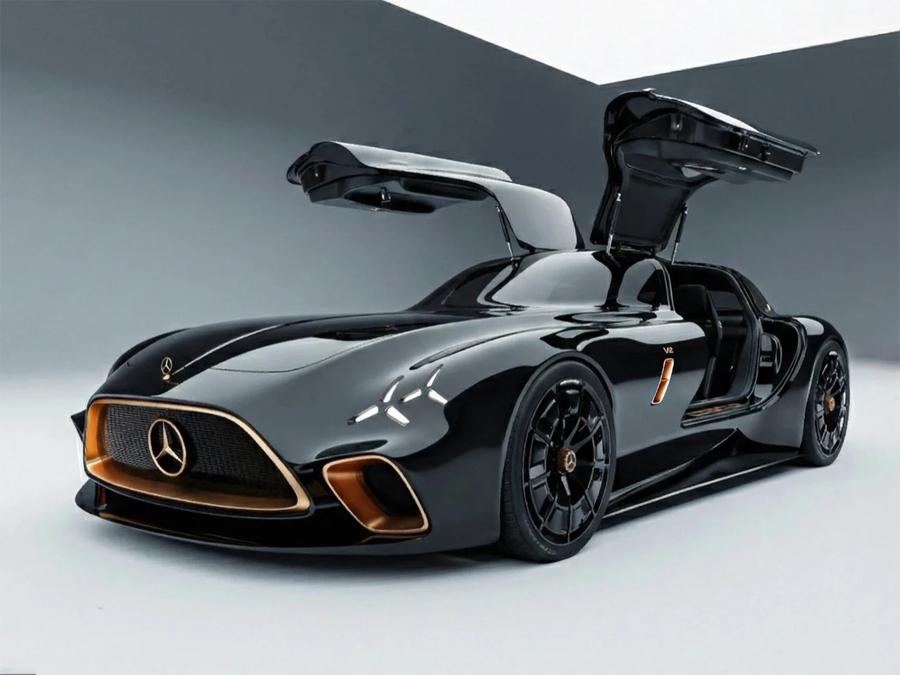
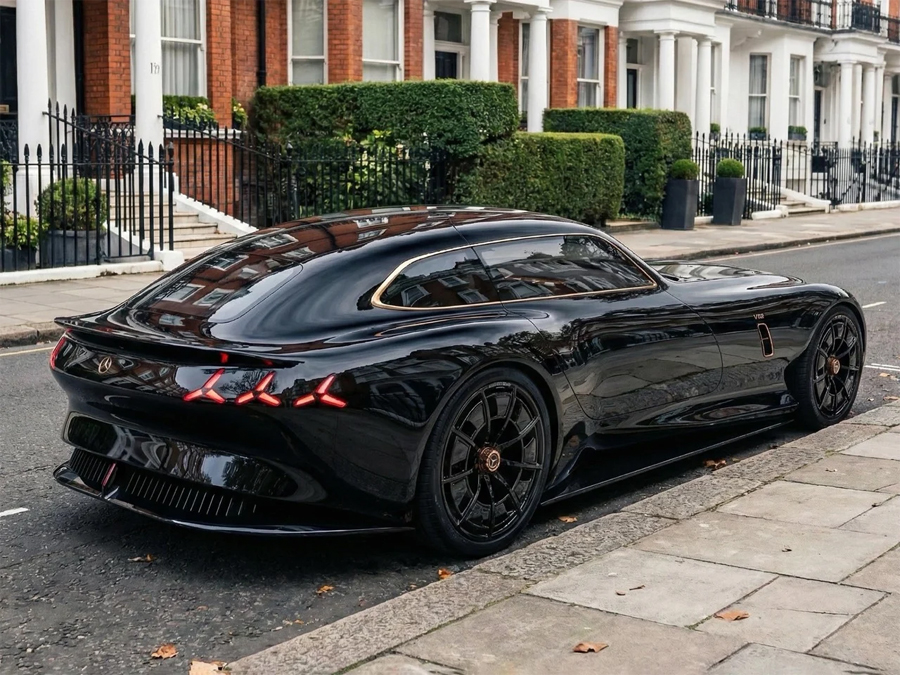
The first impression is sculptural restraint. Draped in obsidian black, the car relies on proportion rather than aggression. The long hood stretches forward in classic front-engine GT fashion, its surfaces flowing with a liquidity that avoids sharp creases. The central grille, unmistakably Mercedes, is framed in warm copper gold, a subtle but deliberate contrast that elevates the three-pointed star into jewelry rather than branding. Large air intakes echo the same bronze tone, creating cohesion rather than visual noise.
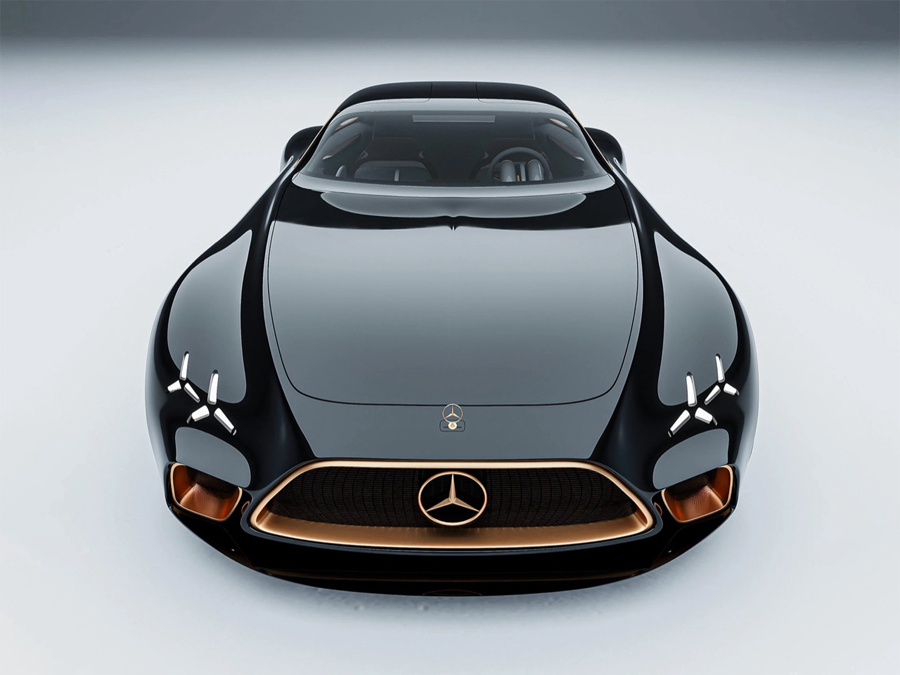
The lighting signature plays a crucial role. X-shaped daytime running lights slice through the gloss-black fascia, referencing contemporary AMG design language without copying it. They feel purposeful, almost surgical, reinforcing the car’s technical intent.
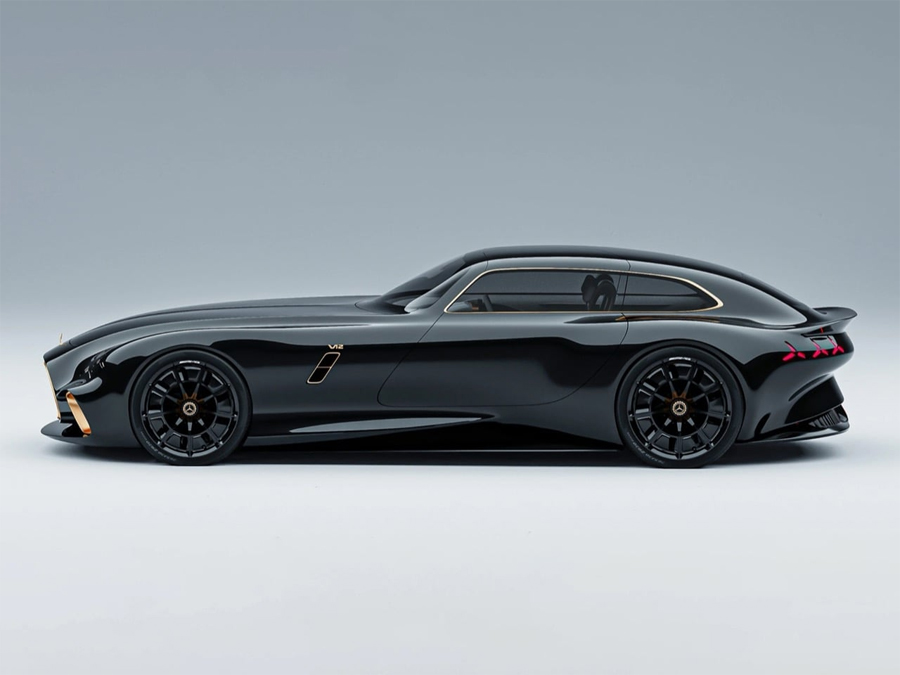
From the side, the shooting brake proportions transform the narrative. Instead of a conventional coupe, Naretto extends the roofline rearward in a fastback arc before resolving it into a crisp Kamm-tail. The silhouette is elegant yet muscular, a rare balance. A thin copper pinstripe traces the greenhouse from A-pillar to tail, a detail so refined it reads more like watchmaking than automotive trim. The discreet “V12” script along the sill hints at naturally aspirated thunder, recalling the racing spirit of the original Uhlenhaut without resorting to theatrical excess.
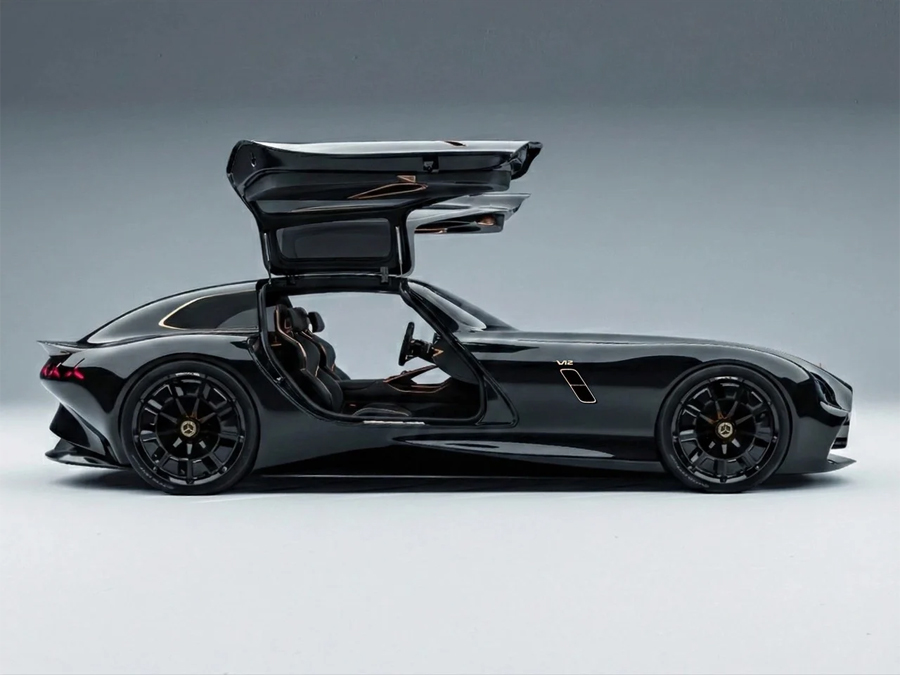
Crucially, the bodywork avoids unnecessary character lines. There are no forced creases or ornamental vents. Drama comes from curvature and stance. That restraint is difficult to execute convincingly, and here it feels deliberate rather than minimal for its own sake.
The doors are gullwing. There was never another credible option. When raised, they reveal a cabin wrapped in black leather with copper stitching that mirrors the exterior detailing. Deeply bolstered racing seats suggest serious intent, while the instrument layout remains clean and driver-focused. The steering wheel is compact and purposeful. Even in concept form, the interior communicates a philosophy: driving first, screens second.
At the rear, the taillights reinterpret the three-pointed star as sculptural red clusters. They function as both lighting and identity, integrating brand heritage directly into form. A subtle roof spoiler and a carefully shaped diffuser add aerodynamic credibility without overwhelming the composition. Multi-spoke AMG wheels in gloss black with copper center caps complete the design language, reinforcing the copper-black dialogue from every angle.
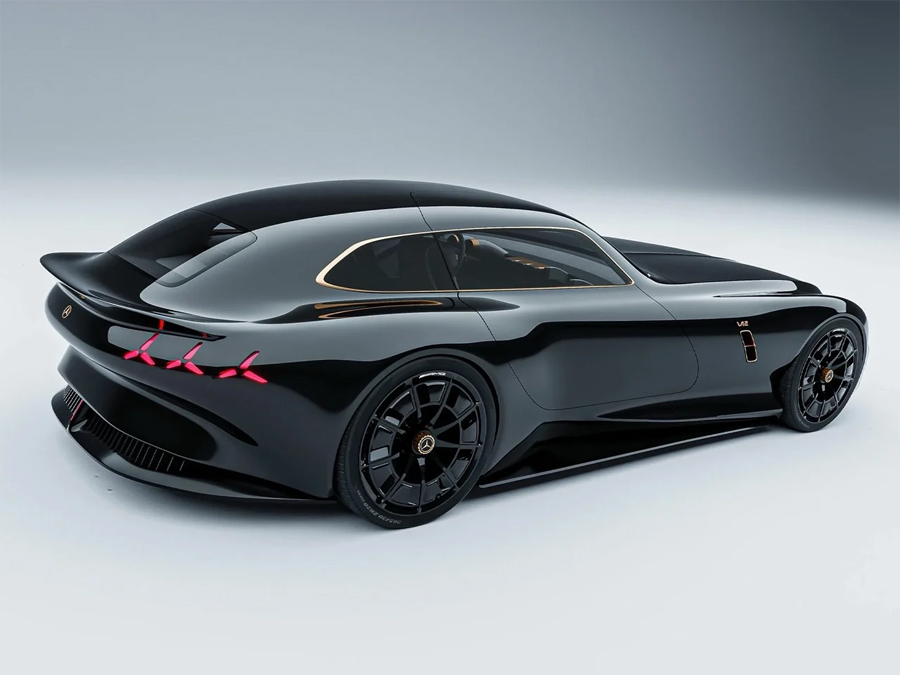
The choice of a shooting brake body style is particularly intelligent. Mercedes has a quiet history of blending performance and practicality, from the Mercedes-Benz CLS Shooting Brake to the Mercedes-AMG GT 4-Door Coupe . By adopting this format, Naretto expands the concept beyond a pure homage. It becomes a statement about versatility and modern luxury. It suggests a car that could carry luggage for a weekend escape while still delivering the visceral intensity associated with AMG.
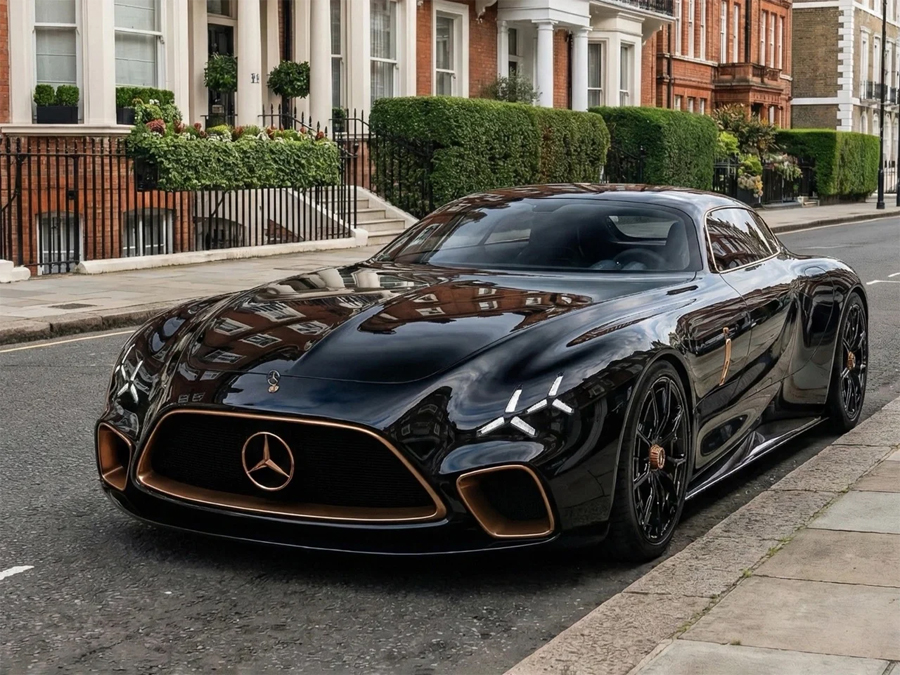
Rendered against the Georgian townhouses of a Kensington street, the Uhlenhaut Shooting Brake looks entirely at ease. It belongs in a world where automotive design is treated as enduring art rather than disposable product. More importantly, it feels coherent. The historical references are emotional rather than literal. The long hood, the ceremonial gullwing doors, and the balanced greenhouse architecture echo the Gullwing’s spirit while allowing contemporary AMG themes to breathe.
Rudolf Uhlenhaut once blurred the line between race car and road car by driving competition machinery to work. This concept suggests that, had he lived in today’s era of high-performance grand tourers, he might have chosen something like this. A machine rooted in engineering purity, shaped by restraint, and confident enough to let proportion speak louder than ornament. Also don’t forget to check our list of concept cars from largest automakers.